English text below —
Chi guarda chi
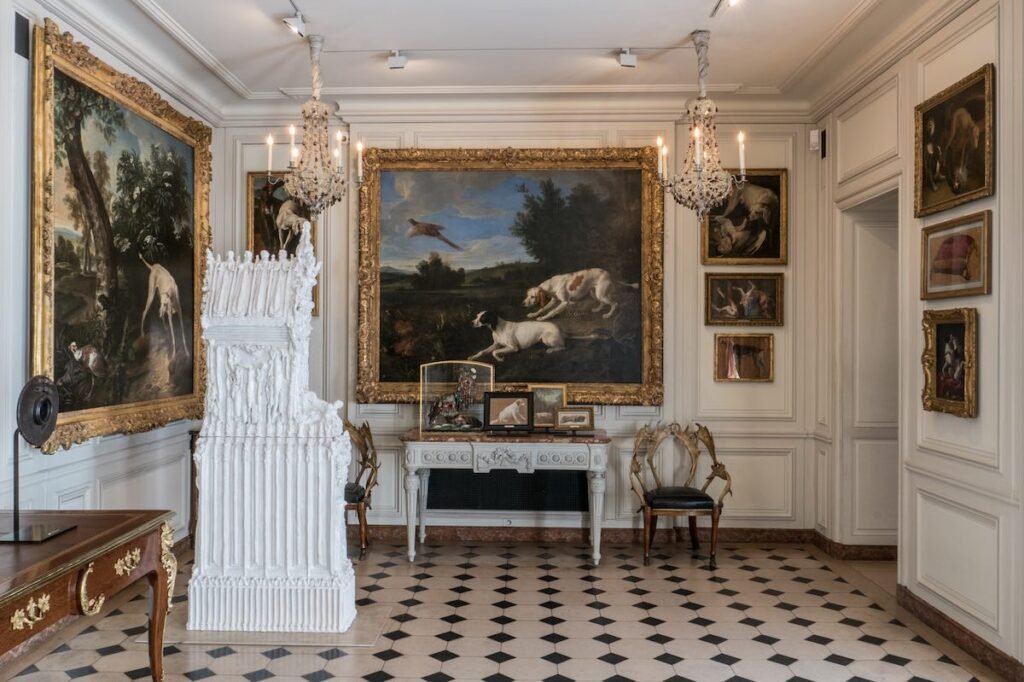
Nel Musée de la Chasse et de la Nature di Parigi
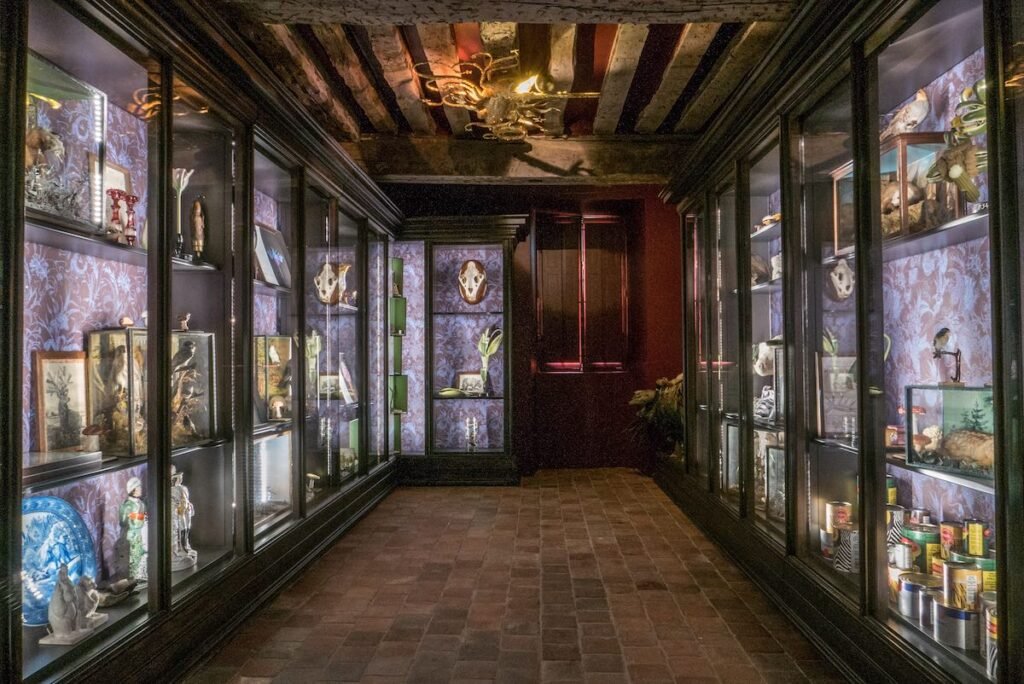
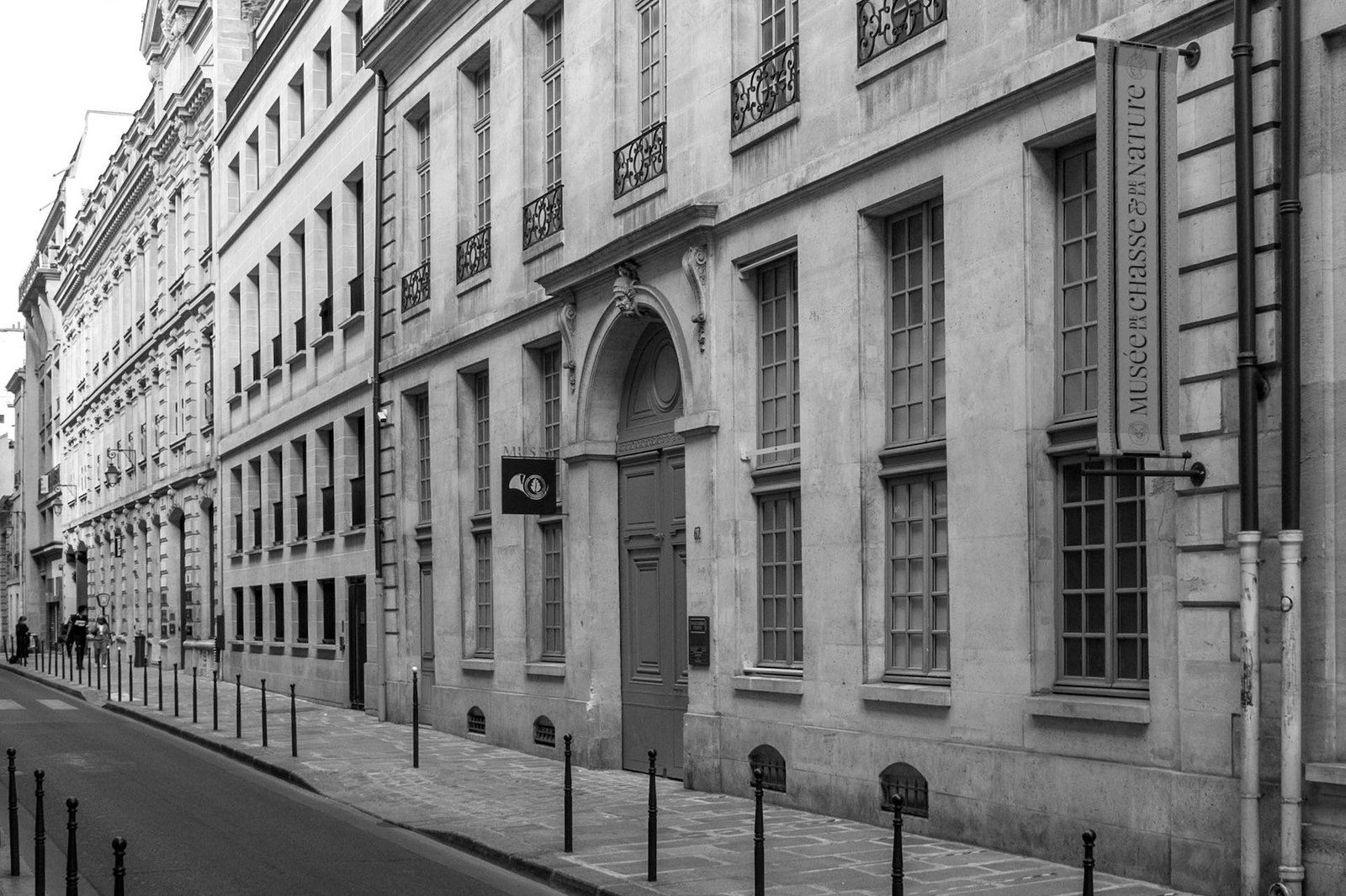
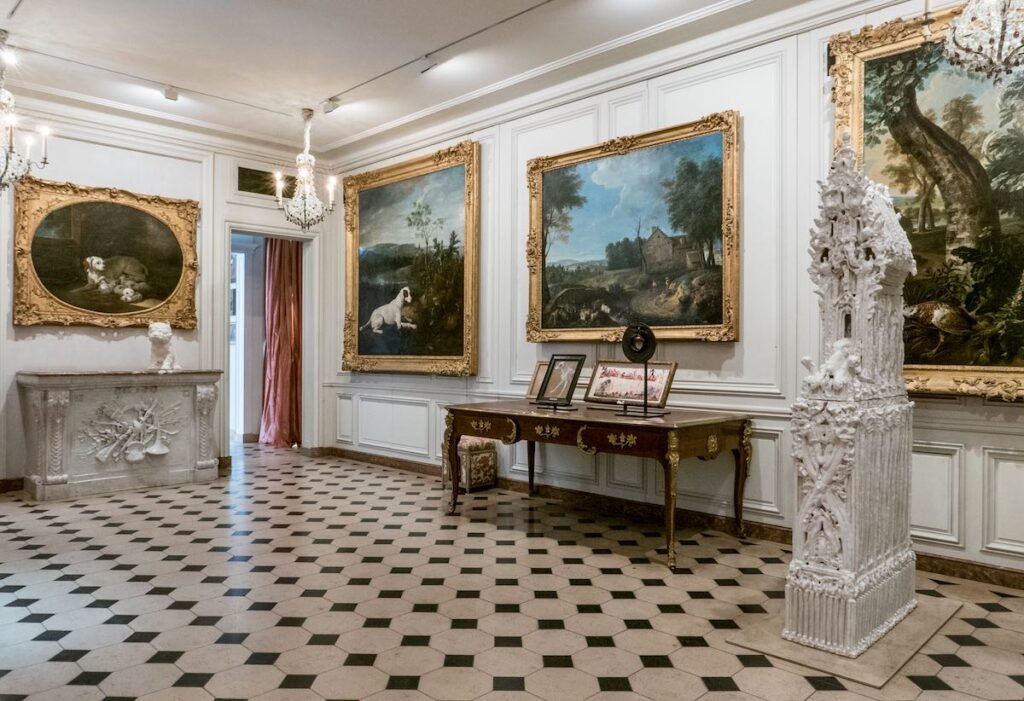
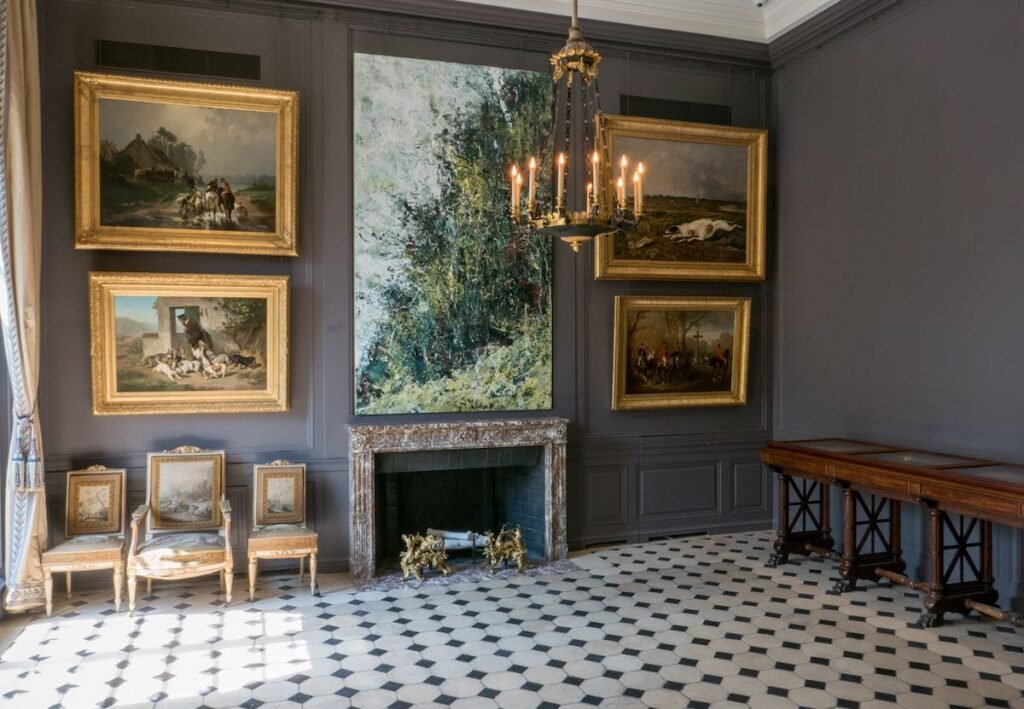
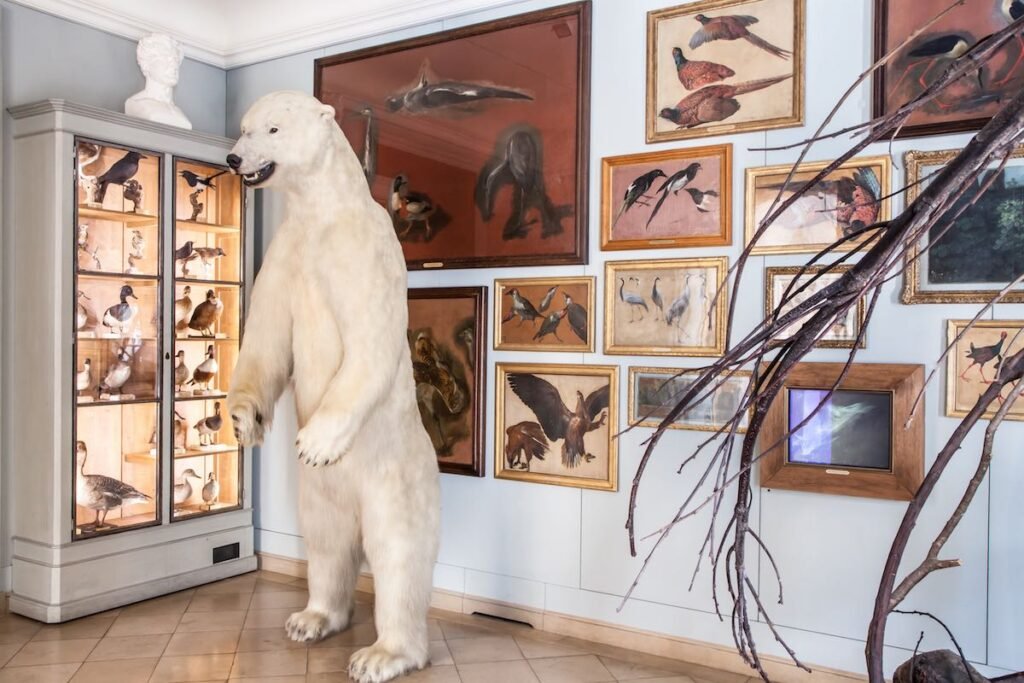
Si entra nel Musée de la Chasse et de la Nature attraversando sale dove ogni cosa sembra al proprio posto da sempre: legni scuri, boiserie, dipinti, armature, corna, strumenti, animali. Eppure nulla dà l’impressione di una collezione conclusa. Gli oggetti non sono esposti per essere contemplati, ma per esercitare una silenziosa presenza, come se attendessero ancora qualcosa.
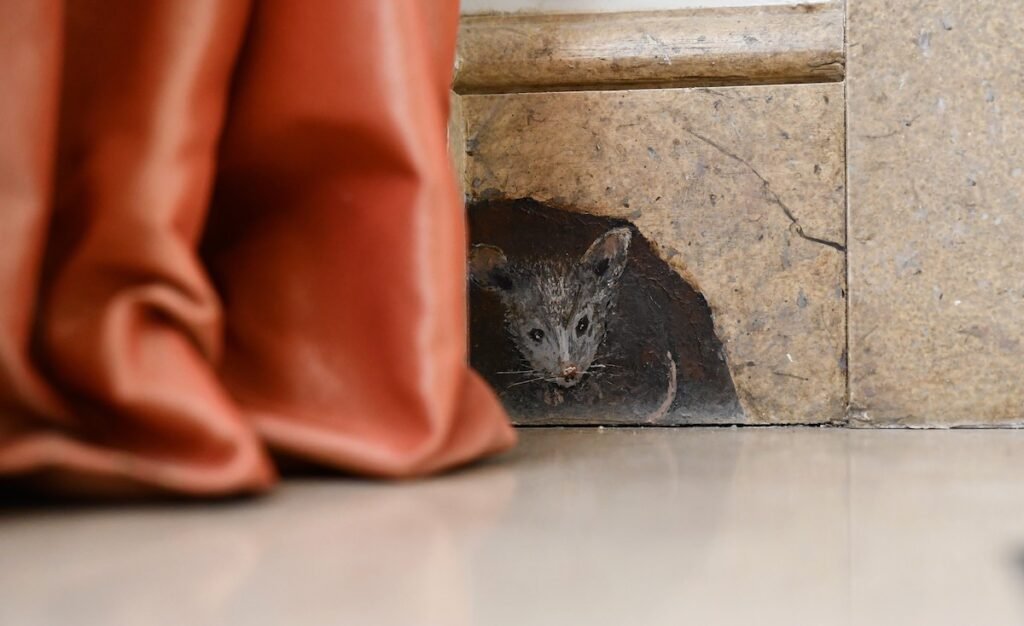
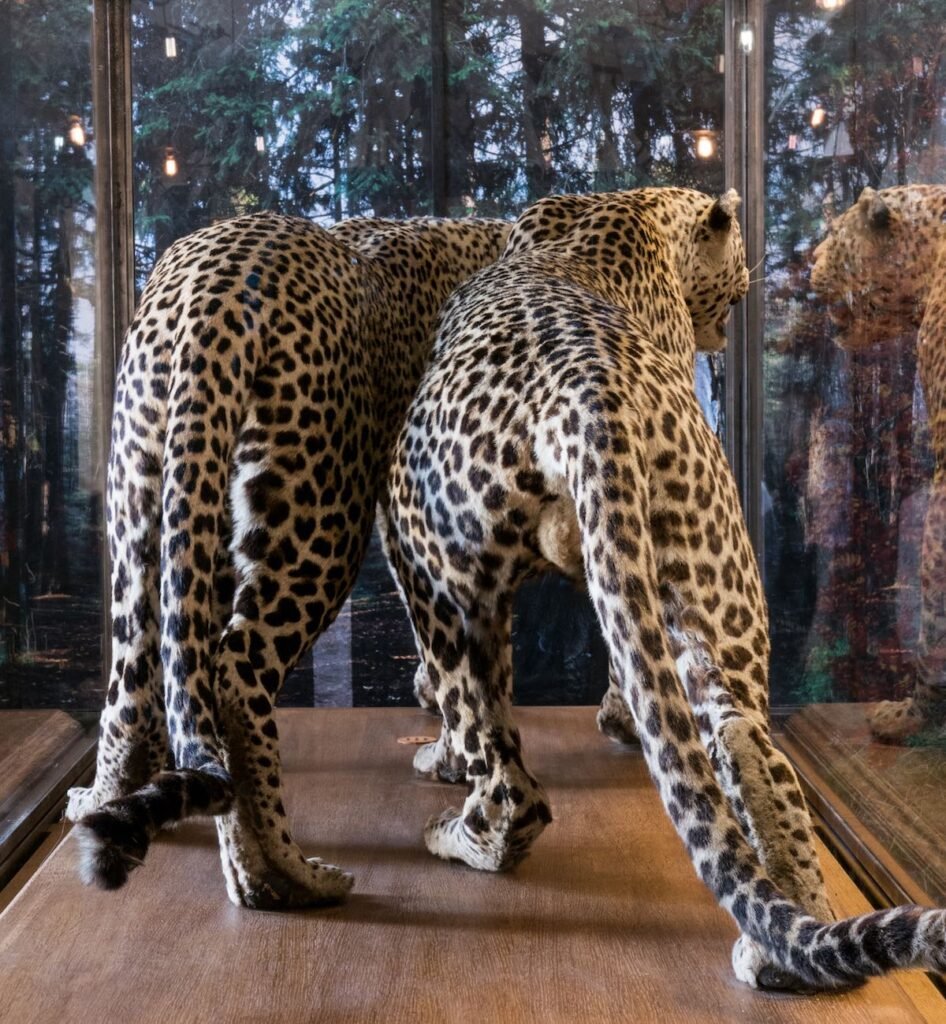
Bastano pochi minuti perché un dettaglio affiori con chiarezza: qui gli animali non occupano il ruolo di semplici reperti. Continuano a guardare, da una parete, da una teca, dall’ombra di una stanza — una sensazione sottile, quasi fisica. Lo sguardo smette di essere un gesto unidirezionale: osservare significa, nello stesso istante, sentirsi osservati.
È questo il primo scarto che il museo introduce: riguarda la posizione dell’essere umano nel mondo, prima ancora che la caccia in sé. Per un momento viene meno l’illusione di occupare il centro della scena. L’animale non è più soltanto l’oggetto di una rappresentazione o il protagonista di un racconto naturalistico: è un’altra forma di presenza, irriducibile alle categorie con cui siamo abituati a interpretarla.
Da quel momento anche il tempo cambia consistenza: non segue l’ordine cronologico delle collezioni né la successione delle sale, si dilata, si sovrappone. L’hôtel particulier del Marais, con le sue stanze seicentesche, gli interventi dell’arte contemporanea e gli oggetti di epoche diverse, non costruisce un percorso lineare ma una convivenza: ogni ambiente trattiene tracce di tempi differenti senza ricondurli a un’unica narrazione.
È proprio questa sospensione a rendere il Musée de la Chasse et de la Nature un luogo inatteso: non tanto perché racconti la storia della caccia, quanto perché restituisce ciò che la modernità ha progressivamente dimenticato, la possibilità di sostare davanti a una forma di alterità senza ridurla a conoscenza, possesso o spettacolo. Qui la caccia appare, prima ancora che come gesto, come disciplina dell’attenzione: un esercizio di attesa, un modo di leggere il mondo attraverso tracce minuscole. In questa pazienza dello sguardo, il museo continua ancora oggi a custodire la propria contemporaneità.
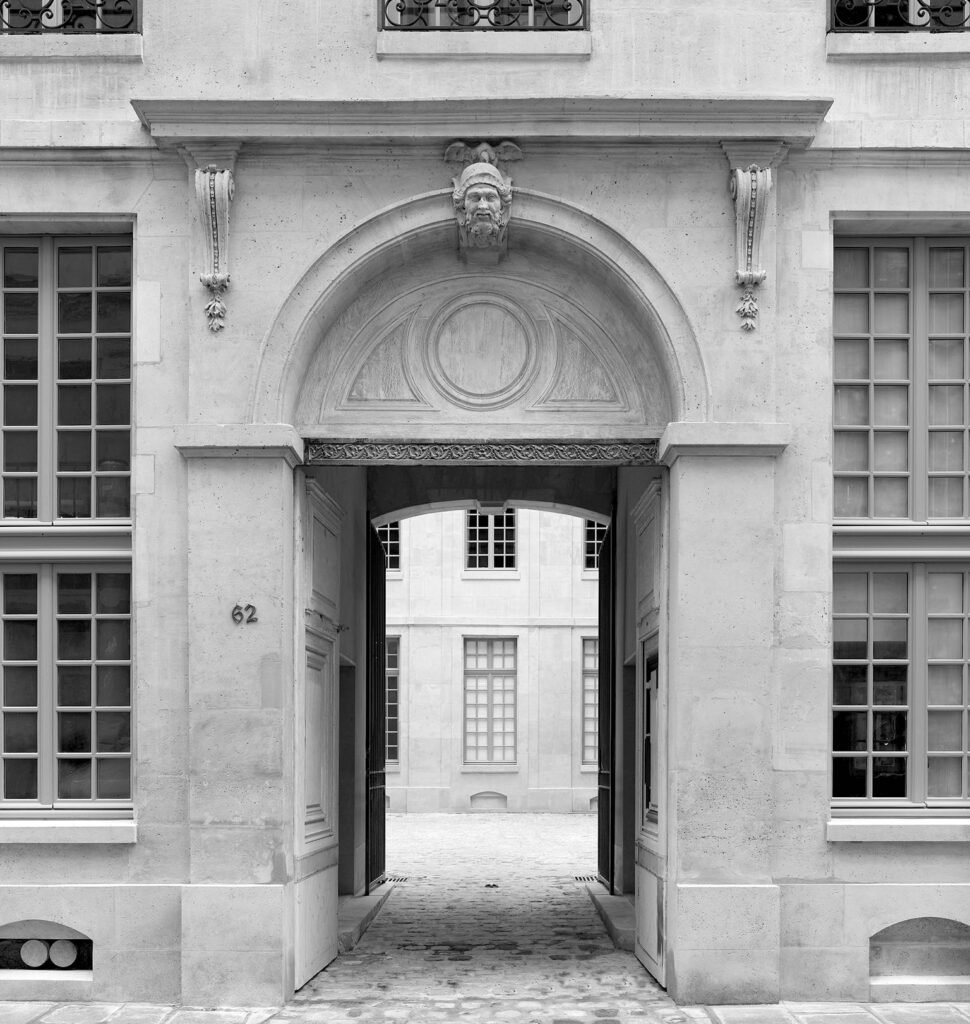
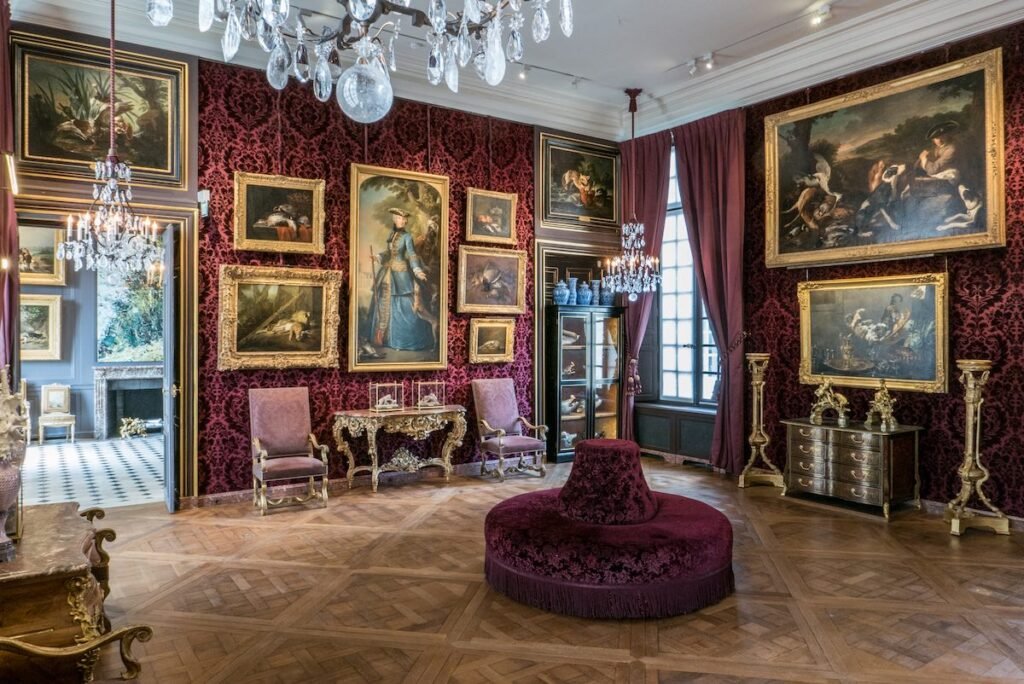
Prima di diventare un museo, questo luogo aveva già conosciuto molte vite. Il cuore del percorso coincide con l’Hôtel de Guénégaud, costruito fra il 1651 e il 1655 da François Mansart per Jean-François de Guénégaud des Brosses, uno dei più alti funzionari della monarchia francese. È l’unico hôtel particulier progettato da Mansart giunto fino a noi pressoché integro: corte, giardino, proporzioni, scalone d’onore. L’architettura non accompagna la visita. Le dà il passo.
Fu residenza aristocratica, poi teatro, poi una casa divisa in appartamenti e quasi dimenticata. Gli edifici hanno un tempo diverso dal nostro: aspettano dentro gli usi che li consumano. Negli anni Sessanta l’Hôtel de Guénégaud venne salvato dalla tutela promossa da André Malraux e dal progetto di François e Jacqueline Sommer. Nel 1964 i Sommer crearono la Fondation de la Maison de la Chasse et de la Nature; nel 1967 Malraux inaugurò il museo. Una collezione privata diventava un luogo pubblico, ma conservava qualcosa della casa: il senso che ogni oggetto fosse stato scelto prima di essere esposto.
Nel 2007 il museo si estese all’adiacente Hôtel de Mongelas, edificio dei primi anni del Settecento. L’ampliamento non aggiunse soltanto nuove sale: cambiò il modo in cui le collezioni potevano parlare. I due hôtels particuliers, ora comunicanti, mantennero la propria identità, come due epoche costrette a condividere lo stesso presente. Una seconda ristrutturazione, avviata nel 2019 e conclusa con la riapertura del 2021, rese accessibili altri ambienti al secondo piano e spostò ancora il baricentro del museo verso la biodiversità, l’ecologia e la crisi del rapporto fra l’essere umano e il vivente. Il museo si definisce una maison habitée. Non una formula, ma un modo di disporre le presenze.
La domanda, a questo punto, è inevitabile: perché un museo della caccia?
La risposta non coincide con l’apologia di una pratica che oggi suscita, comprensibilmente, posizioni controverse. Fin dalla fondazione, il Musée de la Chasse et de la Nature ha dichiarato un’ambizione diversa: non raccontare la caccia come tecnica o come sport, ma esplorare la complessa relazione che per millenni ha legato l’essere umano al mondo animale.
Per gran parte della storia dell’umanità la caccia fu, più che un’attività marginale, una condizione di esistenza: significò imparare a leggere il territorio, riconoscere le stagioni, interpretare segnali minimi, sviluppare forme di attenzione e conoscenza senza le quali la sopravvivenza sarebbe stata impossibile.
Molto prima di diventare un simbolo di dominio, la caccia fu una delle prime modalità attraverso cui l’uomo imparò a misurarsi con ciò che gli era radicalmente altro — e presupponeva un secondo protagonista, spesso dimenticato: la foresta. Prima ancora di essere il luogo dell’inseguimento, il bosco era uno spazio di incertezza, un ambiente in cui l’uomo non poteva limitarsi a guardare: doveva orientarsi senza dominare ciò che lo circondava, fidandosi più dell’udito e dell’olfatto che della vista. Per secoli la foresta è stata il primo luogo dell’alterità, ed è anche per questo che continua ad abitare, senza clamore, l’intero percorso del museo.
È questa lunga durata antropologica che il museo tenta di restituire: armi, dipinti, sculture, animali tassidermizzati, oggetti rituali e opere contemporanee non sono presentati come testimonianze di una tradizione da conservare, ma come frammenti di una storia più ampia — quella del rapporto, mai pacificato, fra cultura e natura, desiderio e paura, prossimità e distanza.
In questa prospettiva la caccia smette di essere il vero argomento del museo e diventa il punto di osservazione dal quale formulare una domanda più profonda: che cosa accade quando l’essere umano incontra un’altra forma di vita? E che cosa rivela di sé lo sguardo rivolto verso l’animale, quando l’animale sembra restituircelo?
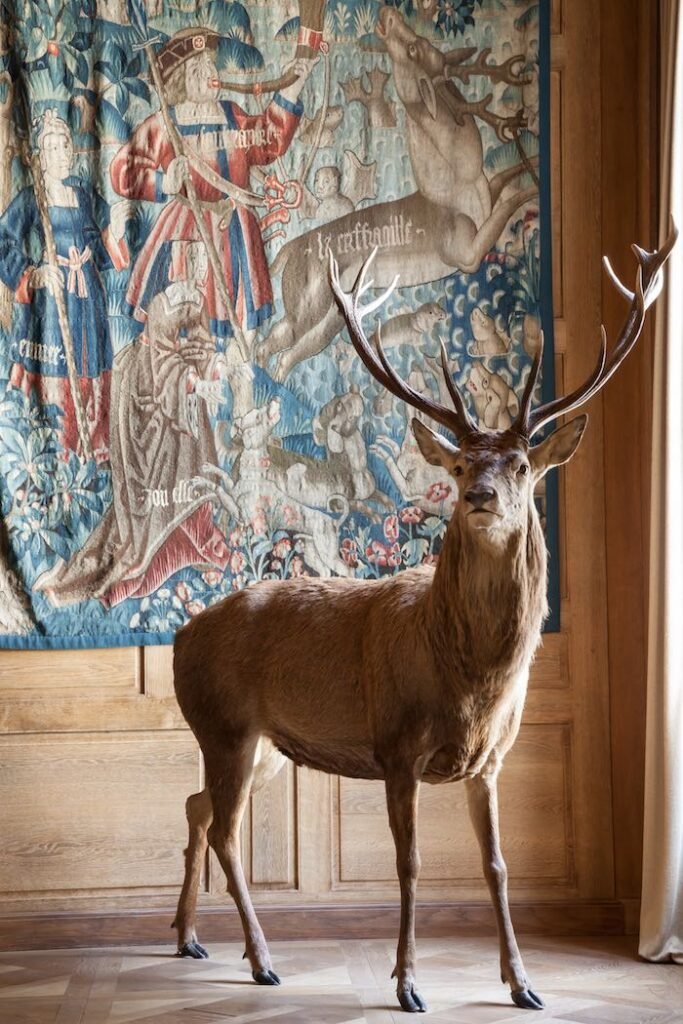
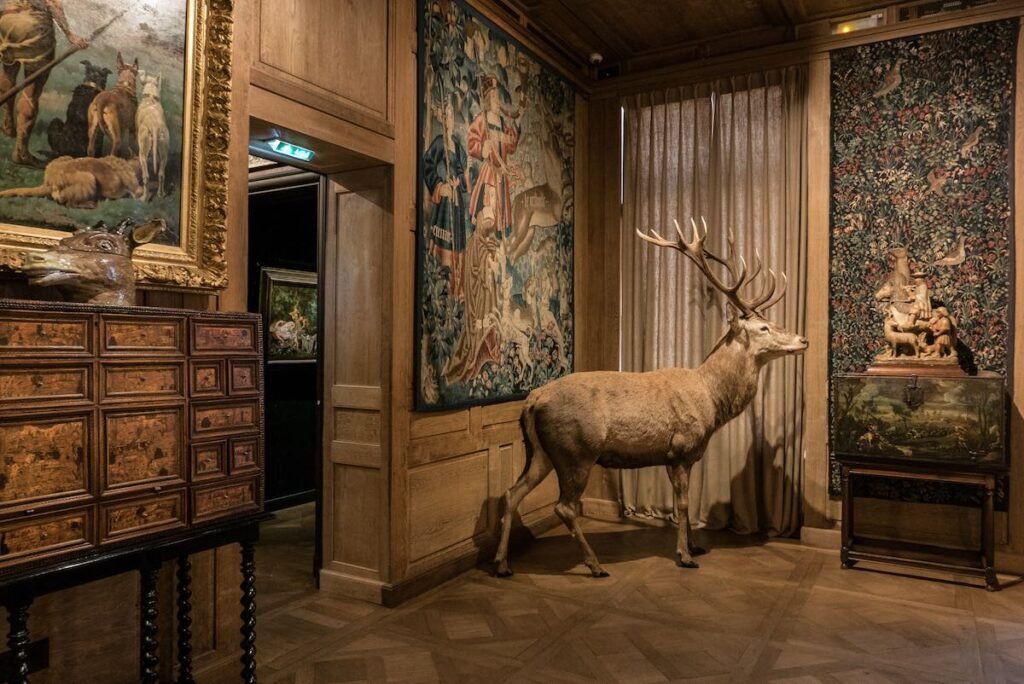
Sala dopo sala diventa evidente che gli animali qui non sono semplicemente esposti, ma continuano ad abitare gli ambienti: un cervo emerge dall’ombra di una boiserie, un lupo interrompe la prospettiva di un corridoio, un gufo si è appollaiato su una biblioteca. La tassidermia, anziché trasformarli in meri esemplari, produce una condizione più ambigua — non restituisce la vita, ma neppure coincide con la morte — mantenendo il corpo in una soglia dove continua a esercitare il proprio effetto.
È forse questa ambiguità a rendere il museo così insolito: lo sguardo perde la sicurezza abituale del visitatore che osserva degli oggetti, e si incrina. Ogni animale sembra sottrarsi a ogni classificazione per riacquistare una propria autonomia — non parla, naturalmente, ma nemmeno tace, e la sua presenza modifica il modo in cui attraversiamo lo spazio.
John Berger ha descritto con precisione la perdita che precede questa inquietudine. In Why Look at Animals? (1977) l’animale, un tempo al centro dell’esperienza umana, viene progressivamente allontanato e ridotto a spettacolo: resta ciò che guardiamo, mentre il fatto che possa guardarci diventa irrilevante. Il Musée de la Chasse et de la Nature non cancella questa frattura — i corpi tassidermizzati ne sono anche la prova — ma la rende percepibile. Restituisce peso a quel secondo sguardo. Non la reciprocità intatta di un mondo perduto, piuttosto il disagio di accorgerci che l’animale non ha mai smesso di occupare l’altra estremità della relazione.
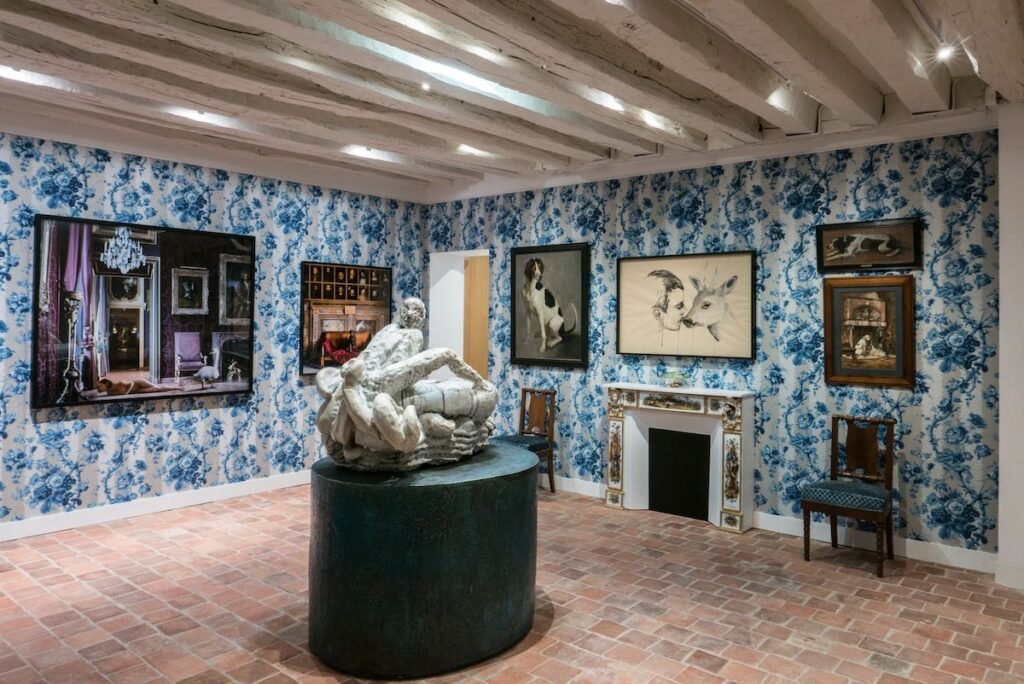
L’impressione è amplificata dal dialogo fra collezioni storiche e interventi contemporanei. Le opere non oppongono antico e nuovo: prolungano la storia del luogo, la deviano, la costringono a produrre nuove domande. Il Seicento dell’hôtel particulier, le tradizioni venatorie, le Wunderkammern e la sensibilità ecologica contemporanea convivono senza che una temporalità prevalga sull’altra. Il passato non viene conservato: continua ad agire.
Ed è forse proprio qui che il museo incontra il tempo dell’altro. Perché l’altro non coincide soltanto con l’animale: è anche il passato, quando non si limita a essere memoria e agisce ancora sul presente. Ogni sala ci ricorda che esistono tempi che non trascorrono semplicemente, ma rimangono sospesi, pronti a riemergere ogni volta che uno sguardo accetta di rallentare abbastanza da riconoscerli.
La trasformazione decisiva prende avvio alla fine degli anni Novanta, con la direzione di Claude d’Anthenaise: nelle stesse sale in cui i trofei tacciono da decenni, l’istituzione smette di interrogarsi soltanto sulla propria collezione e comincia a chiedersi quale possa essere, nel presente, il significato di un museo dedicato alla caccia. La risposta non sta nell’aggiornare le didascalie, ma nel ridefinire radicalmente la domanda: assumere la caccia come occasione per riflettere sulla tensione, mai risolta, fra natura e cultura, desiderio di possesso e riconoscimento dell’alterità.
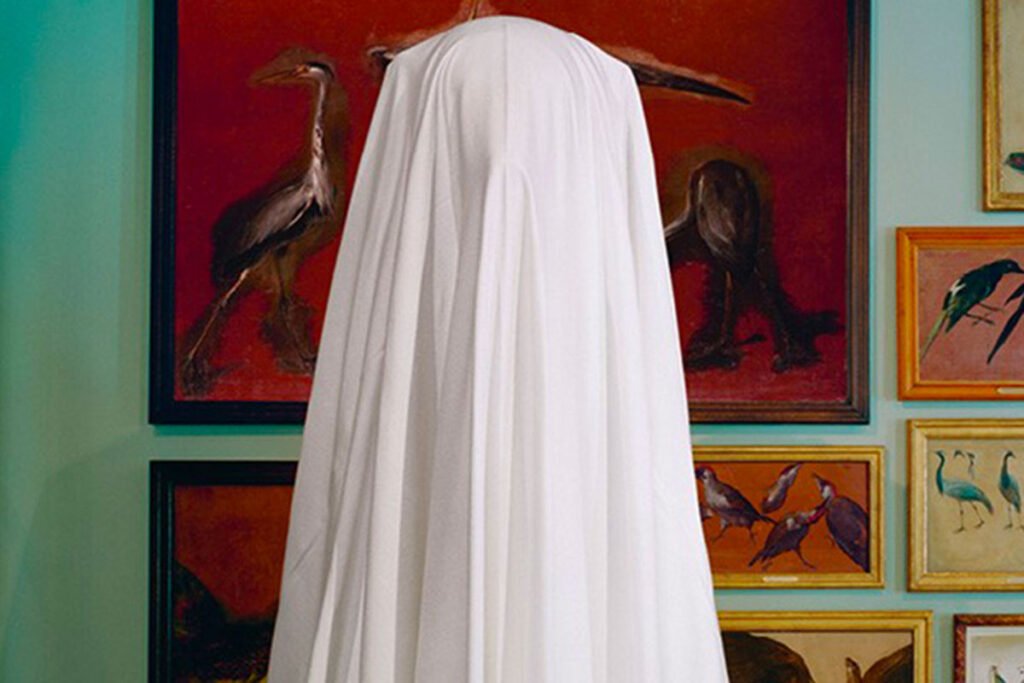
In L’aperto. L’uomo e l’animale (2002), Giorgio Agamben ha chiamato «macchina antropologica» il dispositivo con cui il pensiero occidentale produce l’umano separandolo incessantemente dall’animale. Non si tratta di una frontiera già data, ma di un confine che deve essere ogni volta costruito, sorvegliato, rimesso in funzione. Il museo espone anche questa macchina: nelle classificazioni, nelle armi, nei trofei, nella distinzione fra chi dispone e chi viene disposto. L’arte contemporanea non risolve la separazione. La interrompe per qualche istante, mostrando quanto lavoro sia necessario per continuare a chiamarci soltanto umani.
È da questa rifondazione teorica che nasce l’apertura all’arte contemporanea — non come concessione all’attualità né come strategia per attrarre nuovi pubblici, ma perché d’Anthenaise comprende che sarebbe impossibile interrogare questioni ancora vive affidandosi solo alle testimonianze del passato. Se il museo vuole continuare a produrre pensiero, deve lasciare che il presente entri nelle sue stanze.
A partire dal 1999 vengono così invitati i primi artisti contemporanei, mentre il grande riallestimento concluso nel 2007 rende questo dialogo parte integrante dell’identità del museo. Le opere non occupano uno spazio separato né interrompono il percorso storico: si insinuano fra boiserie seicentesche, dipinti, armi, animali tassidermizzati e oggetti di arti decorative, modificando impercettibilmente il modo in cui l’intera collezione viene percepita.
È proprio questa convivenza a rendere il museo un caso quasi unico: l’arte contemporanea non arriva per spiegare il passato, ma per impedirgli di diventare definitivo. Ogni nuovo intervento riapre domande che sembravano archiviate, ricolloca gli animali al centro dello sguardo e dialoga con quelli che lo hanno preceduto, interrogandoli e lasciandosi a sua volta interrogare.
La storia degli interventi contemporanei non procede in linea retta. Ogni artista riprende una domanda rimasta aperta, formando una costellazione nella quale lo sguardo, la classificazione, la foresta e la carne continuano a richiamarsi.
Il gesto iniziale appartiene a Gloria Friedmann. Con Numéro Vert (1999), il primo intervento contemporaneo voluto da Claude d’Anthenaise, l’artista porta nel museo la tensione che attraverserà tutto ciò che verrà dopo: natura e artificio, umano e animale, ordine e disordine non sono termini pacificati, ma forze che si separano e tornano a confondersi. La Nuit de Diane (2007) di Jan Fabre rende quella tensione uno sguardo: nel Cabinet de Diane sei gufi rivestiti di piume, con occhi umani, osservano il visitatore. Non sappiamo più da quale parte si trovi l’animale.
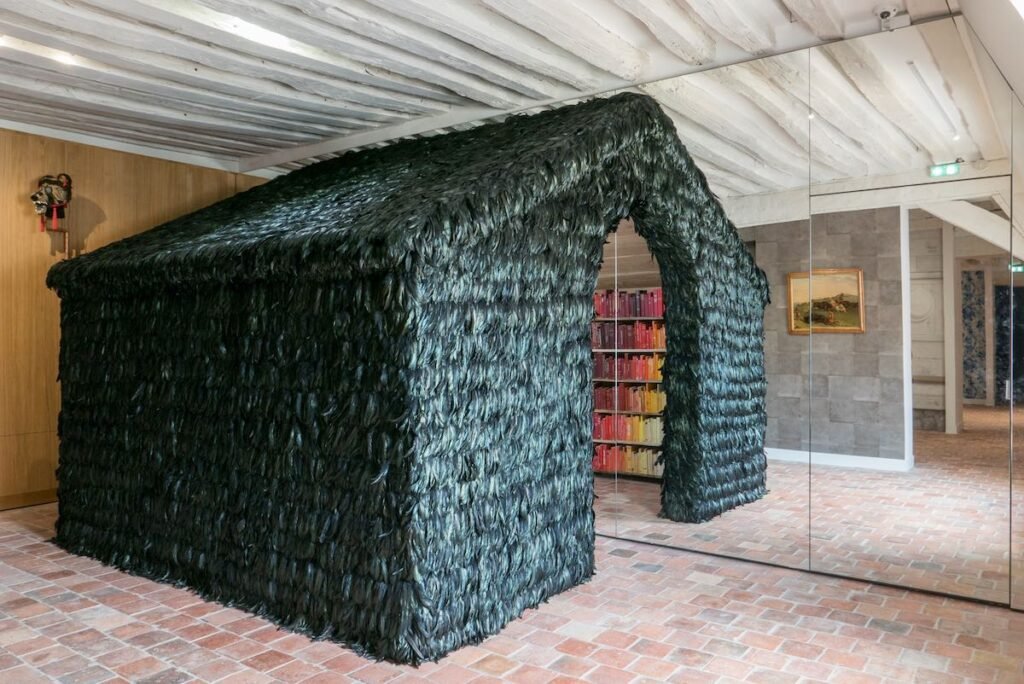
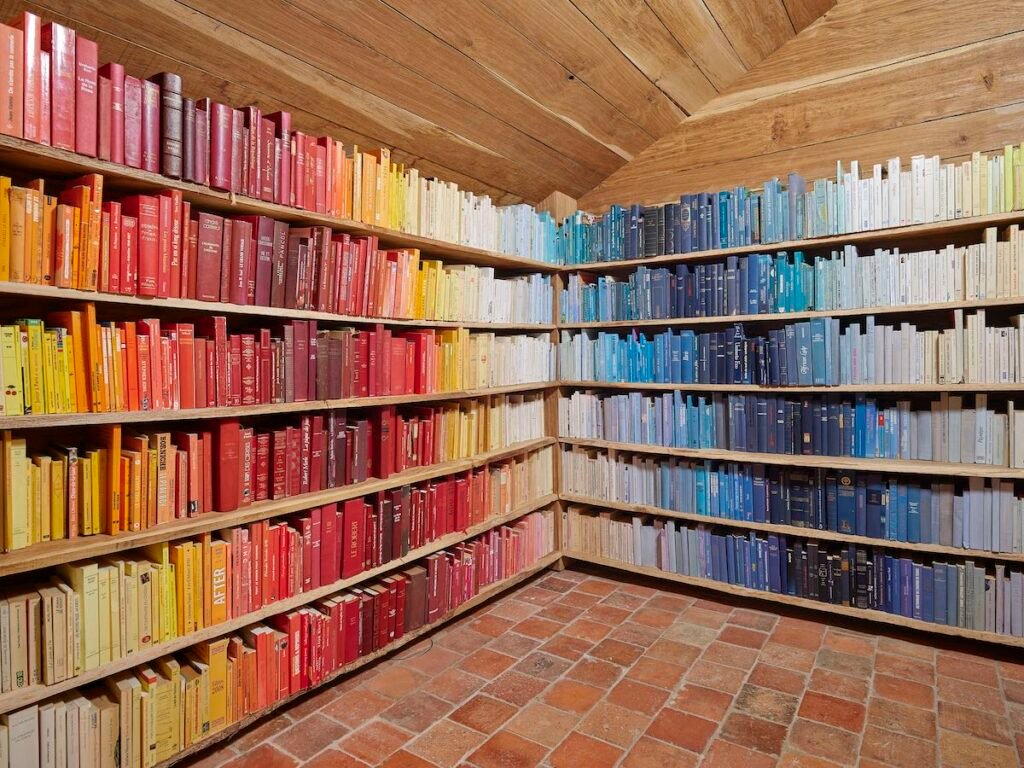
Nello stesso periodo Mark Dion costruisce Cabane Sommer (2006), omaggio a François e Jacqueline Sommer e insieme parodia affettuosa dei sistemi occidentali di conoscenza. Classificare significa scegliere, includere, escludere. La natura descritta dal museo appare per ciò che è sempre stata: già organizzata dallo sguardo umano.
È su questa incrinatura che si innesta Walton Ford(15 settembre 2015 – 28 febbraio 2016). Le sue grandi carte ad acquerello e gouache hanno la precisione delle tavole zoologiche ottocentesche, ma la misura è diventata eccessiva, la scena troppo intensa per restare scientifica. La mostra, prima personale dell’artista in Francia, riuniva una ventina di opere, dieci realizzate appositamente. Tigri, elefanti, scimmie, rinoceronti e uccelli portano dentro l’immagine la violenza delle storie in cui sono stati classificati. Le tassonomie di Dion sembrano qui prendere vita e cominciare a ribellarsi; la distanza descritta da Berger si trasforma in una superficie dipinta che non accetta più di essere innocente.
La caccia ritorna poi come metodo del vedere.
In Sophie Calle et son invitée Serena Carone (10 ottobre 2017 – 11 febbraio 2018), Calle segue tracce, tratta l’amore come un inseguimento e l’assenza come una prova materiale; Serena Carone le affianca un bestiario di oggetti meravigliosi e inquieti. Il museo sembra ricordare qualcosa che non gli è mai accaduto.
In Vânătorul de imagini di Mircea Cantor (15 gennaio – 31 marzo 2019), il cacciatore diventa invece un cacciatore d’immagini. Un’aquila insegue un drone in Aquila non capit muscas; un lupo e una cerva condividono il white cube di Deeparture. Film, oggetti popolari del Musée du Paysan Roumain e opere di artisti rumeni compongono una processione in cui predatori, prede e macchine si scambiano continuamente la posizione. Calle insegue una vita; Cantor segue il punto nel quale l’umano fabbrica la propria differenza.
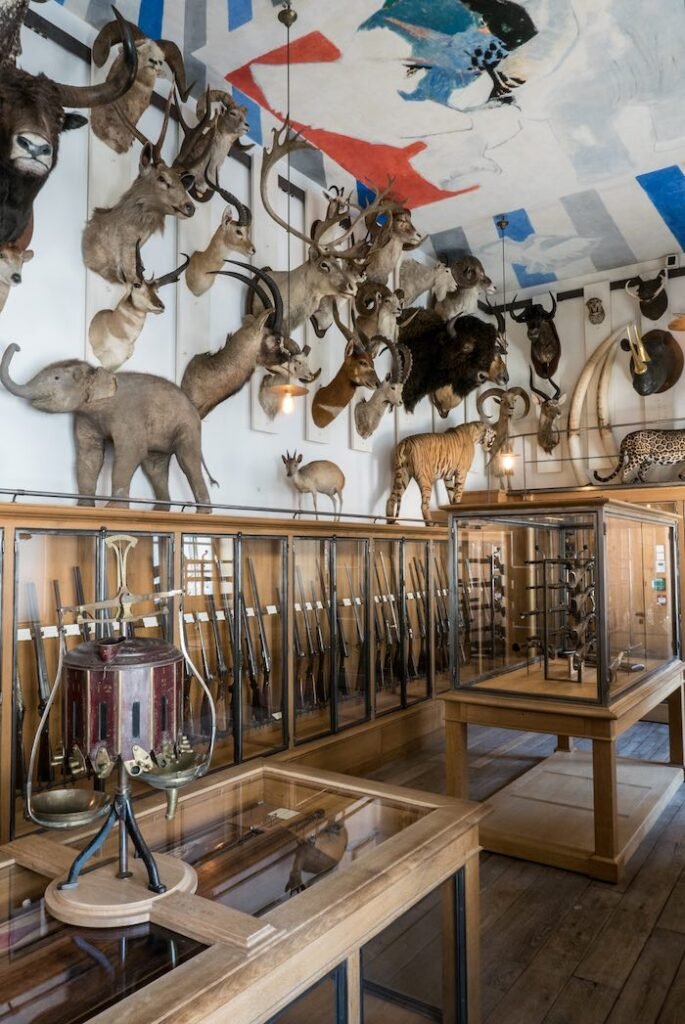
Un’ulteriore svolta si produce con Théo Mercier e la mostra Every Stone Should Cry (23 aprile – 30 giugno 2019). Da sempre interessato alla trasformazione della materia e alla biografia nascosta degli oggetti, l’artista francese introduce nel museo un universo fatto di frammenti, pietre, reliquie e forme sospese fra archeologia e invenzione. Nulla appare definitivamente stabile. Ciò che sembra appartenere al passato continua a modificarsi, mentre ciò che appare contemporaneo assume improvvisamente il carattere di un reperto. Le opere instaurano un dialogo sottile con l’architettura dell’hôtel particulier e con le collezioni permanenti, fino a rendere incerta la distinzione fra ciò che è stato ritrovato e ciò che è stato immaginato. Il museo non si presenta più come il luogo in cui gli oggetti vengono sottratti al tempo, ma come uno spazio nel quale continuano a cambiare significato. Ogni frammento sembra custodire una memoria incompleta, ogni pietra conserva l’eco di una storia che non può più essere ricostruita interamente. È proprio questa condizione di instabilità a interessare Mercier: non l’oggetto in sé, ma la sua capacità di suggerire che ogni forma è sempre il risultato provvisorio di una trasformazione più ampia.
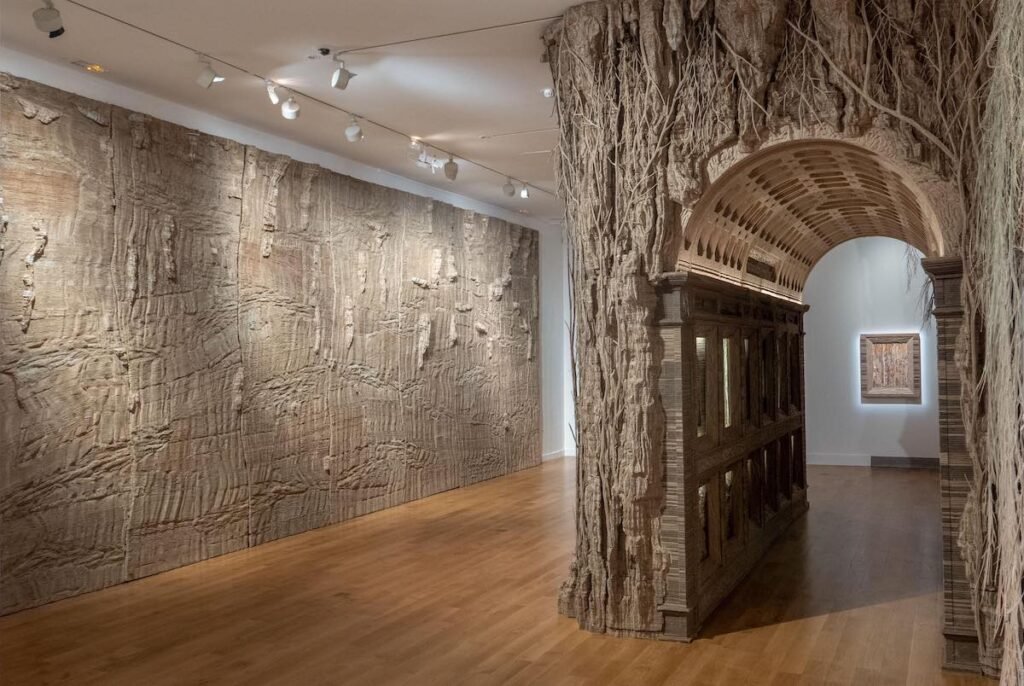
Anche la foresta passa da un’opera all’altra senza restare la stessa. Era già implicita negli equilibri minacciati di Friedmann; con Eva Jospin e Galleria (16 novembre 2021 – 20 marzo 2022) diventa un ambiente da attraversare. Il cartone costruisce un folto insieme vegetale e architettonico, con nicchie e plinti simili a uno studiolo rinascimentale: un paesaggio povero nella materia, inesauribile nella profondità.
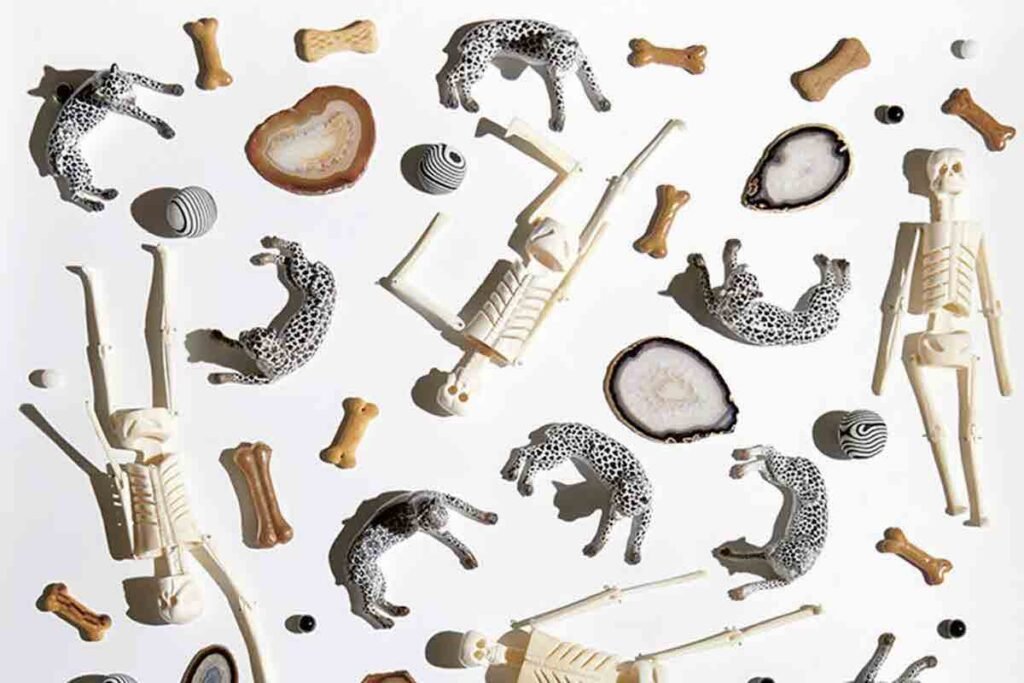
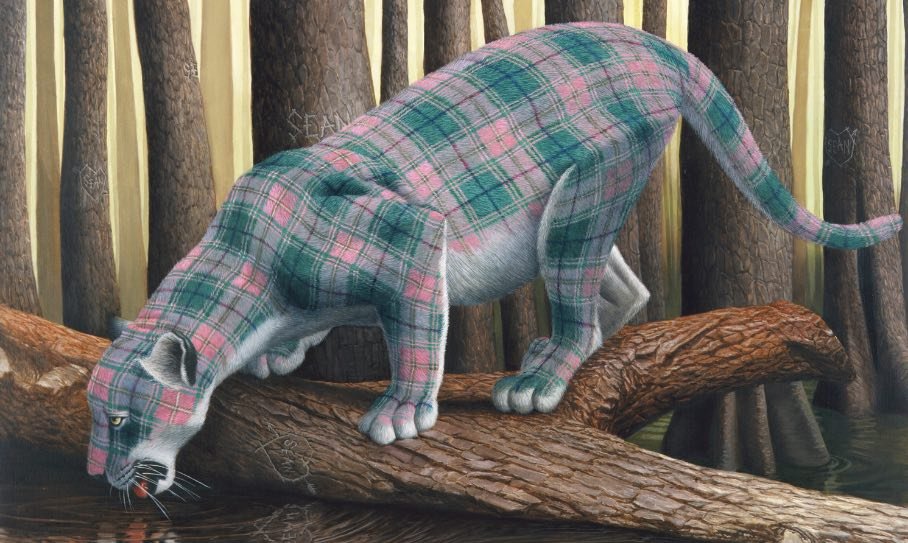
In Animal Kingdom (17 ottobre 2023 – 10 marzo 2024), Sean Landers riporta nella foresta l’animale, ma gli affida il compito ambiguo dell’autoritratto. Giaguari in tartan, leoni e scimmie dal pelame simile al legno incontrano Chardin, Oudry, Desportes e i corpi tassidermizzati. Gli alberi recano il nome dell’artista; le bestie portano la sua vulnerabilità. Il bosco non è più l’altrove dell’umano. È il luogo in cui l’umano dissemina i propri segni e poi finge di non riconoscerli. Ciò che era sguardo e classificazione diventa infine materia.
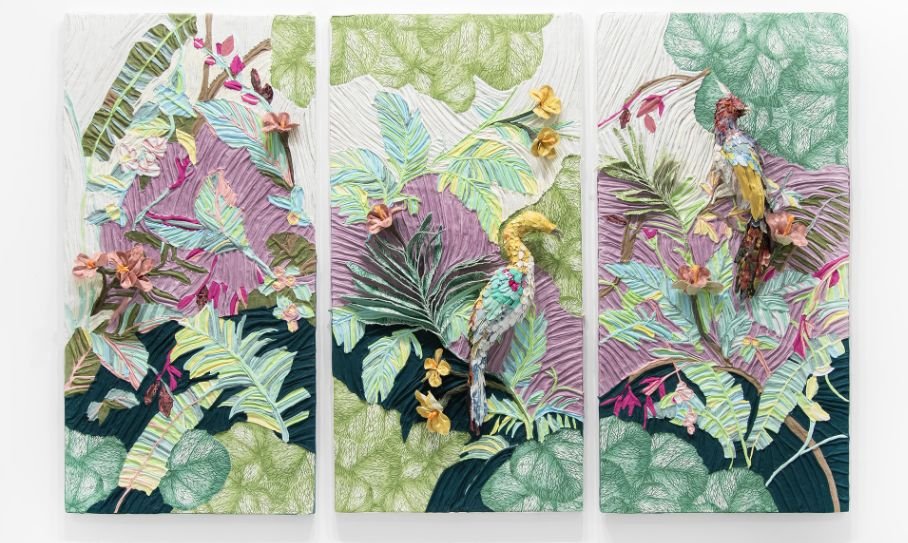
Con Tamara Kostianovsky e La Chair du monde (23 aprile – 3 novembre 2024), abiti usati e tessuti scartati si trasformano in carcasse, ceppi, fiori e uccelli esotici. Da vicino conservano la memoria dei corpi che li hanno indossati; da lontano tornano alla vegetazione. La carcassa diventa una matrice nella quale la vita può ricominciare. Gli ibridi di Fabre, le classificazioni di Dion e il bosco di Jospin convergono qui in una sola materia che non accetta di appartenere interamente all’umano, all’animale o al vegetale. La morte perde la propria fermezza. Diventa passaggio.
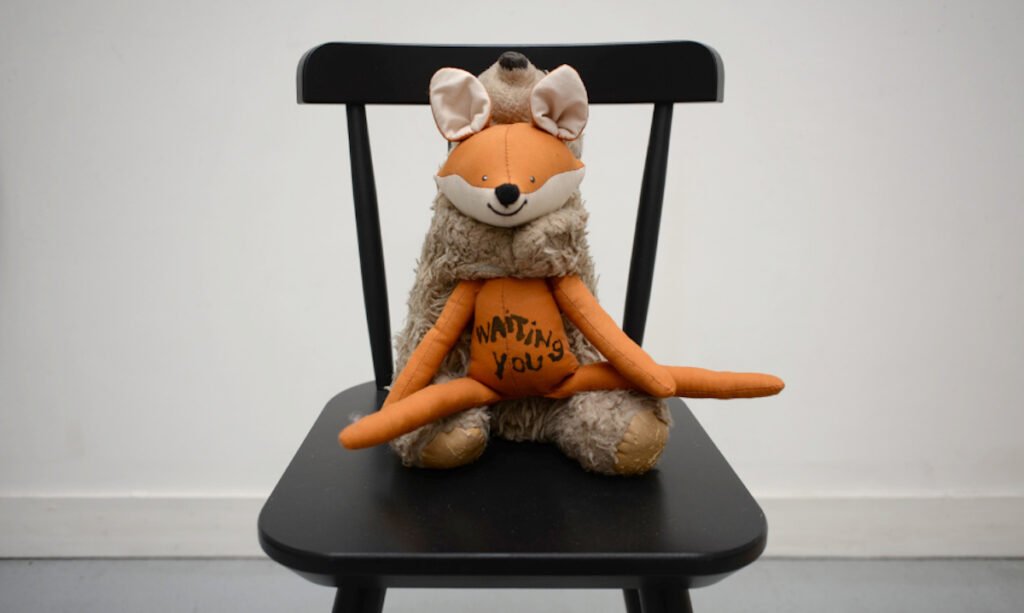
L’attuale mostra di Annette Messager, Une hirondelle ne fait pas le printemps (14 aprile – 20 settembre 2026), raccoglie questi fili senza chiuderli. Più di ottanta opere occupano una quindicina di sale: uccelli, peluche, reti, tessuti, armi molli, corpi smembrati e figure ibride si posano sui mobili, pendono dalle pareti, si confondono con i trofei. Gli occhi umani dei gufi di Fabre ritornano nelle creature che ci somigliano e ci parodiano; la violenza trattenuta nelle immagini di Ford riaffiora nei corpi fragili; l’inseguimento di Calle e Cantor passa dentro proverbi e formule linguistiche. Messager mostra che anche la lingua è una macchina antropologica: chiama l’animale per dire l’umano, lo addomestica in una metafora e insieme ne conserva l’irriducibilità.
Le sue opere non arrivano come ospiti disciplinati. Il museo non contiene più la mostra: ne viene attraversato. Davanti a questo bestiario il familiare si incrina appena, ma è sufficiente. Dallo sguardo e dalla distanza di John Berger alla nudità e all’alterità di Jacques Derrida, dalla macchina antropologica di Giorgio Agamben alle specie compagne di Donna Haraway, fino al silenzio animale di Élisabeth de Fontenay e alla reciprocità delle risposte di Vinciane Despret, si delinea una costellazione teorica. Non si tratta soltanto di chiedere perché guardiamo gli animali, ma quale idea dell’umano produciamo mentre continuiamo a separarli da noi. Il Musée de la Chasse et de la Nature non offre una risposta. Mantiene aperta la distanza fra le specie e ci obbliga a riconoscerla come una costruzione.
È questa la lezione più profonda del museo: non il ricordo di una collezione o di una singola opera, ma quello di una foresta invisibile — non un luogo reale, ma una diversa condizione dello sguardo. Come accade nel bosco, ogni orientamento diventa provvisorio, ogni presenza sembra sottrarsi a ogni definizione, ogni incontro richiede tempo, attenzione e disponibilità a rimanere nell’incertezza. È in questo spazio che l’animale smette di essere una figura da osservare e torna a essere un interlocutore silenzioso.
Forse il tempo dell’altro comincia proprio nel momento in cui smettiamo di credere che lo sguardo appartenga soltanto a noi.
Nel tempo dell’altro è una rubrica che attraversa le presenze dell’arte contemporanea nei musei storici, archeologici, universitari. Luoghi dove il tempo si stratifica e l’opera agisce come incontro, attrito o apparizione. Qui si raccontano innesti e interferenze, ascoltando ciò che resta, ciò che torna, e il silenzio che li separa.
IN THE TIME OF THE OTHER
Who Looks at Whom
At the Musée de la Chasse et de la Nature, Paris
What can a museum of hunting tell us today? Perhaps it can capture the almost imperceptible moment when the gaze changes direction — when the animal ceases to be a presence under observation and becomes someone before whom we might pause. It is at this threshold that a journey through Paris’s Musée de la Chasse et de la Nature begins.
To enter the Musée de la Chasse et de la Nature is to pass through rooms where everything seems always to have been in place: dark wood, boiserie, paintings, suits of armour, antlers, tools, animals. And yet nothing here feels like a self-contained collection. The objects are not displayed to be admired, but to exert a quiet presence — as if they were still waiting for something.
It takes only a few minutes for one thing to become clear: here, the animals are not mere specimens. They go on watching — from a wall, a display case, the shadow of a room. The sensation is subtle, almost physical. The gaze stops being a one-way gesture: to observe means, in the same instant, to feel observed.
This is the museum’s first shift: it concerns humanity’s place in the world, even before hunting itself. For a moment, the illusion of occupying the centre of the scene falls away. The animal is no longer merely the object of representation, or the protagonist of a natural-history tale: it is another form of presence, irreducible to the categories we are used to interpreting it through.
From that point on, time itself changes texture: it no longer follows the chronological order of the collections, or the sequence of the rooms — it stretches, it overlaps. The hôtel particulier in the Marais, with its seventeenth-century rooms, its contemporary art interventions and its objects from different eras, does not offer a linear route, but a form of coexistence: each room holds traces of different times without folding them into a single narrative.
It is precisely this suspension that makes the Musée de la Chasse et de la Nature an unexpected place — not so much because it tells the story of hunting, but because it restores something modernity has gradually forgotten: the possibility of pausing before a form of otherness without reducing it to knowledge, possession or spectacle. Here, hunting appears, before it is ever a gesture, as a discipline of attention: an exercise in waiting, a way of reading the world through the smallest of traces. In this patience of the gaze, the museum continues to preserve what makes it contemporary.
Before it became a museum, this place had already lived several lives. At the heart of the museum stands the Hôtel de Guénégaud, built between 1651 and 1655 by François Mansart for Jean-François de Guénégaud des Brosses, one of the most senior officials of the French monarchy. It is the only hôtel particulier designed by Mansart to survive almost intact: courtyard, garden, proportions, grand staircase. The architecture does not merely accompany the visit. It sets its pace.
It was an aristocratic residence, then a theatre, then a house divided into flats and all but forgotten. Buildings keep a different time from ours: they wait inside the uses that wear them down. In the 1960s, the Hôtel de Guénégaud was saved through the preservation measures championed by André Malraux and the project initiated by François and Jacqueline Sommer. In 1964 the Sommers founded the Fondation de la Maison de la Chasse et de la Nature; in 1967 Malraux opened the museum. A private collection became a public place, yet it kept something of the house about it: the sense that every object had been chosen before it was ever displayed.
In 2007 the museum expanded into the adjoining Hôtel de Mongelas, a building from the early eighteenth century. The extension did not simply add new rooms: it changed the way the collections could speak to one another. The two hôtels particuliers, now connected, kept their separate identities, like two eras forced to share the same present. A second renovation, begun in 2019 and completed with the 2021 reopening, opened up further rooms on the second floor and shifted the museum’s centre of gravity once more, towards biodiversity, ecology and the crisis in the relationship between humans and the living world. The museum describes itself as a maison habitée — an inhabited house. Not a formula, but a way of arranging presences.
At this point, the question is unavoidable: why a museum of hunting?
The answer is not an apology for a practice that today, understandably, provokes controversy. Since its founding, the Musée de la Chasse et de la Nature has declared a different ambition: not to present hunting as either a technique or a sport, but to explore the complex relationship that has bound humans to the animal world for millennia.
For most of human history, hunting was not a marginal activity but a condition of existence: it meant learning to read the land, recognise the seasons, interpret the faintest signs — developing forms of attention and knowledge without which survival would have been impossible.
Long before it became a symbol of dominance, hunting was one of the first ways in which humans learned to reckon with something radically other — and it presupposed a second, often forgotten protagonist: the forest. Before it was a place of pursuit, the woods were a space of uncertainty, an environment in which humans could not simply look: they had to orient themselves without mastering what surrounded them, trusting hearing and smell more than sight. For centuries the forest was the first site of otherness, which is also why it still inhabits the entire museum, without ever announcing itself.
It is this deep anthropological history that the museum seeks to convey: weapons, paintings, sculptures, taxidermied animals, ritual objects and contemporary works are presented not as records of a tradition to be preserved, but as fragments of a larger story — that of the never-settled relationship between culture and nature, desire and fear, proximity and distance.
Seen this way, hunting stops being the museum’s real subject and becomes instead the vantage point from which to ask a deeper question: what happens when a human being encounters another form of life? And what does our gaze at the animal reveal about us, when the animal seems to return it?
Room after room, one thing grows clear: the animals here are not simply on display, but continue to inhabit the spaces. A stag emerges from the shadow of a wood panel, a wolf interrupts the perspective of a corridor, an owl perches over a bookcase. Rather than reducing them to mere specimens, taxidermy creates a more ambiguous condition — it does not restore life, but nor does it coincide with death — holding the body at a threshold where it continues to exert its presence.
Perhaps it is this ambiguity that makes the museum so unusual: the gaze loses its habitual assurance and begins to fracture. Every animal seems to slip free of classification, to reclaim a kind of autonomy — it does not speak, of course, but nor is it silent, and its presence changes the way we move through the space.
John Berger described with precision the loss that precedes this unease. In Why Look at Animals? (1977), the animal — once central to human experience — is progressively pushed aside and reduced to spectacle: it remains what we look at, while the fact that it might look back becomes irrelevant. The Musée de la Chasse et de la Nature does not erase this rupture — the taxidermied bodies are themselves proof of it — but it makes it perceptible. It restores weight to that second gaze. Not the intact reciprocity of a lost world, but the unease of realising that the animal never stopped occupying the other end of the relationship.
This impression is heightened by the dialogue between historical collections and contemporary interventions. The works do not set old against new: they extend the history of the place, divert it, force it to produce new questions. The seventeenth-century hôtel particulier, hunting traditions, Wunderkammern and a contemporary ecological sensibility coexist without any one period gaining the upper hand. The past is not preserved here: it goes on acting.
Perhaps this is exactly where the museum meets the time of the other. Because the other does not coincide only with the animal: it is also the past, whenever it refuses to be mere memory and still acts upon the present. Every room reminds us that some kinds of time do not simply pass — they remain suspended, ready to resurface whenever a gaze is willing to slow down enough to recognise them.
The decisive shift begins in the late 1990s, under the direction of Claude d’Anthenaise: in the same rooms where the trophies have stood silent for decades, the institution turns its attention beyond its own collection and begins to ask what a museum devoted to hunting might mean today. The answer does not lie in updating the wall labels, but in radically redefining the question: taking hunting as an occasion to reflect on the unresolved tension between nature and culture, between the desire to possess and the recognition of otherness.

In The Open: Man and Animal (2002), Giorgio Agamben named the ‘anthropological machine’ — the device by which Western thought produces the human by endlessly separating it from the animal. This is not a border given once and for all, but one that has to be built, patrolled and reactivated again and again. The museum puts this machine on display too: in its classifications, its weapons, its trophies, in the distinction between those who arrange and those who are arranged. Contemporary art does not resolve the separation. It interrupts it for a moment, showing how much work is required to continue calling ourselves simply human.
It is from this theoretical reorientation that the museum’s turn towards contemporary art emerges — not as a concession to the present moment, nor as a strategy to attract new audiences, but because d’Anthenaise understood that it would be impossible to interrogate questions that remain alive by relying on the testimony of the past alone. If the museum wants to keep producing thought, it has to let the present into its rooms.
Beginning in 1999, the museum invited its first contemporary artists; the major refurbishment completed in 2007 made this dialogue an integral part of its identity. The works do not occupy a separate space, nor do they interrupt the historical route: they slip in among seventeenth-century panelling, paintings, weapons, taxidermied animals and decorative objects, imperceptibly changing how the whole collection is perceived.
It is precisely this coexistence that makes the museum almost unique: contemporary art does not arrive to explain the past, but to stop it from becoming final. Every new intervention reopens questions that seemed filed away, puts the animals back at the centre of the gaze, and enters into dialogue with what came before it — questioning it, and allowing itself to be questioned in turn.
The history of these contemporary interventions does not run in a straight line. Each artist picks up a question left open, forming a constellation in which the gaze, classification, the forest and flesh go on calling out to one another.
The initial gesture belongs to Gloria Friedmann. With Numéro Vert (1999), the first contemporary intervention commissioned by Claude d’Anthenaise, the artist brought into the museum the tension that would run through everything to come: nature and artifice, human and animal, order and disorder are not settled terms, but forces that pull apart and merge again.
Jan Fabre’s La Nuit de Diane (2007) turns that tension into a gaze: in the Cabinet de Diane, six owls covered in feathers, fitted with human eyes, watch the visitor. We no longer know which side the animal is on. Around the same time, Mark Dion built Cabane Sommer (2006), a tribute to François and Jacqueline Sommer and, at once, an affectionate parody of Western systems of knowledge. To classify is to choose, to include, to exclude. The nature the museum describes turns out to be what it always was: already organised by the human gaze.
Walton Ford’s work takes root in this fissure (15 September 2015 – 28 February 2016). His large works on paper, in watercolour and gouache, have the precision of nineteenth-century zoological plates, but the scale has become excessive, the scene too intense to remain scientific. The exhibition, the artist’s first solo show in France, brought together some twenty works, ten of them made specially for the occasion. Tigers, elephants, monkeys, rhinoceroses and birds carry into the image the violence of the histories in which they were classified. Dion’s taxonomies seem here to come to life and start to rebel; the distance described by Berger turns into a painted surface that can no longer claim innocence.
Hunting then returns as a method of seeing. In Sophie Calle et son invitée Serena Carone (10 October 2017 – 11 February 2018), Calle follows traces, treats love as a pursuit and absence as material evidence; Serena Carone places alongside Calle’s work a bestiary of wondrous, unsettling objects. The museum seems to remember something that never happened to it.
In Mircea Cantor’s Vânătorul de imagini (15 January – 31 March 2019), the hunter becomes instead a hunter of images. An eagle chases a drone in Aquila non capit muscas; a wolf and a doe share the white cube of Deeparture. Film, folk objects from the Musée du Paysan Roumain and works by Romanian artists form a procession in which predator, prey and machine continually swap places. Calle pursues a life; Cantor pursues the point at which the human manufactures its own difference.
A further turn comes with Théo Mercier and the exhibition Every Stone Should Cry (23 April – 30 June 2019). Long interested in the transformation of matter and the hidden biography of objects, the French artist introduces into the museum a universe of fragments, stones, relics and forms suspended between archaeology and invention. Nothing appears finally fixed. What seems to belong to the past keeps changing, while what looks contemporary suddenly takes on the character of an artefact. The works set up a subtle dialogue with the architecture of the hôtel particulier and with the permanent collections, to the point of blurring the line between what has been found and what has been imagined. The museum no longer presents itself as a place where objects are removed from time, but as a space in which they go on changing meaning. Every fragment seems to hold an incomplete memory; every stone keeps the echo of a story that can no longer be fully reconstructed. It is precisely this condition of instability that interests Mercier: not the object itself, but its capacity to suggest that every form is always the provisional result of a larger transformation.
The forest, too, moves from one work to the next without staying the same. It was already implicit in Friedmann’s precarious balances; with Eva Jospin’s Galleria (16 November 2021 – 20 March 2022) it is transformed into an environment to walk through. Using cardboard, Jospin constructs a dense mass of vegetation and architecture, with niches and plinths recalling a Renaissance studiolo — a landscape made from a humble material, yet inexhaustible in depth.
In Animal Kingdom (17 October 2023 – 10 March 2024), Sean Landers brings the animal back into the forest, but hands it the ambiguous task of self-portraiture. Tartan-clad jaguars, lions and monkeys with wood-grained fur meet Chardin, Oudry, Desportes and the taxidermied bodies. The trees carry the artist’s name; the beasts carry his vulnerability. The woods are no longer an elsewhere for the human. They are the place where the human scatters its own signs and then pretends not to recognise them.
What was once gaze and classification finally becomes matter. With Tamara Kostianovsky’s La Chair du monde (23 April – 3 November 2024), worn clothes and discarded fabric are transformed into carcasses, tree stumps, flowers and exotic birds. Up close, they keep the memory of the bodies that once wore them; from a distance, they return to vegetation. The carcass becomes a matrix in which life can begin again. Fabre’s hybrids, Dion’s classifications and Jospin’s woods converge here into a single matter that refuses to belong entirely to the human, the animal or the plant. Death loses its finality. It becomes passage.
The museum’s current exhibition, Annette Messager’s Une hirondelle ne fait pas le printemps (14 April – 20 September 2026), gathers up these threads without tying them off. More than eighty works occupy some fifteen rooms: birds, soft toys, netting, fabric, soft weapons, dismembered bodies and hybrid figures perch on furniture, hang from the walls, blur into the trophies. The human eyes of Fabre’s owls return in creatures that resemble and parody us; the violence held inside Ford’s images resurfaces in fragile bodies; the pursuits of Calle and Cantor pass into proverbs and turns of phrase. Messager shows that language, too, is an anthropological machine: it calls on the animal to speak of the human, domesticates it into a metaphor, and at the same time preserves its irreducibility.
Her works do not arrive as well-behaved guests. The museum no longer contains the exhibition: the exhibition runs through it. Faced with this bestiary, the familiar cracks — only slightly, but enough. From Berger’s gaze and distance to the nakedness and otherness of Jacques Derrida, from Giorgio Agamben’s anthropological machine to Donna Haraway’s companion species, on to the animal silence of Élisabeth de Fontenay and the reciprocity of response explored by Vinciane Despret, a theoretical constellation takes shape. This is not only a matter of asking why we look at animals, but of asking what idea of the human we produce by continuing to separate them from us. The Musée de la Chasse et de la Nature offers no answer. It holds open the distance between species, and forces us to recognise it as a construction.
This is the museum’s deepest lesson: not the memory of a collection or a single work, but that of an invisible forest — not a real place, but a different condition of the gaze. As in the woods, every sense of direction becomes provisional, every presence seems to slip free of definition, every encounter demands time, attention, and a willingness to remain with uncertainty. It is in this space that the animal stops being a figure to be observed and becomes, once again, a silent interlocutor.
Perhaps the time of the other begins at the precise moment when we cease to believe that the gaze belongs to us alone.