English text below —
Ciò che il tempo non separa
Kolumba, Colonia
Esistono luoghi in cui il tempo passa.
E altri in cui non riesce ad andarsene.
Kolumba appartiene a questi ultimi.
Entrando, non si ha subito l’impressione di visitare una collezione. Si avverte piuttosto di essere entrati in qualcosa che era già cominciato: una storia della quale vediamo le conseguenze, ma non il principio. Sotto i nostri passi ci sono case romane, una chiesa medievale, le macerie della guerra. Sopra, una luce pallida attraversa i mattoni e cambia lentamente posizione. Le opere aspettano senza spiegarsi.
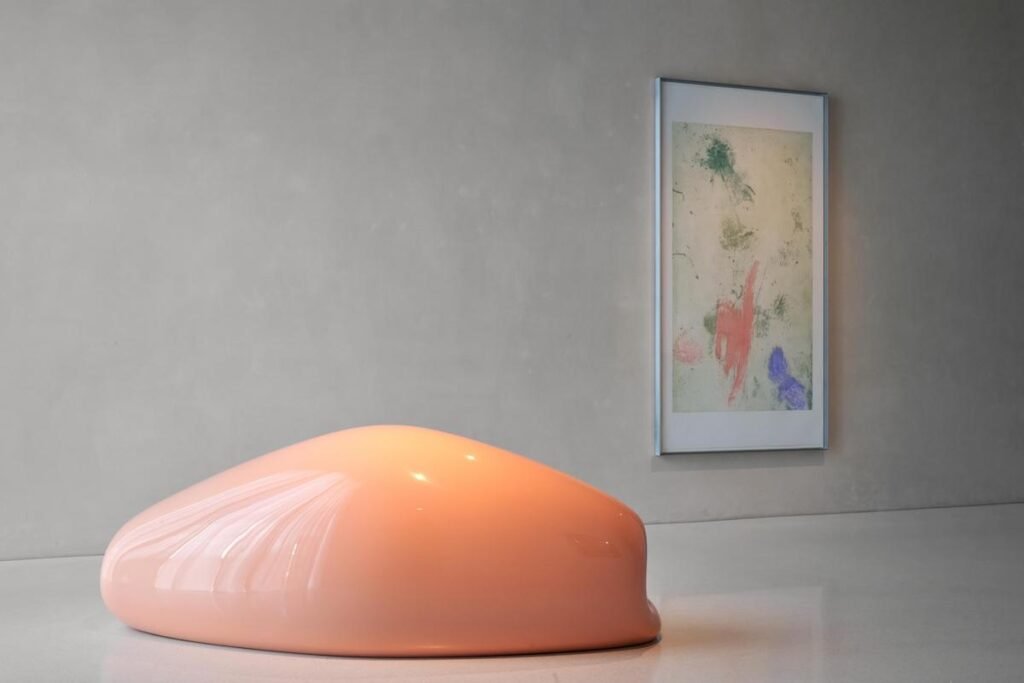
Qui il passato non è alle nostre spalle. È sotto il pavimento, dentro i muri, nell’aria che circola fra una pietra annerita e una scultura contemporanea. Ogni cosa proviene da un’epoca diversa, eppure nessuna sembra interamente consegnata al proprio tempo. Una Madonna tardogotica, Portable Ocean (1969) di Paul Thek, un dipinto di Joseph Marioni, una croce medievale: il museo non chiede che cosa abbiano in comune. Le mette abbastanza vicine perché la domanda cominci a riguardare noi.
Forse è questa la sua forma più rara. Kolumba non conserva il tempo come se fosse qualcosa di concluso. Gli permette di continuare a produrre presenza.
II. Il luogo dove il tempo non è stato ricostruito
Ogni museo nasce da una serie di decisioni: che cosa conservare, che cosa mostrare, che cosa lasciare nell’ombra. Kolumba nasce anche da una decisione più difficile: non nascondere ciò che non poteva essere ricomposto.
Per comprenderlo bisogna tornare nel centro di Colonia, nel punto in cui sorgeva la chiesa di Santa Colomba. Le sue origini risalgono almeno all’età carolingia, ma sotto le fondamenta erano rimaste tracce più antiche: abitazioni romane, murature medievali, resti di edifici che per secoli avevano occupato lo stesso lembo di città. Non una storia disposta in successione, ma molte vite costruite una sopra l’altra.
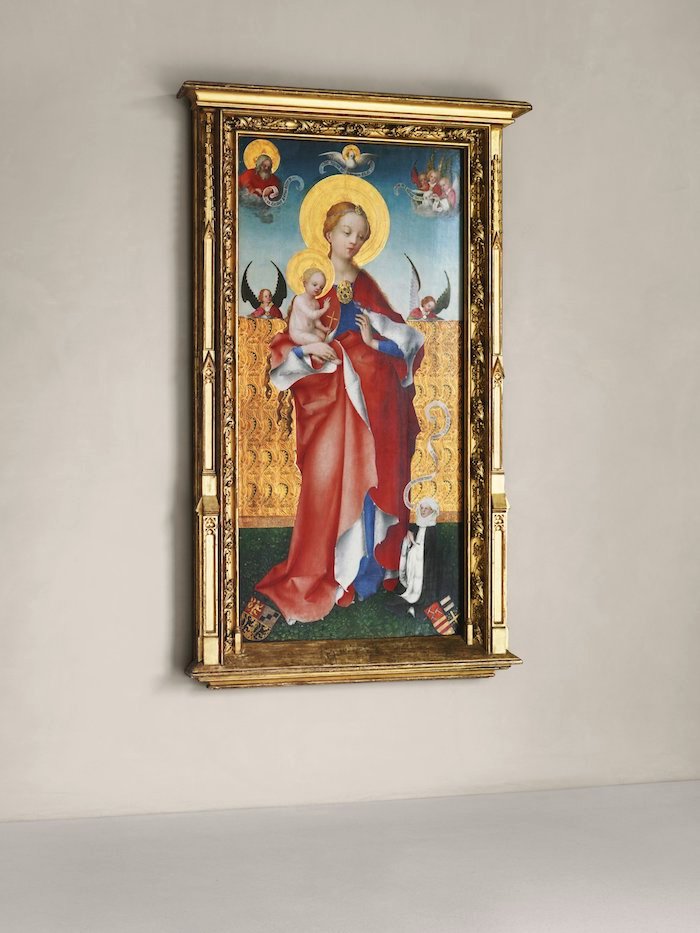
Durante la Seconda guerra mondiale la chiesa fu quasi completamente distrutta. Rimasero parti dei muri esterni, il troncone della torre e, addossata a un pilastro della navata settentrionale, una piccola figura tardogotica della Vergine. Cominciarono a chiamarla Madonna in den Trümmern (fine del XV secolo), la Madonna fra le rovine. I fedeli arrivavano per raccogliersi davanti a quell’immagine. Non era uscita indenne dalla storia: era rimasta dentro ciò che la storia aveva fatto.
Nel 1949 fu posata la prima pietra della cappella progettata dal giovane Gottfried Böhm. Consacrata l’anno seguente, la costruzione accolse la Madonna e incorporò i resti della chiesa distrutta. Böhm non cercò di restituire a Santa Colomba l’aspetto che aveva avuto. Costruì uno spazio nel quale la perdita potesse essere abitata.
È un pensiero architettonico, ma anche una posizione morale. Ricostruire può voler dire riparare; può anche voler dire rendere irriconoscibile la ferita. Qui la ferita non fu monumentalizzata e non fu cancellata. Rimase nel luogo, esposta alla pioggia, alla devozione, al mutare della città.
Quando, negli anni Settanta, gli scavi archeologici riportarono alla luce fondazioni romane e medievali, il terreno divenne ancora più difficile da interpretare. Ogni scoperta spostava indietro l’inizio della storia. Il passato non si lasciava ridurre a una sola origine; affiorava per frammenti e rendeva impossibile decidere quale epoca dovesse prevalere sulle altre.
È qui che Kolumba trova la propria necessità.
Il museo non nasce soltanto dal desiderio di dare una sede alla collezione diocesana. Nasce dalla presenza di cose che non potevano essere divise senza perdere il loro significato: la cappella e la rovina, lo scavo e la città, la devozione e la distruzione, l’opera antica e quella contemporanea.
Anche il contemporaneo, del resto, era arrivato prima dell’edificio. Dal 1993 il museo accostava già l’arte del presente alla collezione storica, senza disporre le opere in una sequenza pacificata. Il concorso del 1997, vinto da Peter Zumthor, non chiedeva soltanto di proteggere le rovine: poneva il problema di come far convivere architettura, opere e memorie del luogo.
La questione era già inscritta nel terreno: come costruire senza dividere ciò che, anche dopo la distruzione, continuava a esistere insieme?
III. Peter Zumthor non costruisce un museo
Il progetto non posa un museo sopra le rovine di Santa Colomba. Ne fa il punto di partenza.
Prima ancora che l’edificio prenda forma, il luogo oppone a ogni soluzione semplice i muri spezzati della chiesa, la cappella di Gottfried Böhm ancora consacrata e in uso, uno scavo archeologico che attraversa duemila anni, una collezione senza unità cronologica, un giardino cresciuto dove un tempo si trovava il cimitero. Ciascun elemento possiede una propria presenza, una necessità specifica. Spostarne uno significherebbe alterare il significato degli altri.
La risposta richiede dieci anni. L’architetto non cerca una forma capace di dominare ciò che ha trovato. Cerca il punto in cui il nuovo edificio possa cominciare senza obbligare il luogo a ricominciare.
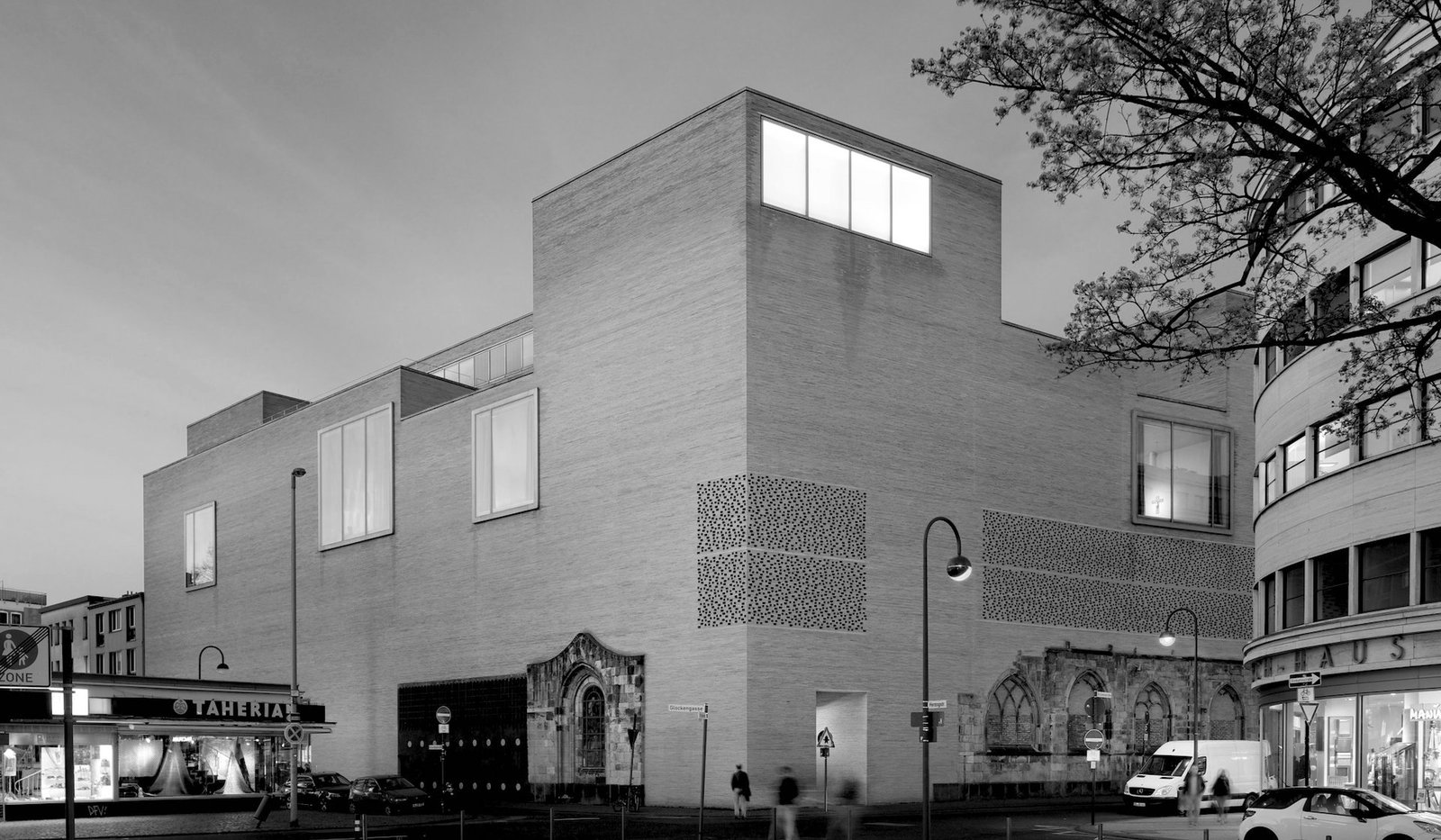
Da fuori, Kolumba appare come un volume compatto di mattoni grigio chiaro. Non mostra immediatamente ciò che contiene. Si solleva nel centro ricostruito di Colonia con una calma quasi anacronistica, interrotta da finestre di dimensioni diverse e da alcune superfici traforate. Potrebbe sembrare un edificio chiuso. Avvicinandosi, però, ci si accorge che la sua materia non è uniforme. Il grigio cambia con il cielo; a volte trattiene la luce, altre volte sembra restituirla. Anche il muro, che dovrebbe separare l’interno dall’esterno, comincia a comportarsi diversamente.
Il mattone fu sviluppato appositamente per Kolumba. È lungo, sottile, cotto in tonalità che oscillano dal grigio caldo all’ocra più pallida. La malta non lo costringe in una superficie perfetta. Fra un elemento e l’altro rimangono minime irregolarità, differenze di spessore, tracce della mano. Il nuovo muro incontra il tufo, il basalto e i mattoni delle rovine senza tentare di imitarli. Sono materie lontane, eppure sembrano riconoscersi.
Può darsi che la continuità non consista nel rendere simili le cose. Consiste nel permettere loro di toccarsi senza perdere la propria differenza.
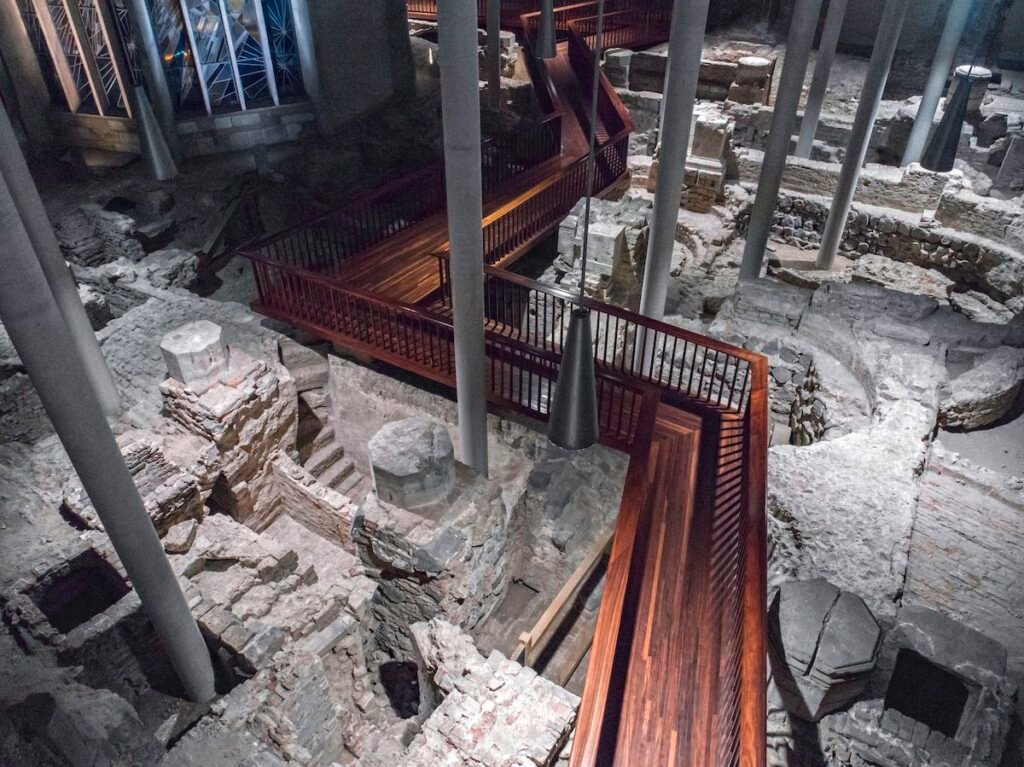
All’interno, questa idea diventa un’esperienza fisica: la grande sala archeologica riunisce i resti romani, le fondazioni della chiesa, le macerie della guerra e la cappella di Böhm, mentre una passerella attraversa lo scavo senza cancellarlo. Fra le rovine scendono le colonne che sostengono il piano superiore, con una cautela quasi corporea; Stefan Kraus le ha paragonate ad aghi che sfiorano il terreno, come se cercassero i pochi punti nei quali è ancora possibile posarsi.
Si cammina sopra ciò che resta, ma non si guarda il passato dall’alto. La distanza è troppo breve. I muri interrotti salgono verso il corpo, la terra rimane vicina, le forme degli edifici scomparsi continuano a determinare il percorso. A tratti non è più chiaro se ci troviamo dentro una chiesa, sotto un museo o nel sottosuolo di una città. Le categorie che normalmente separano questi spazi smettono di essere utili.
Dalle pareti traforate entrano aria, rumori e luce. Queste pareti-filtro non sono finestre né muri pieni. Lasciano passare il giorno in frammenti minuti, come se l’esterno potesse raggiungere le rovine soltanto dopo essere stato scomposto. La luce si muove sulle pietre, scompare, ritorna altrove. Con lei arrivano il vento e i suoni della città: una campana, un motore, alcune voci di cui non si distinguono le parole. L’edificio protegge ciò che contiene, ma non lo sottrae completamente al mondo.
Anche la cappella rimane autonoma. Continua a essere una chiesa, con un proprio ingresso e una vita indipendente da quella del museo. La si può raggiungere per pregare senza visitare una mostra. Kolumba la circonda senza assimilarla. È forse uno dei gesti più radicali del progetto: accettare che nel cuore dell’edificio esista qualcosa che l’edificio non possiede.
Sopra lo scavo si trovano sedici sale. Nessuna ripete esattamente l’altra. Cambiano le proporzioni, l’altezza, la direzione della luce, il rapporto con la città. Alcune sono raccolte; altre si aprono attraverso finestre che occupano quasi un’intera parete. Non esiste un percorso imposto. Le stanze sembrano offrire possibilità diverse di attenzione, come se ogni opera avesse bisogno di una particolare quantità di spazio, di ombra, di vicinanza.
Zumthor ha definito Kolumba un museo d’ombra, destinato a mutare nel corso del giorno e delle stagioni. È un’espressione precisa. Qui l’architettura non produce uno sfondo neutro sul quale le opere possano apparire sempre uguali. La luce di dicembre non è quella di giugno. Un dipinto visto al mattino non occupa la stanza nello stesso modo nel pomeriggio. L’edificio introduce nella visione ciò che molti musei cercano di eliminare: la variazione, l’attesa, la possibilità che un’opera non si conceda immediatamente.
Per questo, definirlo un contenitore sarebbe inesatto. Kolumba interviene nelle relazioni: fra il corpo e il pavimento, fra la luce e un dipinto, fra una rovina e una scultura, fra ciò che viene custodito e ciò che continua a vivere senza appartenere al museo.
L’architettura non ricompone la storia. Le dà una forma nella quale le sue interruzioni possano rimanere percepibili.
IV. Il museo senza cronologia
Nelle sale di Kolumba le date non sono scomparse. Hanno soltanto smesso di dettare l’ordine delle opere.
Un museo cronologico ci insegna a procedere: prima questo, poi quello; una forma genera la successiva, un secolo consegna il proprio problema al secolo seguente. È un modo efficace di dare ordine alla conoscenza. Ma l’ordine, quando diventa troppo sicuro, può farci dimenticare che le opere non restano ferme nel punto della storia al quale le abbiamo assegnate.
I due Reishäuser (1991 e 1992) di Wolfgang Laib, esposti nel 1996 accanto a un ciborio medievale, non diventano oggetti liturgici; il ciborio non viene trasformato in scultura minimalista. Eppure la misura, la custodia, l’offerta, il vuoto interno cominciano a passare dagli uni all’altro. Non come spiegazioni, ma come domande che la materia rivolge al corpo.
Kolumba lavora in questo modo dal 1993, molto prima che il nuovo edificio fosse terminato. Il ciclo Wiederbegegnung mit Unbekanntem (1993–2001) — incontrare di nuovo ciò che non conosciamo — mise Antoni Tàpies, Paul Thek, Joseph Beuys, Antonio Saura e Roman Opalka in rapporto con la collezione storica. Il titolo conteneva già un programma. Rivedere non significava riconoscere. Significava accettare che una cosa familiare potesse essersi resa estranea, e che proprio quell’estraneità la restituisse al presente.
Il museo diocesano aveva ereditato una raccolta discontinua: pittura, scultura, paramenti, manoscritti, oggetti devozionali, frammenti architettonici. Avrebbe potuto correggerne l’eterogeneità attraverso la classificazione, scelse invece di usarla. L’incompletezza divenne un metodo curatoriale e le lacune fra un oggetto e l’altro non furono riempite; furono rese percepibili.
Anche per questo nelle sale le informazioni non precedono l’incontro. Le opere non sono sommerse da testi che dicano al visitatore quale rapporto deve vedere. I dati esistono, raccolti nella guida, ma rimangono disponibili a una certa distanza. Prima viene la presenza: una superficie, un peso, un colore che non riusciamo ancora a nominare. La conoscenza arriva dopo e, quando arriva, non annulla ciò che abbiamo percepito senza sapere.
C’è qualcosa di esigente in questa fiducia. Il visitatore non viene guidato lungo una tesi già conclusa. Deve sostenere l’incertezza di un incontro e decidere quanto a lungo restare. Una stanza può sembrare quasi vuota; due opere possono ignorarsi; una relazione può non prodursi affatto. Kolumba ammette anche questa possibilità. Non ogni vicinanza è una rivelazione.
Ogni anno, nel mese di settembre, la collezione viene riallestita. Non si aggiunge semplicemente una mostra temporanea a un ordinamento permanente: è l’intero museo a cambiare disposizione. Opere che erano rimaste nei depositi entrano nelle sale; altre scompaiono; un oggetto già visto si ritrova vicino a una presenza diversa e sembra avere modificato il proprio tono. Il museo non propone una narrazione nuova sostituendo quella precedente. Afferma, ancora una volta, che nessuna storia è definitiva.
Questo ritmo annuale introduce nel collezionare una forma di instabilità controllata. Possedere un’opera non significa fissarne per sempre il significato. Significa assumersi la responsabilità di rimetterla in relazione. La collezione diventa meno simile a un inventario e più simile a una conversazione nella quale alcuni interlocutori tacciono a lungo, poi ritornano con una frase che non avevamo saputo ascoltare.
Le mostre annuali hanno dato a questa pratica titoli che funzionano come orientamenti, non come argomenti da illustrare: Noli me tangere! (2010–2011), denken (2011–2012), Art is Liturgy (2012–2013), playing by heart (2014–2015), Me in a no-time state (2016–2017), Pas de deux (2017–2018).
Nel museo senza cronologia, allora, il presente non coincide con l’arte contemporanea. È la condizione nella quale ogni opera, antica o recente, viene incontrata. Il passato non riceve una stanza separata; il nuovo non viene incaricato di rappresentare il nostro tempo. Entrambi sono sottratti al compito di confermare ciò che già sappiamo.
Rimane la domanda più semplice e più difficile: che cosa succede ora, fra queste cose?
Kolumba non risponde. Prepara una stanza, regola la luce, lascia una distanza. Poi ci chiede di entrarvi.
V. Rendere produttivi i segreti
Un segreto può essere custodito. Può anche essere messo al lavoro.
È questa la proposta contenuta nel titolo della mostra annuale di Kolumba, conclusa il 14 agosto 2026: make the secrets productive! Art in Times of Unreason (2025–2026). Le parole provengono da Joseph Beuys e compaiono, scritte su una lavagna, all’inizio del percorso. Non invitano a svelare ciò che è nascosto. Suggeriscono qualcosa di meno rassicurante: che il non sapere possa diventare una forza attiva.
La mostra nasce dentro un presente che il museo descrive come fuori asse. I fatti e i numeri occupano lo spazio pubblico, ma non riescono più a renderlo comprensibile; il desiderio di potere prende il posto della ragione; cultura, educazione e ricerca vengono trattate come spese dalle quali sia possibile arretrare. Kolumba non oppone a questa crisi un repertorio di risposte. Rivendica per l’arte una funzione diversa: mantenere aperto ciò che la lingua politica e quella economica vorrebbero chiudere troppo in fretta.
Il punto non è scegliere l’irrazionale contro la ragione. È ricordare che una società governata soltanto da ciò che può essere calcolato perde l’accesso a una parte della propria esperienza. Un’immagine non presenta un bilancio. Un oggetto devozionale non dimostra. Una scultura può restare muta per secoli e poi, dentro una certa stanza, formulare una domanda che non sapevamo di avere.
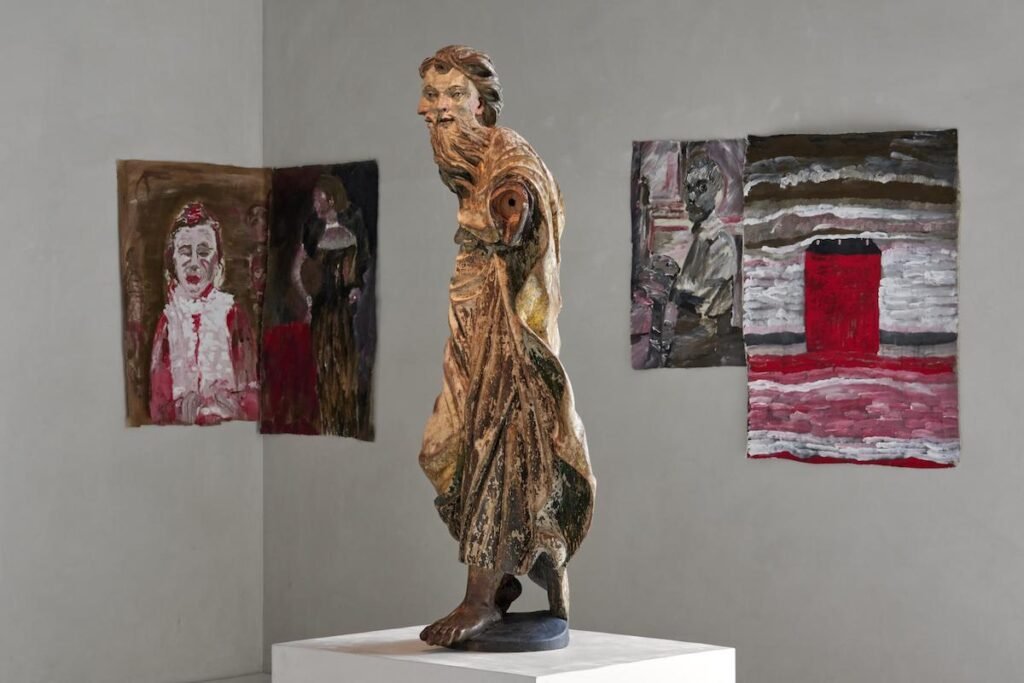
Nelle sale erano riunite opere di nove secoli. Il Cristo in riposo (ca. 1480) dell’Alto Reno appariva accanto al Costruttivismo trascendentale (1992/1994) di Anna e Bernhard Blume. Un Ecce Homo (ca. 1460–1500) di Colonia incontrava il Serpente piumato (1969) di Paul Thek. Josef Albers entrava in rapporto con oggetti della raccolta di forme e manifatture; vasi contemporanei e dipinti condividevano la stessa misura dello sguardo.
Davanti al Cristo in riposo, il Costruttivismo trascendentale dei Blume non attenua il dolore della figura: l’ironia interviene quando lo sguardo si è già fermato su quel corpo. Con Thek e l’Ecce Homo accade altro. Lo sguardo torna dall’uno all’altro e si accorge di aver cambiato posizione.
Il punto esclamativo del titolo introduce una nota di impazienza. Rendete produttivi i segreti. Fatene qualcosa. Ma che cosa può produrre un segreto senza smettere di esserlo? Forse la capacità di sostare davanti a un’opera prima di darle un nome o attribuirle un’utilità.
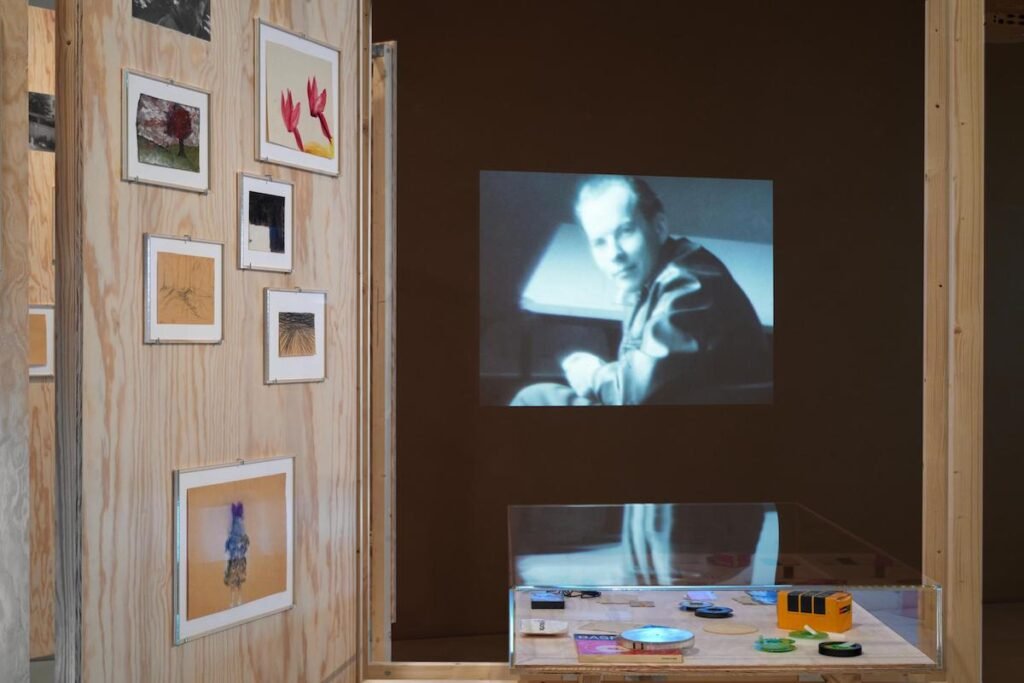
L’esposizione comprendeva Joseph Beuys, Paul Thek, Jannis Kounellis, Donald Judd, Per Kirkeby, Duane Michals, Joanna Piotrowska e Mladen Stilinović, insieme a opere medievali, oggetti d’arte applicata e lavori di autori meno canonizzati. L’elenco non disegnava una gerarchia. Produceva una comunità temporanea, attraversata da differenze di autorità, funzione e valore. Anche una collezione ecclesiastica, sembrava dire, può diventare il luogo nel quale le certezze dell’istituzione vengono esposte alla prova dell’incontro.
Resta una tensione che il museo non dovrebbe eludere. Parlare di libertà del pensiero e di processi sociali condivisi dentro un’istituzione diocesana significa misurarsi anche con i limiti della propria autorità. Chi decide quali segreti possano diventare produttivi? Quali esperienze ricevono una stanza e quali restano fuori? La sospensione delle gerarchie cronologiche non cancella il potere curatoriale; lo rende, semmai, più responsabile.
È qui che la mostra acquistava la propria urgenza. Non nella promessa che l’arte possa riparare la democrazia, ma nel rifiuto di considerare superflue le facoltà che la rendono possibile: distinguere, immaginare, dubitare, sopportare una complessità senza consegnarla subito a uno slogan.
Quando scrivevo queste pagine, lo scorso agosto, le sale erano chiuse. make the secrets productive! (2025–2026) era appena terminata; le opere venivano rimosse, altre uscivano dai depositi, le relazioni costruite per un anno si scioglievano. Era la fase invisibile del museo: il momento in cui una costellazione scompare prima che la successiva abbia assunto una forma pubblica.
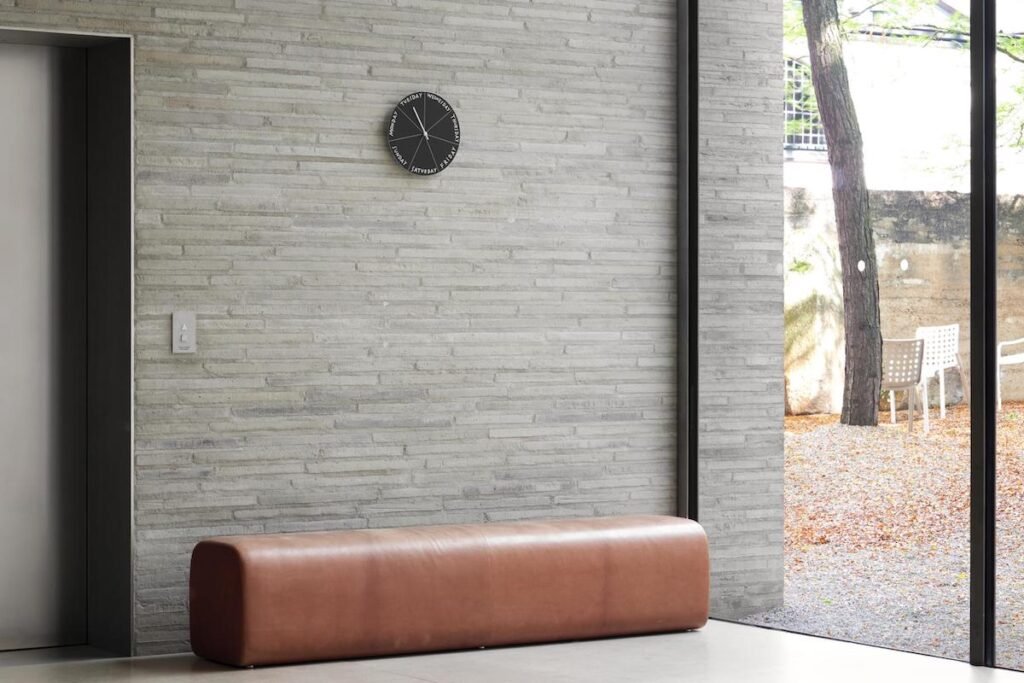
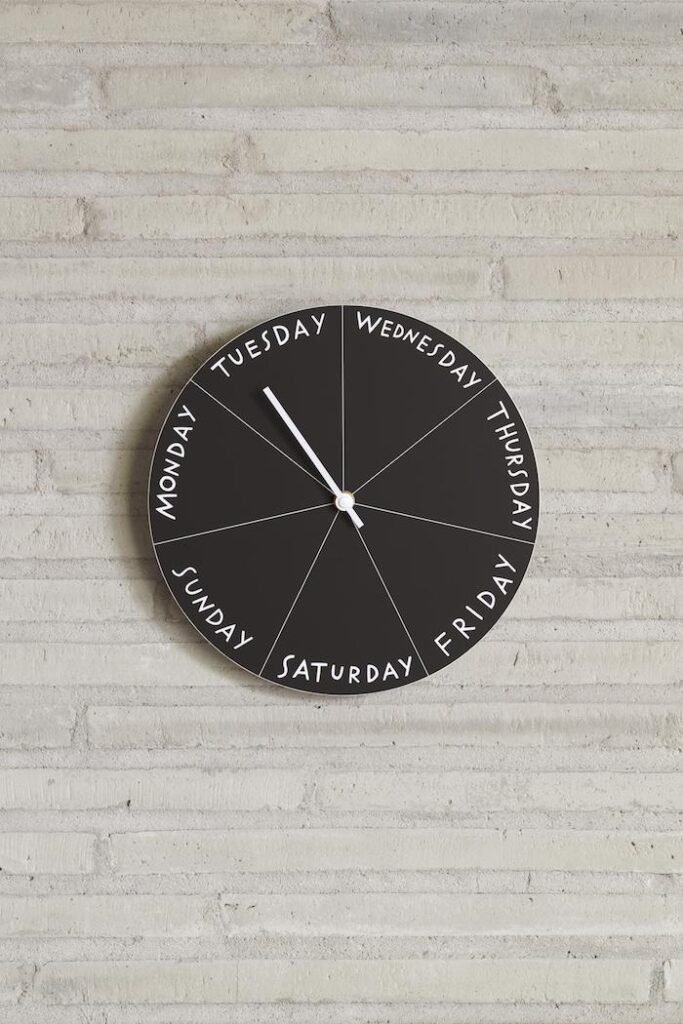
Quella sospensione è durata tre settimane. Il 19 settembre 2026 Kolumba ha riaperto con Have you ever fallen in love with a clock? Über Norm und Abweichung (2026–2027) — Sulla norma e la deviazione. Il titolo appartiene a un’opera dell’artista newyorkese Finnegan Shannon del 2021, un orologio installato nel foyer che non segna le ore ma i giorni della settimana, la cui lancetta compie un giro completo ogni sette giorni. Ci si può innamorare di un orologio? Accanto, in una vetrina, sono raccolti orologi da cucina, da polso, da tavolo, contaminuti, sveglie digitali: la collezione domestica di ciò che ci scandisce senza che ce ne accorgiamo.
Il direttore Marc Steinmann, alla guida del museo dal gennaio di quest’anno dopo il pensionamento di Stefan Kraus, indica nel tempo la norma più avvertita della vita quotidiana: le ore che dettano le giornate, il ritardo costante, la pressione della scadenza. È un’eredità antica. Già le ore canoniche dei monaci scandivano la giornata medievale, e in Francia le campane di chiese e municipi suonavano un tempo deliberatamente fuori sincrono, nella contesa per il potere di misurare il tempo altrui.
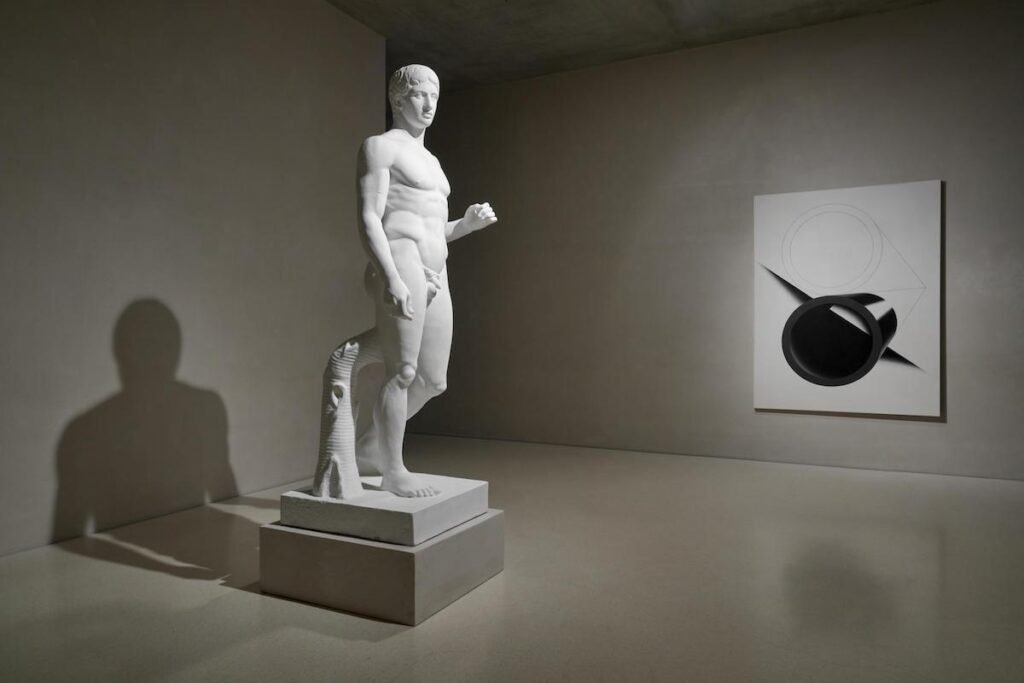
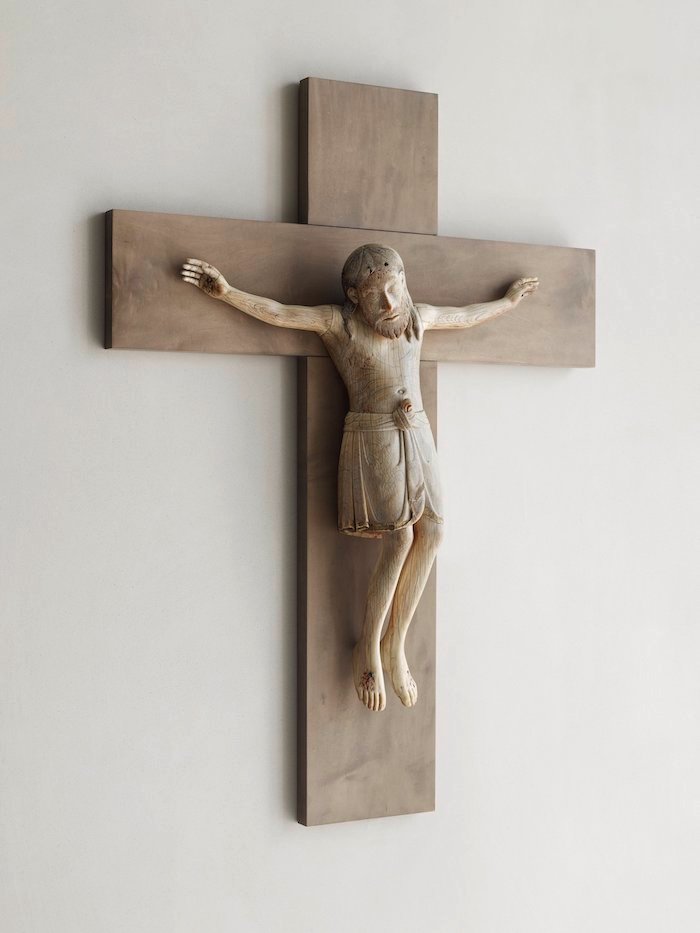
Ma la mostra non si ferma all’orologio. Nella sala cinque è esposto il calco del Doriforo (dopo il 1861 e prima del 1965), la figura che incarna il canone del corpo ideale descritto da Policleto. Gli fa da contrappunto — non da spiegazione — l’immagine del Cristo sofferente, il crocifisso: il corpo torturato contro il corpo canonico, la deviazione estrema accanto alla norma estrema. Locomotive in volo, un cowboy a cavallo, un volto triplicato: il percorso espositivo accosta questi oggetti senza indicare in che cosa si somiglino.
Dopo una mostra dedicata ai segreti, Kolumba ne ha aperta una dedicata alla misura. Il passaggio è preciso: da ciò che resiste alla spiegazione a ciò che resiste alla regola. Le stanze hanno già cambiato idea.
Cover: Kolumba, Außenansicht © Foto: Veit Landwehr/Kolumba, Köln
Nel tempo dell’altro è una rubrica che attraversa le presenze dell’arte contemporanea nei musei storici, archeologici, universitari. Luoghi dove il tempo si stratifica e l’opera agisce come incontro, attrito o apparizione. Qui si raccontano innesti e interferenze, ascoltando ciò che resta, ciò che torna, e il silenzio che li separa.
IN THE TIME OF THE OTHER
What Time Does Not Separate
Kolumba, Cologne
At Kolumba, a ruin and a work of our time share the light of day. What remains meets what begins. Between them, time is not a distance to be bridged: it is the life each continues to have in the eyes of whoever pauses to look.
There are places where time passes.
And others it cannot bring itself to leave.
Kolumba belongs to the latter.
On entering, one does not immediately feel that one is visiting a collection. Rather, there is the sense of having stepped into something already under way: a story whose consequences we can see, but not its beginning. Beneath our feet lie Roman houses, a medieval church, the rubble of war. Above, a pale light crosses the brickwork and slowly shifts position. The works wait without explaining themselves.
Here the past is not behind us. It is beneath the floor, within the walls, in the air circulating between a blackened stone and a contemporary sculpture. Everything comes from a different period, yet nothing seems wholly consigned to its own time. A late Gothic Madonna, Paul Thek’s Portable Ocean (1969), a painting by Joseph Marioni, a medieval cross: the museum does not ask what they have in common. It places them close enough for the question to begin to concern us.
Perhaps this is its rarest form. Kolumba does not preserve time as though it were something concluded. It allows time to go on producing presence.
II. The Place Where Time Was Not Reconstructed
Every museum begins with a series of decisions: what to preserve, what to display, what to leave in shadow. Kolumba also begins with a more difficult decision: not to conceal what could not be made whole again.
To understand it, we must return to the centre of Cologne, to the site where the church of St Kolumba once stood. Its origins reach back at least to the Carolingian period, but older traces had survived beneath its foundations: Roman dwellings, medieval masonry, the remains of buildings that had occupied the same patch of city for centuries. Not a history arranged in sequence, but many lives built one upon another.
During the Second World War, the church was almost entirely destroyed. Sections of the outer walls survived, along with the stump of the tower and, against a pier in the north aisle, a small late Gothic figure of the Virgin. It came to be known as Madonna in den Trümmern (late fifteenth century), the Madonna among the ruins. Worshippers gathered before the image. It had not emerged from history unscathed: it had remained within what history had done.
In 1949, the foundation stone was laid for the chapel designed by the young Gottfried Böhm. Consecrated the following year, the structure housed the Madonna and incorporated the remains of the destroyed church. Böhm did not attempt to restore St Kolumba to its former appearance. He built a space in which loss could be inhabited.
It is an architectural idea, but also a moral position. To rebuild may mean to repair; it may also mean to render the wound unrecognisable. Here the wound was neither monumentalised nor erased. It remained in place, exposed to rain, to devotion, to the changing city.
When archaeological excavations brought Roman and medieval foundations to light in the 1970s, the site became harder still to interpret. Each discovery pushed the beginning of the story further back. The past refused to be reduced to a single origin; it surfaced in fragments, making it impossible to decide which period should prevail over the others.
This is where Kolumba becomes necessary.
The museum arises not only from the desire to provide a home for the diocesan collection. It arises from the presence of things that could not be divided without losing their meaning: the chapel and the ruin, the excavation and the city, devotion and destruction, the ancient work and the contemporary one.
The contemporary, moreover, had arrived before the building. From 1993 the museum was already bringing the art of the present into relation with the historical collection, without arranging the works into a neat chronological sequence. The 1997 competition, won by Peter Zumthor, did not ask merely to protect the ruins: it posed the problem of how to make architecture, works and the memories of the place coexist.
The question was already inscribed in the ground: how to build without dividing what, even after destruction, continued to exist together?
III. Peter Zumthor Does Not Build a Museum
The project does not set a museum down upon the ruins of St Kolumba.
It makes them its starting point.
Even before the project takes shape, the site rules out any simple solution. It contains the church’s broken walls, Gottfried Böhm’s chapel, still consecrated and in use, an archaeological excavation spanning two thousand years, a collection with no single chronology and a garden growing where the cemetery once lay. Each element possesses its own form, its own particular necessity. To move any one of them would alter the meaning of the others.
The response takes ten years. The architect does not seek a form capable of dominating what he has found. He looks for the point at which the new building can begin without forcing the site to begin again.
From the outside, Kolumba appears as a compact volume of pale grey brick. It does not immediately reveal what it contains. It rises in the rebuilt centre of Cologne with an almost anachronistic calm, interrupted by windows of varying dimensions and several perforated surfaces. It might seem to be a closed building. Yet on approaching, one notices that its substance is not uniform. The grey changes with the sky; at times it holds the light, at others it seems to give it back. Even the wall, which ought to separate inside from outside, begins to behave differently.
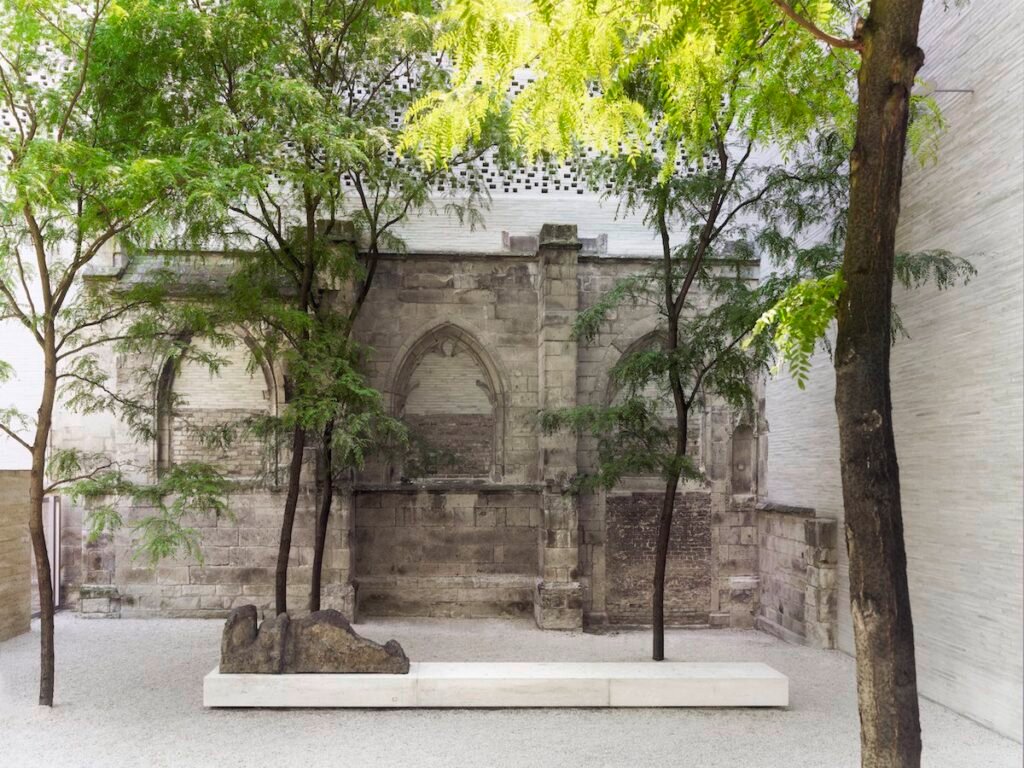
The brick was developed specifically for Kolumba. It is long and slender, fired in shades ranging from warm grey to the palest ochre. The mortar leaves the surface imperfect. Minute irregularities, variations in thickness and traces of the hand remain between one element and the next. The new wall meets the tuff, basalt and brick of the ruins without attempting to imitate them. These materials are distant from one another, yet they seem to recognise each other.
Perhaps continuity does not lie in making things alike. It lies in allowing them to touch without losing their difference.
Inside, this idea becomes a physical experience: the great archaeological hall brings together the Roman remains, the church foundations, the rubble of war and Böhm’s chapel, while a walkway crosses the excavation without erasing it. Among the ruins, the columns supporting the upper floor descend with an almost bodily caution; Stefan Kraus has compared them to needles grazing the ground, as though seeking out the few points where it is still possible to rest.
One walks above what remains, but does not look down upon the past. The distance is too slight. The broken walls rise towards the body, the earth stays close, and the outlines of vanished buildings continue to determine the route. At times it is no longer clear whether we are inside a church, beneath a museum or in the underground strata of a city. The categories that normally separate these spaces cease to be useful.
Air, noise and light enter through the perforated walls. These filter walls are neither windows nor solid walls. They admit the day in minute fragments, as though the outside world could reach the ruins only after being broken apart. Light moves across the stones, disappears, returns elsewhere. With it come the wind and the sounds of the city: a bell, an engine, voices whose words cannot be made out. The building protects what it contains, but does not entirely remove it from the world.
The chapel, too, remains autonomous. It continues to be a church, with its own entrance and a life independent of the museum. It can be entered for prayer without visiting an exhibition. Kolumba surrounds it without assimilating it. This is perhaps one of the project’s most radical gestures: accepting that something exists at the heart of the building that the building does not possess.
Above the excavation are sixteen galleries. No two are exactly alike. Their proportions, height, direction of light and relationship with the city all change. Some are intimate; others open through windows that occupy almost an entire wall. There is no prescribed route. The rooms seem to offer different possibilities for attention, as though each work required a particular measure of space, shadow and proximity.
Zumthor has described Kolumba as a museum of shadows, destined to change over the course of the day and the seasons. The phrase is apt. Here architecture does not provide a neutral backdrop against which works can always appear the same. December light is not June light. A painting seen in the morning does not occupy the room in quite the same way in the afternoon. The building introduces into vision what many museums seek to eliminate: variation, waiting, the possibility that a work may not yield itself at once.
For this reason, to call it a container would be inaccurate. Kolumba shapes the relationships: between the body and the floor, between light and a painting, between a ruin and a sculpture, between what is preserved and what continues to live without belonging to the museum.
The architecture does not piece history back together. It gives history a form in which its interruptions can remain perceptible.
IV. The Museum Without Chronology
In Kolumba’s galleries, dates have not disappeared. They have merely stopped dictating the order of the works.
A chronological museum teaches us to proceed. First this, then that; one form generates the next, one century hands its problem on to the century that follows. It is an effective way of ordering knowledge. But when order becomes too assured, it can make us forget that works do not remain fixed at the point in history to which we have assigned them.
Wolfgang Laib’s two Reishäuser (1991 and 1992), shown in 1996 beside a medieval ciborium, do not become liturgical objects; the ciborium is not transformed into a Minimalist sculpture. Yet measure, safekeeping, offering and inner emptiness begin to pass between them. Not as explanations, but as questions matter puts to the body.
Kolumba has worked in this way since 1993, long before the new building was completed. The cycle Wiederbegegnung mit Unbekanntem (1993–2001) — encountering anew what we do not know — brought Antoni Tàpies, Paul Thek, Joseph Beuys, Antonio Saura and Roman Opalka into relation with the historical collection. The title already contained a programme. To see again did not mean to recognise. It meant accepting that something familiar might have become strange, and that this very strangeness could restore it to the present.
The diocesan museum had inherited a discontinuous collection: paintings, sculptures, vestments, manuscripts, devotional objects, architectural fragments. It could have corrected this heterogeneity through classification. Instead, it chose to use it. Incompleteness became a curatorial method. The gaps between one object and another were not filled; they were made perceptible.
This is also why information does not precede the encounter in the galleries. The works are not submerged beneath texts telling the visitor which relationship to see. The details are there, in the guide, but kept at a distance. Presence comes first: a surface, a weight, a colour we cannot yet name. Knowledge arrives later and, when it does, it does not erase what we sensed without knowing.
There is something demanding in this trust. The visitor is not guided through an argument already concluded. They must sustain the uncertainty of an encounter and decide how long to remain. A room may seem almost empty; two works may ignore each other; a relationship may fail to occur at all. Kolumba allows for this possibility too. Not every proximity is a revelation.
Every September, the collection is reinstalled. A temporary exhibition is not simply added to a permanent display: the entire museum changes its arrangement. Works that had remained in storage enter the galleries; others disappear; an object seen before finds itself beside a different presence and seems to have changed its tone. The museum does not propose a new narrative in place of the previous one. It asserts, once again, that no story is definitive.
This annual rhythm introduces a form of controlled instability into collecting. To possess a work does not mean fixing its meaning for ever. It means assuming responsibility for placing it in relation again. The collection becomes less like an inventory and more like a conversation in which some participants remain silent for a long time, then return with a sentence we had not known how to hear.
The annual exhibitions have given this practice titles that function as bearings rather than arguments to be illustrated: Noli me tangere! (2010–2011), denken (2011–2012), Art is Liturgy (2012–2013), playing by heart (2014–2015), Me in a no-time state (2016–2017), Pas de deux (2017–2018).
In the museum without chronology, then, the present does not coincide with contemporary art. It is the condition in which every work, ancient or recent, is encountered. The past is not given a separate room; the new is not charged with representing our time. Both are released from the task of confirming what we already know.
The simplest and most difficult question remains: what is happening now, between these things?
Kolumba does not answer. It prepares a room, regulates the light, leaves a distance. Then it asks us to enter.
V. Making Secrets Productive
A secret may be kept. It may also be put to work.
This is the proposition contained in the title of Kolumba’s annual exhibition, which closed on 14 August 2026: make the secrets productive! Art in Times of Unreason (2025–2026). The words come from Joseph Beuys and appear, written on a blackboard, at the beginning of the exhibition. They do not invite us to reveal what is hidden. They suggest something less reassuring: that not knowing might become an active force.
The exhibition emerged within a present that the museum describes as out of joint. Facts and figures occupy public space but can no longer make it intelligible; the desire for power takes the place of reason; culture, education and research are treated as expenses that can simply be curtailed. Kolumba does not oppose this crisis with a repertoire of answers. It asserts a different function for art: to keep open what political and economic language would close too quickly.
The point is not to choose the irrational over reason. It is to remember that a society governed solely by what can be calculated loses access to part of its own experience. An image does not present a balance sheet. A devotional object proves nothing. A sculpture may remain silent for centuries and then, in a particular room, formulate a question we did not know we had.
The galleries brought together works spanning nine centuries. Christ at Rest (c. 1480), from the Upper Rhine, appeared beside Anna and Bernhard Blume’s Transcendental Constructivism (1992/1994). An Ecce Homo (c. 1460–1500) from Cologne encountered Paul Thek’s Plumed Serpent (1969). Josef Albers entered into relation with objects from the collection of forms and crafts; contemporary vessels and paintings called for the same degree of attention.
Before Christ at Rest, the Blumes’ Transcendental Constructivism does not soften the figure’s pain: irony intervenes only once the gaze has already settled on that body. With Thek and the Ecce Homo, something else happens. The gaze moves back and forth between the two and notices that it has shifted position.
The exclamation mark in the title introduces a note of impatience. Make the secrets productive. Do something with them. But what can a secret produce without ceasing to be one? Perhaps the capacity to linger in front of a work before giving it a name or putting it to use.
The exhibition included Joseph Beuys, Paul Thek, Jannis Kounellis, Donald Judd, Per Kirkeby, Duane Michals, Joanna Piotrowska and Mladen Stilinović, alongside medieval works, objects of applied art and pieces by less canonised artists. The list established no hierarchy. It produced a temporary community, traversed by differences of authority, function and value. Even an ecclesiastical collection, it seemed to suggest, can become a place in which the certainties of the institution are exposed to the test of encounter.
A tension remains that the museum should not evade. To speak of freedom of thought and shared social processes within a diocesan institution also means confronting the limits of its authority. Who decides which secrets may become productive? Which experiences are given a room, and which remain outside? Suspending chronological hierarchies does not erase curatorial power; if anything, it makes that power more accountable.
This is where the exhibition acquired its urgency. Not in the promise that art might repair democracy, but in the refusal to consider superfluous the faculties that make democracy possible: distinguishing, imagining, doubting, enduring complexity without immediately surrendering it to a slogan.
When I was writing these pages last August, the galleries were closed. make the secrets productive! (2025–2026) had just ended; works were being removed, others brought out of storage, and the relationships built over the course of a year were coming undone. This was the museum’s invisible phase: the moment when one constellation disappears before the next has taken on a public form.
That suspension lasted three weeks. On 19 September 2026, Kolumba reopened with Have you ever fallen in love with a clock? Über Norm und Abweichung (2026–2027) — On Norm and Deviation. The title belongs to a 2021 work by the New York artist Finnegan Shannon: a clock installed in the foyer that marks not the hours but the days of the week, its hand completing a full rotation every seven days. Can one fall in love with a clock? Nearby, a display case contains kitchen clocks, wristwatches, desk clocks, timers and digital alarm clocks: a domestic collection of what measures out our lives without our noticing.
Director Marc Steinmann, who has led the museum since January of this year following Stefan Kraus’s retirement, identifies time as the norm most keenly felt in everyday life: the hours that dictate our days, constant lateness, the pressure of deadlines. It is an ancient inheritance. The canonical hours already ordered the medieval day of the monks, while in France the bells of churches and town halls once rang deliberately out of sync, in a struggle over the power to measure the time of others.
But the exhibition does not stop at the clock. Gallery five contains a cast of the Doryphoros (after 1861 and before 1965), the figure that embodies the canon of the ideal body described by Polykleitos. Its counterpoint — not its explanation — is the image of the suffering Christ, the crucifix: the tortured body against the canonical body, extreme deviation beside extreme norm. Locomotives in flight, a cowboy on horseback, a face tripled: the exhibition brings these objects together without stating precisely how they resemble one another.
After an exhibition devoted to secrets, Kolumba has opened one devoted to measure. The transition is exact: from what resists explanation to what resists the rule. The rooms have already changed their minds.