La casa di chi verrà
Alla Fondazione Querini Stampalia
English text below —
Una casa può cominciare ad appartenere agli altri nell’ora in cui il giorno si ritira. Giovanni Querini Stampalia l’aveva immaginata ancora aperta, con i libri disponibili a chi soltanto dopo il lavoro poteva concedersi il tempo di leggerli. Non conosceva i volti che sarebbero entrati, né le domande che avrebbero portato con sé. Nel testamento del 1868 aveva disposto che la biblioteca rimanesse accessibile soprattutto la sera e quando le altre biblioteche pubbliche erano chiuse: lasciava a degli sconosciuti una parte della giornata che altrove non avrebbero trovato, e un luogo nel quale trascorrerla.
La luce accesa più a lungo apparteneva a questa idea della conoscenza. Per conoscere ciò che si ignorava occorrevano un tavolo, un libro, ore sottratte alle necessità immediate; occorreva poter tornare sulla stessa pagina senza sapere ancora che cosa se ne sarebbe ricevuto. Il lascito riguardava anche questa libertà, che Giovanni aveva esercitato lungo la propria vita e che, alla fine, destinava a persone estranee al suo nome.
Nato nel 1799, due anni dopo la caduta della Serenissima, Giovanni Querini Stampalia era l’ultimo discendente di uno dei suoi grandi casati. Nel ritratto in mosaico conservato nel palazzo, il berretto scuro, i capelli mossi sulle tempie, le folte basette e la cravatta alta raccolgono il volto in una gravità dalla quale la bocca serrata sembra non volersi separare. Le lettere restituiscono una voce più giovane: «Non bramo che lo studio, e la quiete», scriveva nel 1817. Alla richiesta della famiglia di assicurare una discendenza avrebbe opposto la scelta di non sposarsi, interrompendo una genealogia alla quale avrebbe dato un seguito attraverso le cose.
Laureato in diritto a Padova, coltivava il greco e il latino, la numismatica e l’araldica, la botanica e la storia naturale. Fra le ore dei libri trovavano posto l’equitazione e la scherma; la curiosità scientifica lo portava verso gli strumenti, fino al laboratorio di fisica e chimica allestito nel palazzo, alle apparecchiature acquistate per l’Ospedale Civile, agli esperimenti sull’illuminazione elettrica. Nelle proprietà, le idrovore a vapore e le lavorazioni della seta rinnovate davano allo studio una conseguenza materiale. Sapere qualcosa del mondo significava anche poter intervenire sulle condizioni della vita.
Le condizioni necessarie al pensiero sarebbero diventate, da una posizione storica diversa, il centro di Una stanza tutta per sé (1929) di Virginia Woolf. Nell’esclusione delle donne dalla vita letteraria, Woolf riconosce il peso del denaro, delle interruzioni, del tempo che altri possono reclamare; la stanza è ciò che permette a una voce di trovare la propria durata. La biblioteca serale di Giovanni apriva agli sconosciuti uno spazio di libertà intellettuale, rendendo disponibili le ore che il lavoro lasciava loro. La conoscenza poteva cominciare lì, nella consuetudine silenziosa con un libro.
Alla sua morte, nel 1869, i libri furono affidati all’uso pubblico insieme al palazzo, ai dipinti, ai mobili e agli oggetti raccolti attraverso le generazioni. A Santa Maria Formosa, la dimora cinquecentesca, ampliata e rinnovata nel Settecento, conserva nella successione degli ambienti qualcosa della distanza che una famiglia aveva posto fra la propria vita e quella degli altri. Si passa da sale di rappresentanza a stanze più raccolte; un’apertura lascia intravedere ciò che il cammino raggiungerà poco dopo, mentre un’altra parte della casa si sottrae alla prima veduta. L’edificio ordina gli incontri prima che lo facciano le opere.
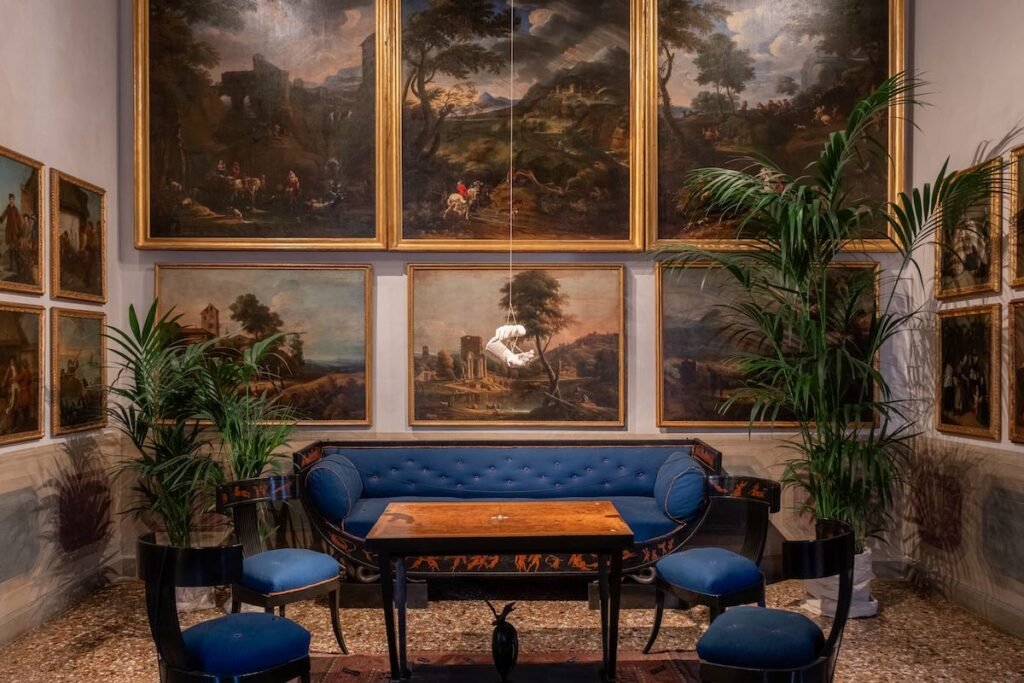
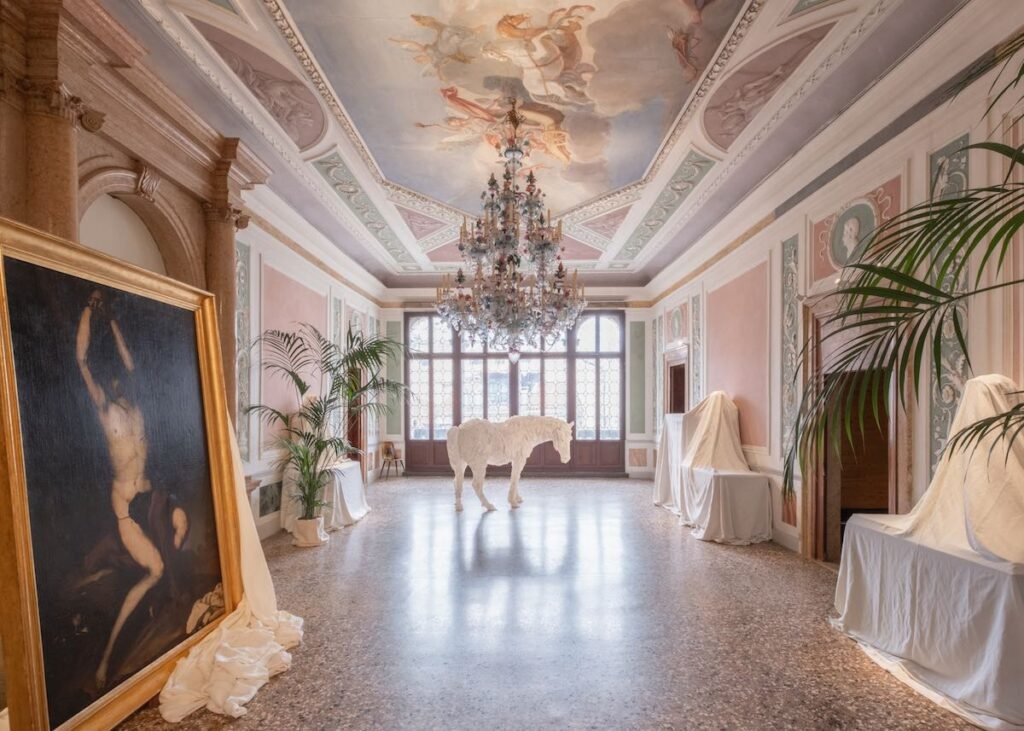
Al secondo piano, il portego, la grande sala dove la famiglia riceveva, riunisce questa geografia. La centralità dell’ambiente, in corrispondenza della polifora, appartiene alla forma del palazzo veneziano e all’esibizione del prestigio patrizio; sul soffitto, l’Allegoria dell’Aurora (fine XVIII secolo) di Jacopo Guarana ricorda le nozze di Alvise Querini con Maria Teresa Lippomano. Gli stucchi di Giuseppe e Pietro Castelli articolano le superfici intorno a un’immagine che aveva accompagnato l’attesa di una continuità familiare. Chi la guarda oggi arriva dopo quella promessa, dentro una casa il cui futuro è divenuto pubblico.
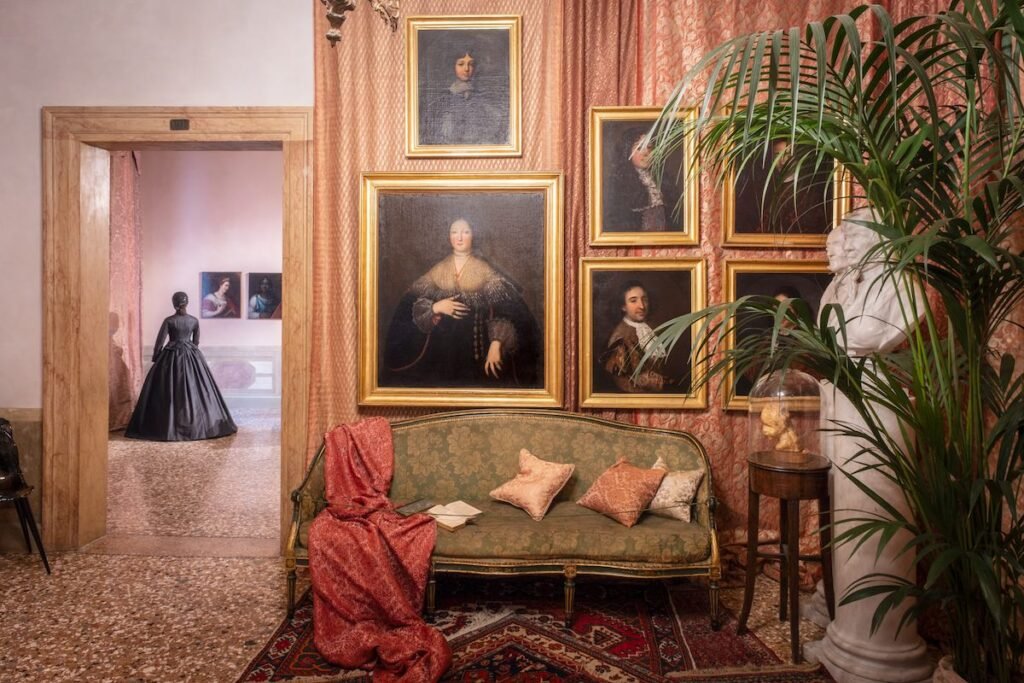
Nelle stanze, i mobili suggeriscono gesti dei quali rimane soltanto la possibilità. Un ritratto è ancora vicino a un oggetto che avrebbe potuto appartenere alla persona dipinta, ma di quel volto non udremo la voce. Ci avviciniamo a ciò che altri hanno conosciuto da una distanza che nessuna cura potrà colmare. In Spettri di Marx (1993), interrogando l’eredità di una tradizione politica, Jacques Derrida riconosce nell’ereditare un compito: ricevere comporta interpretare, distinguere, scegliere. Anche qui la fedeltà incontra questa difficoltà. La casa sopravvive a coloro che l’hanno disposta e domanda a chi arriva che cosa ne farà.
Il lascito doveva perciò trovare una forma capace di ospitare lettori e visitatori. La presenza di altri corpi chiedeva accessi, percorsi, ambienti praticabili, dentro un edificio la cui conservazione avrebbe incontrato le esigenze dell’uso. Alois Riegl, nel Culto moderno dei monumenti (1903), distingue il valore d’antichità dal valore d’uso e rende leggibile il conflitto fra il tempo depositato nelle cose e le necessità del presente. Alla Querini, quel conflitto ha la concretezza di un passo, di una scala, di un piano terreno che l’acqua può raggiungere: preservare la dimora significa anche permettere a qualcuno di entrarvi.
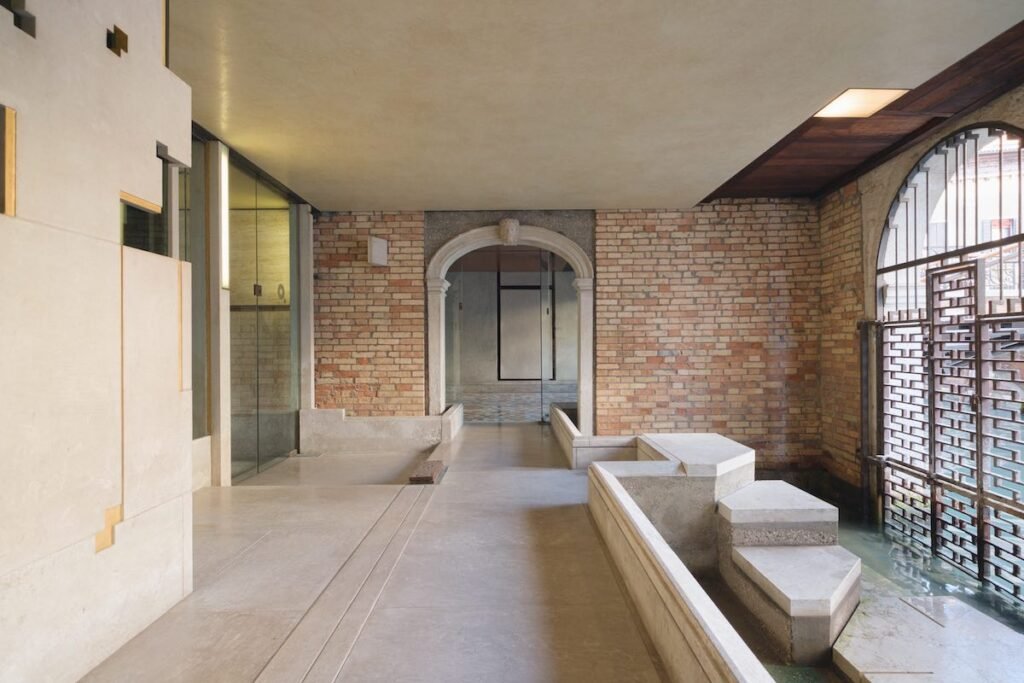
Fra il 1959 e il 1963, Carlo Scarpa ridisegna parte del piano terreno e il giardino nella corte. Il ponte sul campiello Querini conduce a un ingresso dove il rio lambisce il palazzo e decide la misura dell’intervento. Giuseppe Mazzariol avrebbe voluto tenere fuori l’acqua alta; Scarpa risponde: «Dentro, dentro l’acqua alta, dentro come in tutta la città». Pochi centimetri distinguono il cammino della marea da quello del visitatore, mentre cancellate e gradini ne accompagnano l’avanzata. La sicurezza ha qui una quota precisa, alla quale la città continua a rivolgere la propria domanda.
La luce riflessa dall’acqua risale sulle pareti, raggiunge il soffitto e modifica il colore delle superfici. Nel giardino, vasche e piccoli canali imprimono all’acqua un altro movimento, scandito dalla pietra, dal cemento, dal mosaico. Il gocciolio dà alla corte una durata che non coincide con quella di chi si ferma ad ascoltarlo. Fra l’atrio, la sala per mostre e incontri e il giardino, Scarpa costruisce le condizioni di una convivenza: ciascuna materia conserva la propria resistenza e il palazzo lascia entrare qualcosa che non potrà possedere.
I collegamenti di Valeriano Pastor, realizzati fra il 1982 e il 1997, proseguono il lavoro nella profondità dell’edificio. Una nuova scala raggiunge i piani dalla piccola corte interna; le doghe di legno del rivestimento curvo e i piccoli oblò richiamano lo scafo di un’imbarcazione, dando al passaggio verticale una memoria veneziana. La passerella fra la Biblioteca e il deposito librario accorcia una distanza necessaria alla vita dell’istituzione. Anche questi percorsi, meno esposti all’ammirazione delle sale, appartengono alla cura: fanno sì che un libro possa arrivare nelle mani di chi lo ha chiesto.
Dal 1994, Mario Botta riorganizza spazi e servizi, spostando l’accesso principale verso campo Santa Maria Formosa. Intorno alla corte coperta, l’ingresso, l’auditorium e i nuovi cammini ricompongono parti diverse del complesso; la pietra rossa di Verona della scala incontra il metallo, e la luce filtrata dall’alto accompagna le persone verso gli altri ambienti. La corte Mazzariol offre un luogo nel quale sostare fra una destinazione e l’altra. Le esigenze cresciute nel tempo trovano posto in questa parte dell’edificio, lasciando all’intervento di Scarpa la possibilità di essere conservato senza ulteriori adeguamenti.
Nelle sale destinate a ospitare la Collezione Intesa Sanpaolo, Michele De Lucchi restituisce invece alle porte allineate il loro cannocchiale visivo. Il progetto, concluso nel 2018, rimuove tramezzi e lascia che la tinta delle pareti si attenui da un ambiente all’altro, così che l’occhio possa anticipare il cammino. Il palazzo riunisce questi modi differenti di rendersi disponibile. Chi lo attraversa incontra decisioni appartenute a epoche diverse, ancora attive nello spazio concesso al suo corpo, nella luce con cui gli viene incontro un’opera.
È una casa già trasformata da molte presenze quella alla quale si rivolge Conservare il futuro. Gli interventi prendono avvio nel 1997; Chiara Bertola, che ha curato il programma di arte contemporanea fino al 2022, costruisce una ricerca che il volume omonimo del 2023 ripercorre attraverso il primo venticinquennio. L’artista, nella figura dell’intruso evocata da Bertola, entra in un ordine che non ha stabilito. Può modificarlo, ma un dettaglio della dimora può a sua volta correggere il progetto, chiedergli un’altra misura, rendere inutile il gesto nel quale aveva inizialmente confidato.
La ricerca comprende, tra gli altri, Michelangelo Pistoletto, Lothar Baumgarten, Giulio Paolini, Georges Adéagbo, Anita Sieff, Marisa Merz, Qiu Zhijie, Haris Epaminonda, Danh Vō, Isamu Noguchi e Park Seo-Bo; Roman Opałka, Mariateresa Sartori, Mona Hatoum, Jimmie Durham, Giovanni Anselmo ed Elisabetta Di Maggio. Intorno al Fondo Luigi Ghirri lavorano inoltre Yona Friedman e Jean-Baptiste Decavèle, Paolo Icaro, Andrea Zanzotto e Giuseppe Caccavale. Alcuni lavori rimangono come doni, affidando alle raccolte la memoria dell’incontro dal quale sono nati. L’eredità familiare riceve così anche domande che nessuno dei suoi proprietari avrebbe potuto formulare.
Le scelte di chi cura l’istituzione entrano a loro volta nell’eredità. Accanto ai dipinti e ai mobili, la Fondazione Querini Stampalia custodisce rapporti che un inventario non potrebbe descrivere. Cristiana Collu, direttrice dal settembre 2024, assume nel manifesto A Wonder Booster (2024) l’arcipelago come figura dell’istituzione: museo, biblioteca, architetture e attività pubbliche mantengono la propria consistenza, mentre i collegamenti ne rinnovano le possibilità.
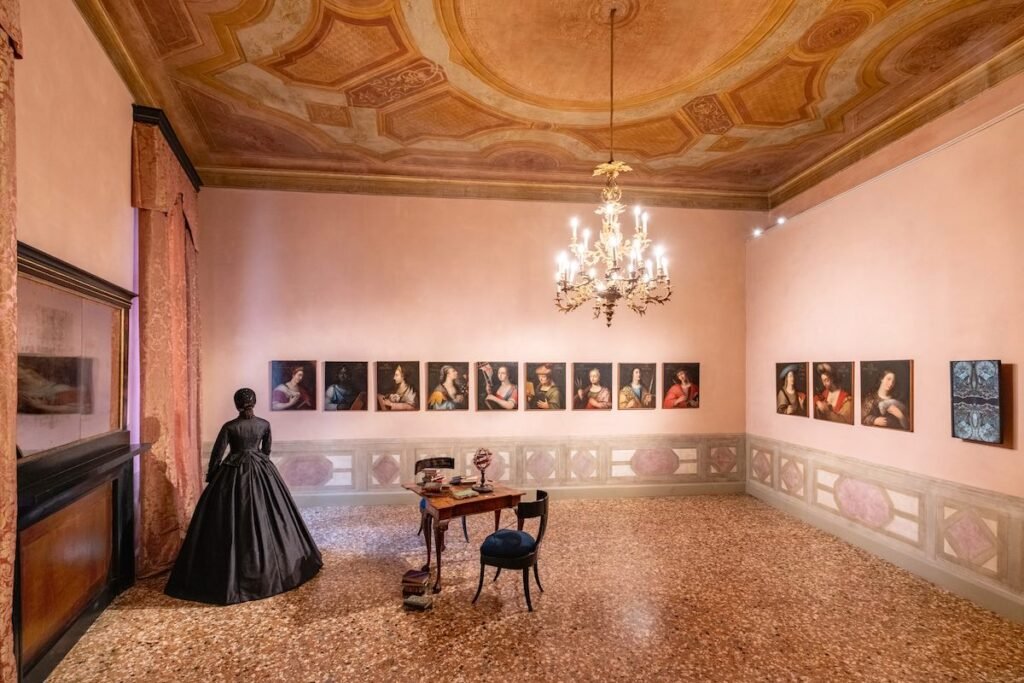
Questa geografia viene ridisegnata da The Dreamer (2026), il riallestimento della collezione inaugurato il 5 maggio, con progetto e direzione artistica di Collu. Le passioni di Giovanni e della sorella Caterina diventano il filo di una narrazione che attraversa le stanze, intrecciando dipinti, arredi e presenze contemporanee alle suggestioni di Senso (1954) di Luchino Visconti. Tessuti, suoni e fragranze accompagnano il visitatore dentro una dimora restituita all’immaginazione. La regia rende avvertibile il desiderio di una vita trascorsa; più incerto è lo spazio che lascia alle cose per raccontarla secondo la propria voce.
Il luogo non si esaurisce nelle pareti che accolgono il lavoro. Miwon Kwon, in One Place after Another. Site-Specific Art and Locational Identity (2002), segue il passaggio dalla specificità fisica del sito alle sue condizioni istituzionali e sociali. Alla Querini, queste condizioni comprendono la volontà del fondatore, gli usi delle stanze, la storia della tutela e delle letture che vi sono state ammesse. L’intervento incontra tutto questo prima ancora di trovare una posizione. La sua necessità si avverte quando qualcosa della casa lo rende diverso da come sarebbe altrove, e quando la casa, dopo averlo ricevuto, rende visibile ciò che prima teneva in riserva.
È su questa necessità che anche The Dreamer chiede di essere misurato. La seduzione del montaggio lascia tuttavia aperta la questione della necessità degli inserimenti contemporanei: il legame con la raccolta sembra affidato soprattutto alla consonanza d’atmosfera, e la ragione dell’incontro rimane meno leggibile della scena che lo accoglie. I mobili raccolti in gruppi e i teli che ne velano le superfici danno all’assenza un’evidenza teatrale, ma sottraggono allo sguardo parte di quella vita materiale che la casa ha ricevuto il compito di trasmettere. Il dubbio riguarda la misura della trasformazione: quanto delle opere resta disponibile a un incontro che il racconto non abbia già predisposto? Alla Querini, dove il lascito nasce dalla possibilità di studiare, anche l’incanto deve lasciare tempo e spazio alla conoscenza.
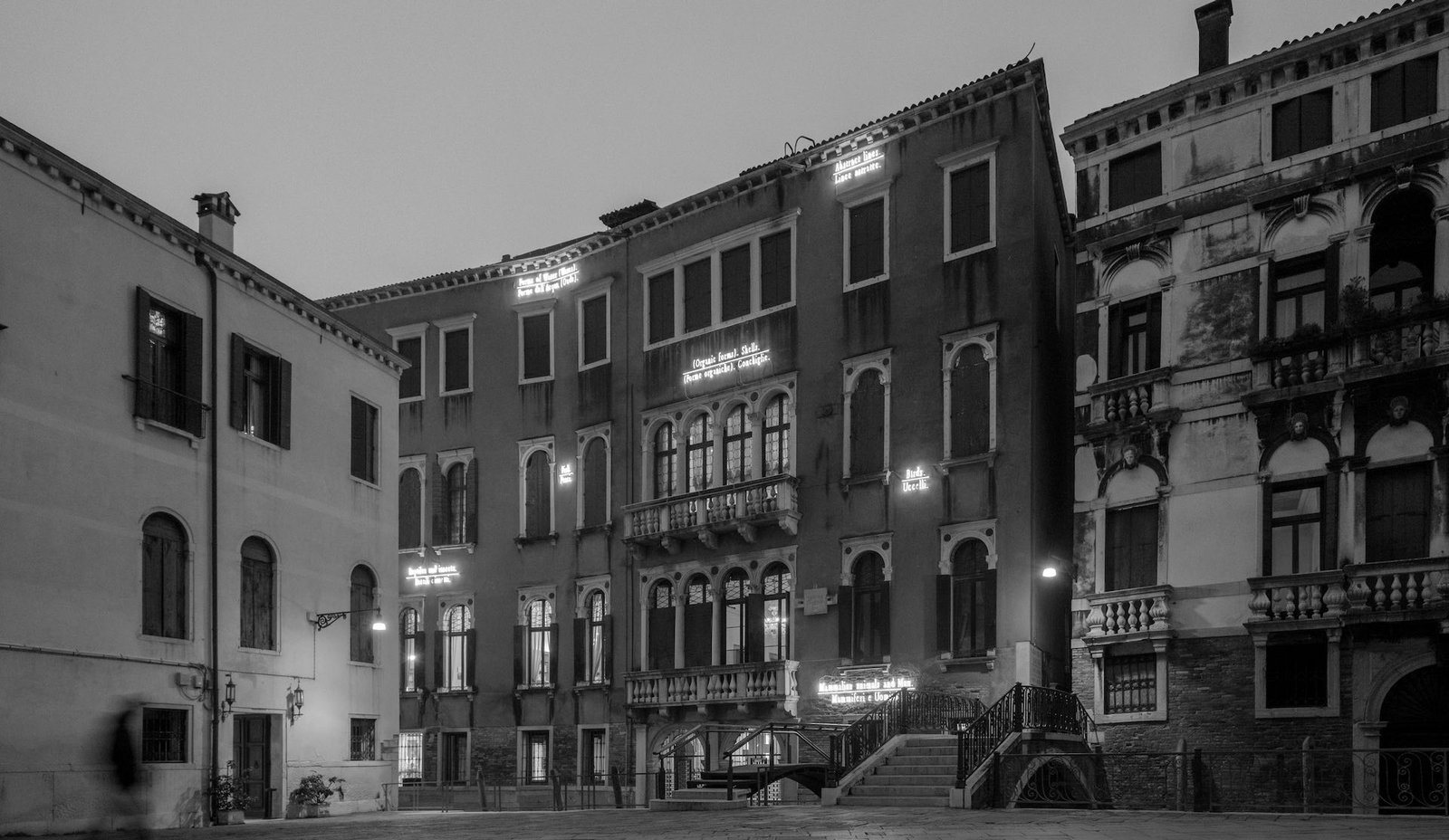
Una facciata può essere letta, un colore ritrovato, un intarsio ripreso dove la vita dell’edificio lo richiede. Le dodici scritte al neon di Joseph Kosuth, La materia dell’ornamento (1997), riportano sulla pietra le categorie di Ruskin nelle Pietre di Venezia (1851–1853). Maria Morganti segue invece i colori della Sala dell’Ottocento: nel Quadro per la Sala dell’800 (2008), anche il fiore fra i capelli della figura di Alessandro Milesi in La modella (1910) entra nel tempo di un’altra pittura. Il dettaglio sopravvive perché qualcuno lo ha guardato abbastanza. In Porte tagliafuoco, presentata nel 2008 in Disegni dimessi, le pellicole adesive con cui Stefano Arienti riveste le porte portano gli intarsi antichi dentro una necessità presente. Il linguaggio della dimora continua dove deve passare chi la usa.
Leggere le cose non basta a restituire la vita che le abitava. Sul tavolo del portego, le figure in porcellana di Kiki Smith, raccolte in Homespun Tales. Storie di occupazione domestica (2005), evocano presenze femminili delle quali le stanze conservano il posto. La misura minuta dei corpi fa sentire quanto spazio rimanga intorno a un’assenza. Ilya ed Emilia Kabakov rendono incerta anche la misura di chi arriva: in Where Is Our Place? (2002), presentata nel 2003, il visitatore si trova fra figure gigantesche e un mondo minuscolo sotto il pavimento. La dimora è riconoscibile, eppure il nostro corpo non può più assumersi come misura di tutto ciò che contiene.
Quella familiarità è ancora più insidiosa nelle vetrine antiche, dove Mona Hatoum incrina la fiducia che accordiamo alle cose custodite. La mostra Interior Landscape (2009) attraversa gli spazi temporanei e la collezione; in Natura morta (2009), il vetro di Murano prende forme simili a bombe a mano, con sagome che evocano anche frutti. Il colore e la lucentezza precedono il riconoscimento. Quando la forma si precisa, la delicatezza del vetro continua ad attirare, e l’oggetto rimane protetto con le attenzioni dovute a un bene prezioso. Il desiderio di guardarlo sopravvive a ciò che abbiamo scoperto; la vetrina lo tiene davanti a noi, ormai inseparabile dal ricordo della violenza.
Nell’installazione Interior Landscape (2008), il profilo della Palestina compare nei capelli sul cuscino e nella deformazione di un appendiabiti metallico, fra un letto d’acciaio, un tavolo e altri elementi domestici. Nel luogo del riposo, ciò che poteva essere la traccia di una testa delinea un territorio lontano. La stanza porta con sé una separazione che i suoi oggetti non riescono a ricomporre e, dentro il palazzo veneziano, rende meno naturale la continuità delle raccolte. Avere potuto restare, avere trovato il modo di portare con sé le cose: molto di ciò che chiamiamo patrimonio dipende da queste possibilità. Il cuscino di Hatoum ne rivela la fragilità.
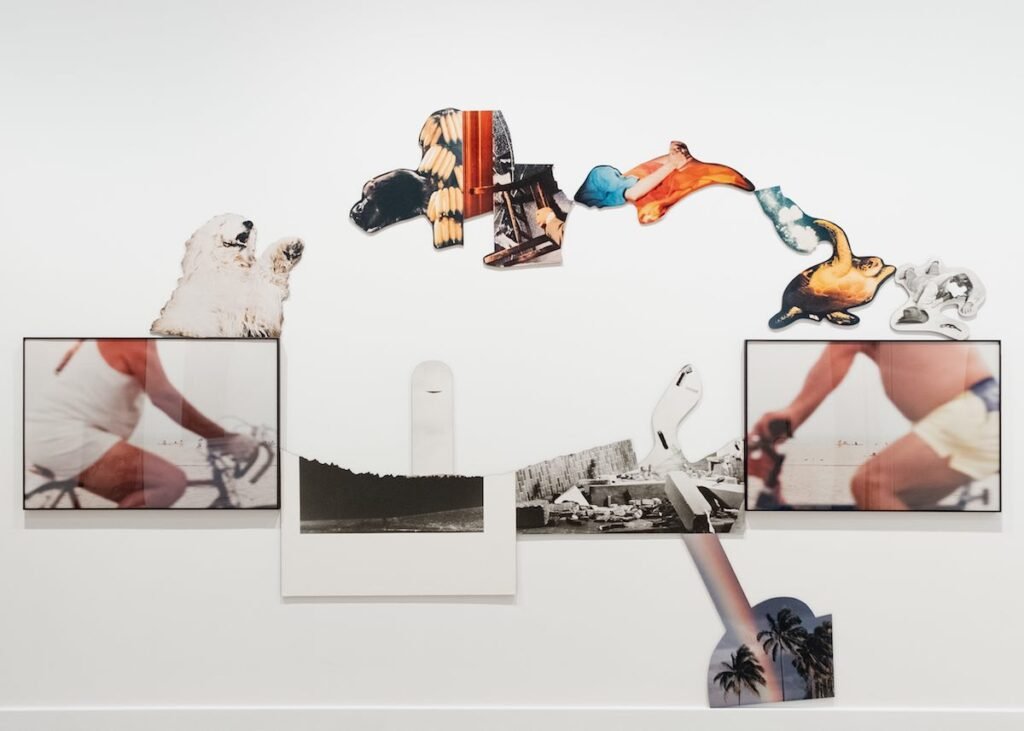
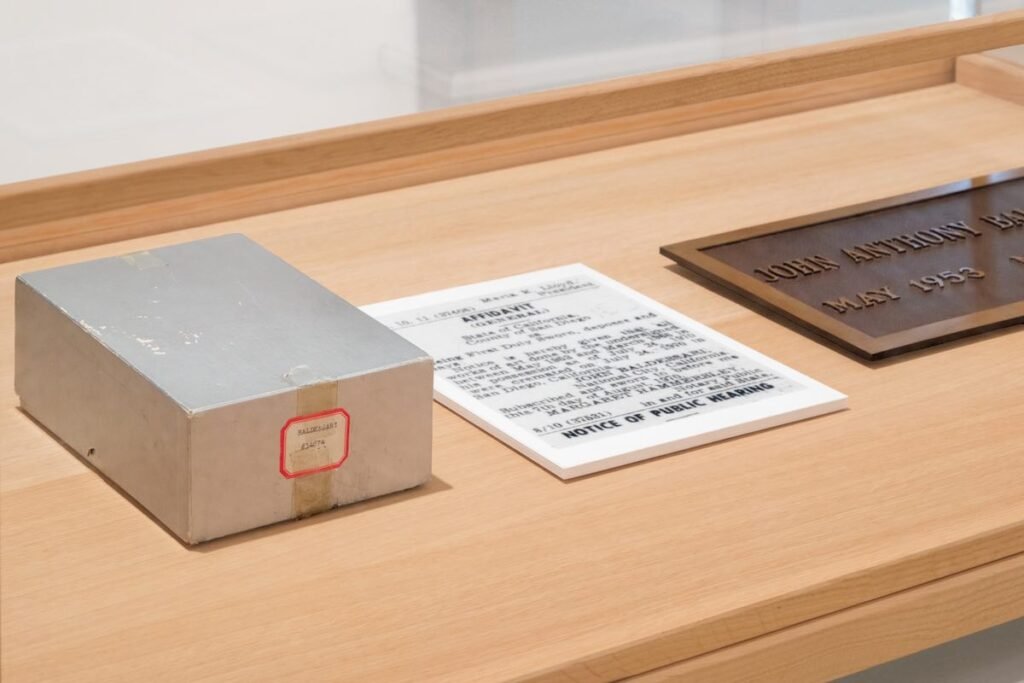
Ereditare comporta anche ricevere ciò che qualcuno ha deciso di sottrarre. Le ceneri di Cremation Project (1970) di John Baldessari provengono dai dipinti realizzati fra il 1953 e il 1966 ancora in suo possesso: raccolte in un’urna bronzea a forma di libro, sono presentate con una targa, una dichiarazione e fotografie. John Baldessari. No Stone Unturned – Conceptual Photography (2025), realizzata con la partecipazione dell’Estate of John Baldessari, porta questa memoria nella casa del lascito. Quell’urna a forma di libro custodisce la volontà che alcune opere non sopravvivano nella forma originaria. Alla continuità resa precaria da Hatoum si aggiunge una continuità deliberatamente interrotta: la fedeltà a chi lascia può chiedere di custodire anche la sua rinuncia.
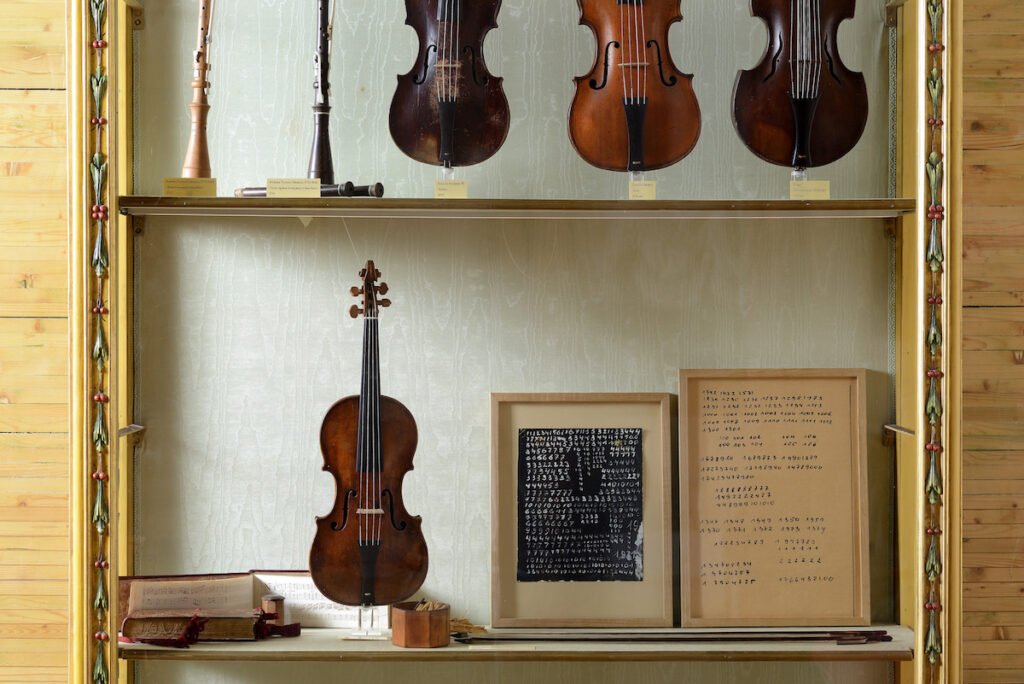
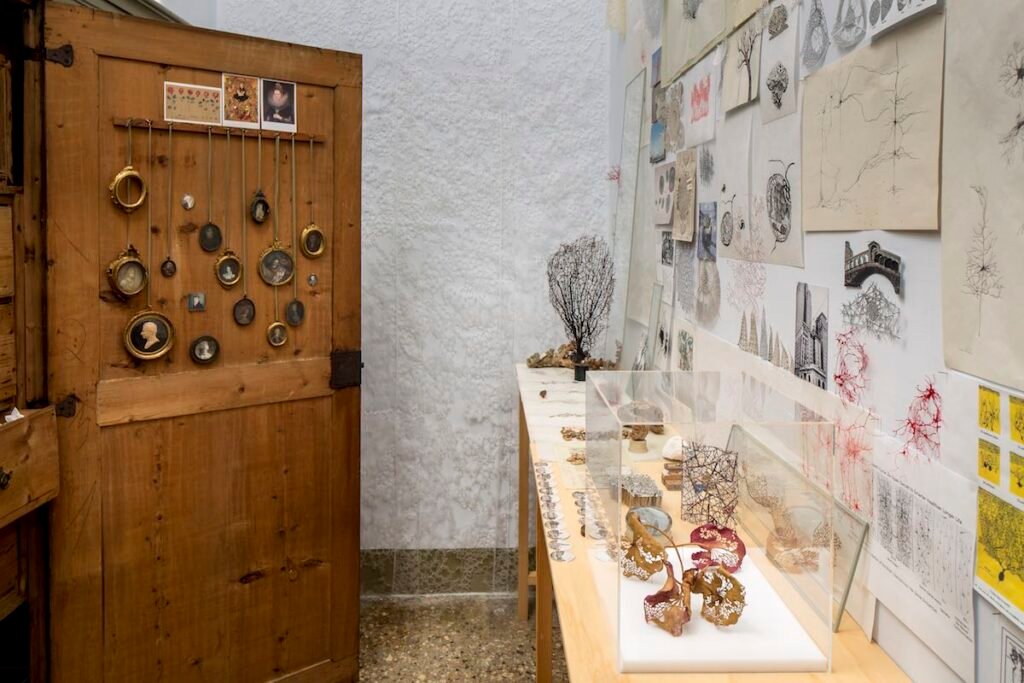
Altre cose rischiano di scomparire senza che nessuno lo abbia voluto. In una stanza dietro il boudoir, Elisabetta Di Maggio dedica loro la pazienza delle mani e dello sguardo. Natura quasi trasparente (2017) dispone in un guardaroba settecentesco reperti dell’artista accanto a piccoli oggetti delle raccolte, componendo un cabinet de curiosités. Gli oggetti, di diversa provenienza, condividono il tempo che qualcuno ha sottratto ad altro per raccogliere e trattenere. Nella luce di quella stanza, ciò che avrebbe potuto essere trascurato trova ancora chi se ne accorge.
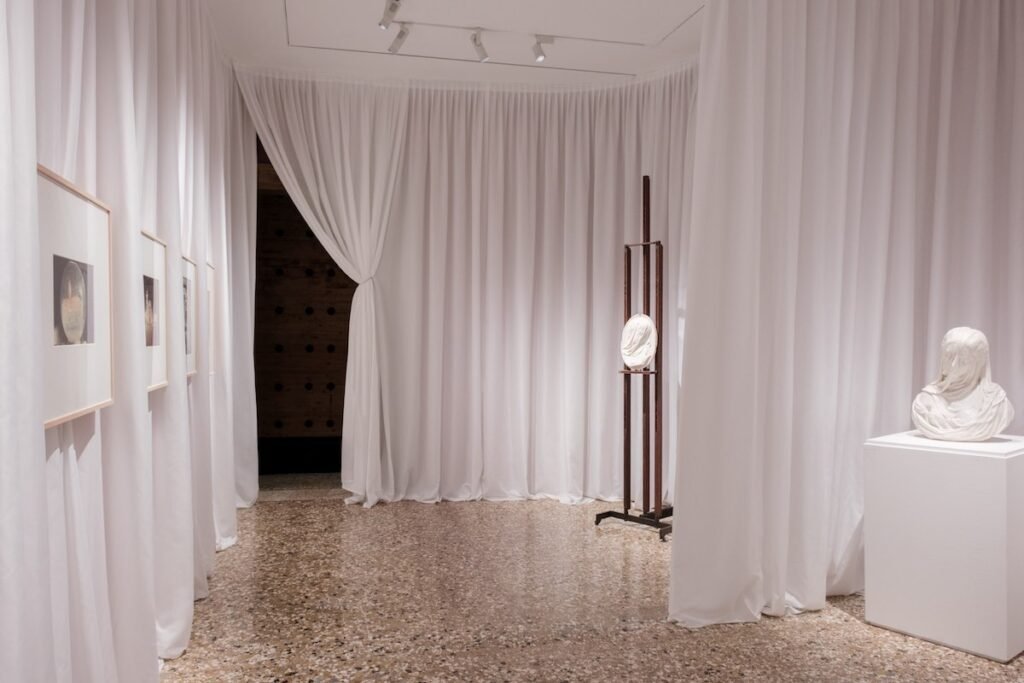
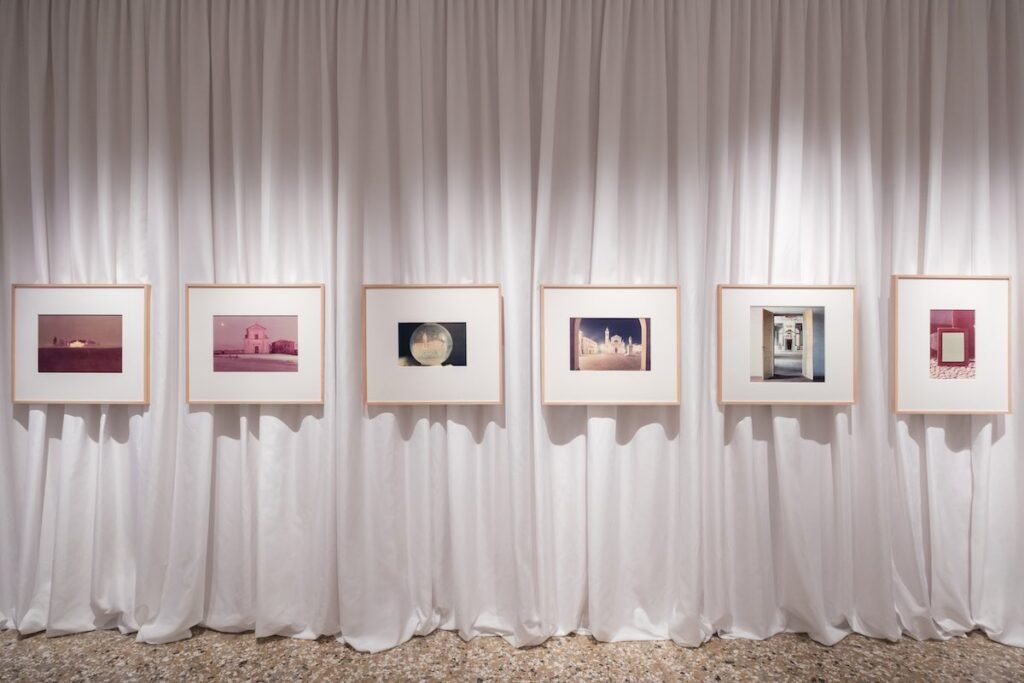
L’attenzione può arrivare tardi. Il medaglione riconosciuto come autografo di Antonio Corradini era rimasto nei depositi; in Disapparire. Antonio Corradini e Luigi Ghirri (2025–2026), il volto velato incontra le fotografie di un paesaggio che affiora dalla nebbia senza che questa si sciolga del tutto. Nel marmo, il viso e ciò che lo copre appartengono alla medesima materia. Il lavoro dello sguardo comincia da questa resistenza, anche quando il nome dell’autore è stato restituito. Curata da Elisabetta Dal Carlo, Lara Marchese, Marta Savaris e Babet Trevisan, con Monica De Vincenti, la mostra lascia aperto lo scarto fra avere custodito una cosa e avere imparato a vederla.
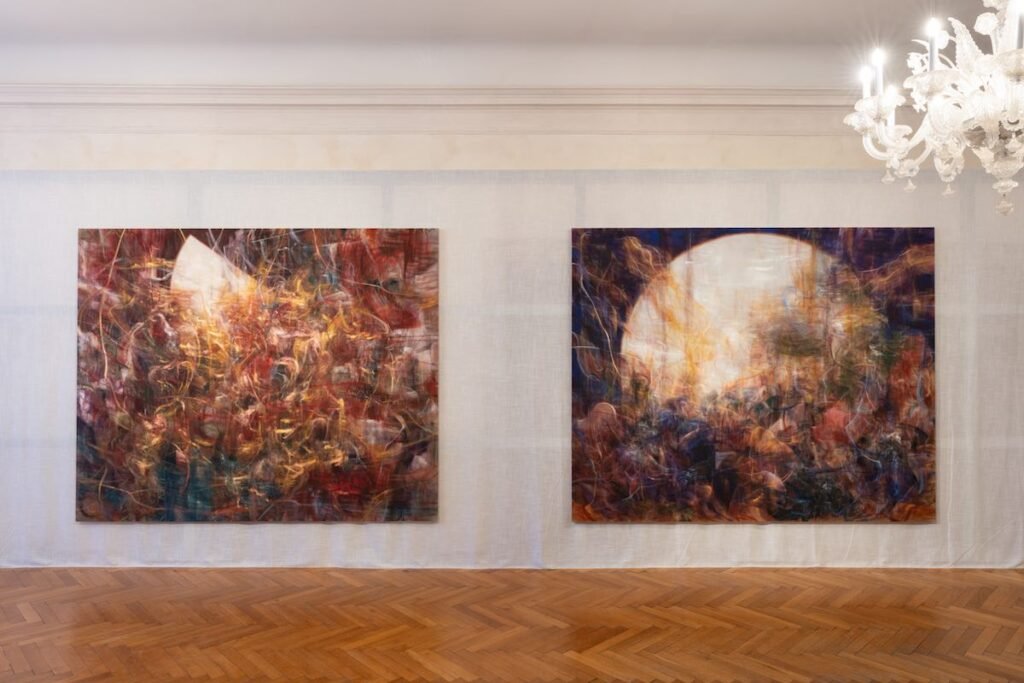
Di quella pazienza fanno parte anche le ore in cui un’opera non esiste ancora. Nel portego della Biblioteca, lo studio di Nigel Cooke accoglie le correzioni, l’attesa, la pittura che non ha deciso come continuare. Le cinque tele di Bad Habits (5 maggio–22 novembre 2026), a cura di Evelyn C. Hankins, sono mostrate dove sono state completate; nella tavolozza notturna, fra frammenti di figure, animali e oggetti, il lavoro ormai visibile porta la memoria di quelle ore. La casa ha ospitato qualcosa prima di poterlo custodire.
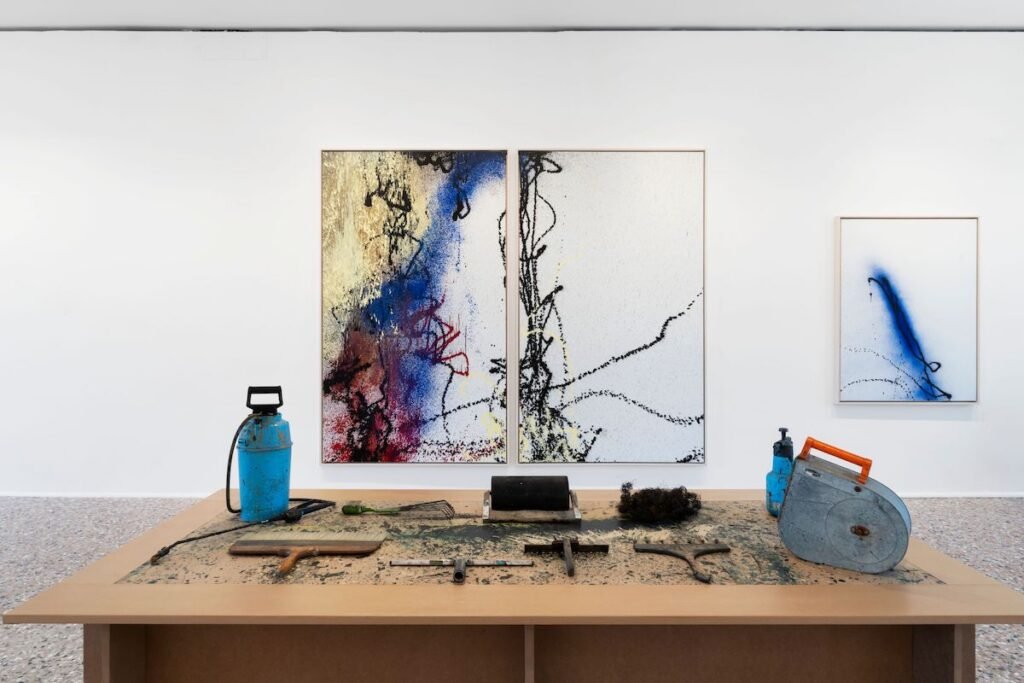
I dipinti ereditati hanno avuto anch’essi un tempo nel quale erano incompiuti, e cercarne le circostanze significa tentare di udire qualcosa di quella vita. Una pittura non ereditata, ma ospitata, tenta la stessa ricerca per la via del suono: in The Invisible Chord. Hans Hartung and Music (5 maggio–13 settembre 2026), a cura di Thomas Schlesser, dipinti, documenti e strumenti restituiscono la musica non come ispirazione ma come condizione del gesto. L’ascolto apre nella pittura un tempo che la tela, da sola, non lascia udire. Il gesto dipinto riceve una durata ulteriore, affidata a chi si ferma davanti al quadro; la vita trascorsa di cui le stanze sono piene trova nel suono una forma che non può essere trattenuta.
Fuori dalle stanze, quel lavoro continua nelle mani che tengono in vita Venezia. Per Venice: Objects, Work and Tourism (2015), Jimmie Durham conduce per quattro anni una ricerca fatta di incontri con costruttori di barche, vetrai, battiloro, intagliatori, lavoratori della ristorazione e degli uffici. La città ha bisogno di chi la ripari, la rifornisca, ne renda possibile ogni giorno l’uso; chi arriva ne incontra soprattutto la bellezza, già pronta a essere guardata. Nelle conversazioni entrano anche artisti e curatori diretti alla Biennale, partecipi di una circolazione di desideri dalla quale Durham non si esclude. Conoscere un luogo e consumarne l’immagine cominciano a confondersi proprio mentre si cerca di distinguerli.
Negli assemblaggi dell’Area Scarpa e del museo, frammenti di vetro, vernici, vecchi mattoni ed elementi del commercio quotidiano recano i segni di rotture e lavorazioni precedenti. L’artista prende in mano cose sulle quali altre mani hanno già agito, e il loro peso gli chiede come sostenerle, quale intervallo mantenere fra l’una e l’altra. In Lapis Lazuli with Venetian Red Glass, a Valve, Et Cetera (2015), la pietra preziosa si trova accanto al vetro rosso, a una valvola, all’acciaio e all’ottone. Il titolo continua dopo l’elenco, offrendo alla città la possibilità di aggiungere qualcosa. Il lavoro sembra conservare quella disponibilità nella forma stessa con cui tiene insieme le parti.
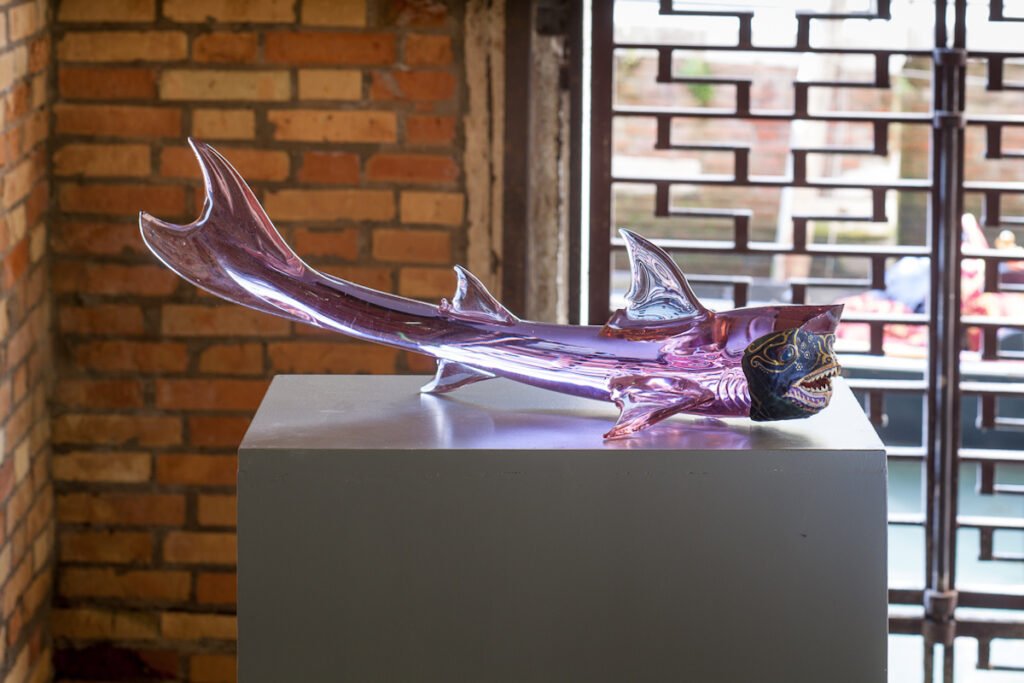
Vetro, pelle, denti di piranha, cartapesta e pittura compongono Carnivalesque Shark in Venice (2015). Lo squalo promesso dal nome arriva attraverso elementi incongrui, così che il riconoscimento deve sostare fra ciò che si aspettava e ciò che ha trovato. Dentro la raccolta storica, il frammento recuperato e la pietra preziosa rinviano entrambi a chi li ha lavorati, anche se la loro collocazione museale li distingue per valore e provenienza. Durham interroga quella gerarchia e fa affiorare, nella materia, una giornata trascorsa spesso fuori dal nostro campo visivo. Il tempo dell’altro entra nella casa con le conseguenze di un lavoro di cui non conosciamo il volto.
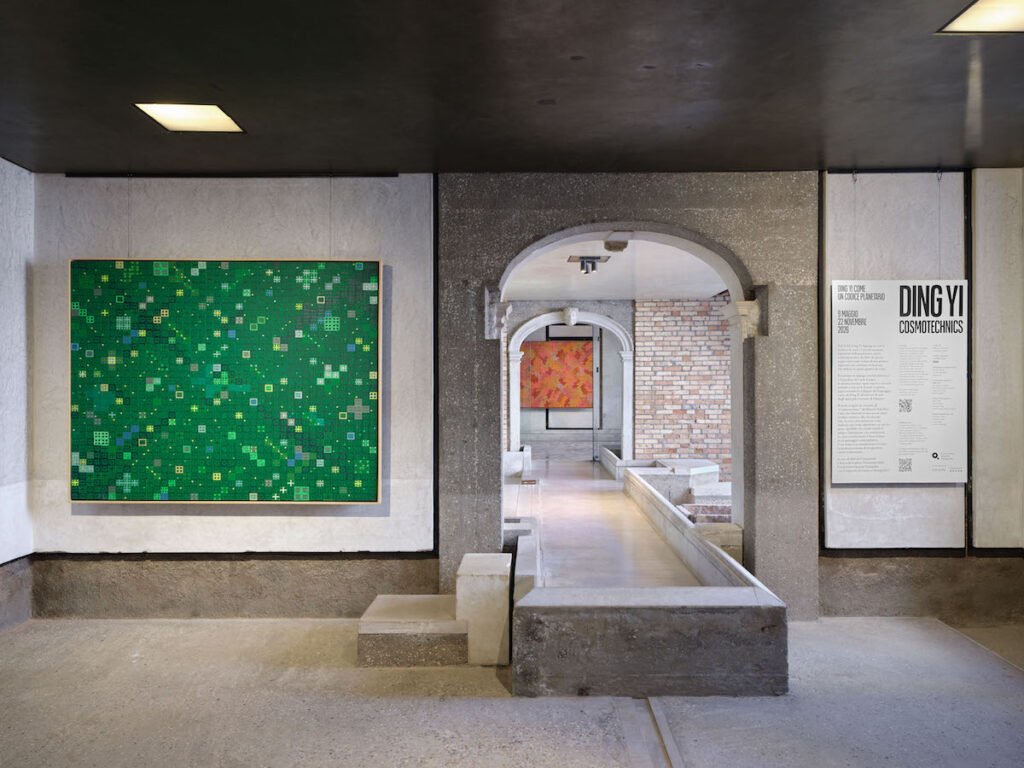
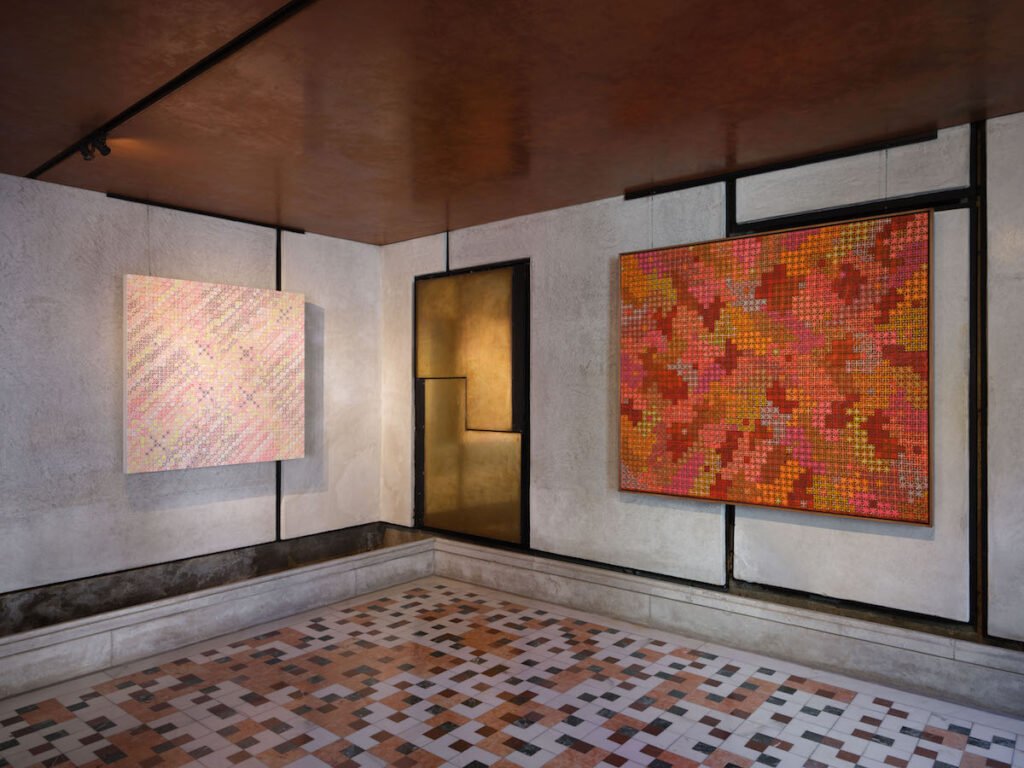
Le mani lasciano nella materia anche l’ordine al quale si sono affidate. In Appearance of Crosses, serie avviata nel 1988, Ding Yi ripete una croce; l’occhio scopre incisioni e intervalli che rendono ogni tratto irriducibile alla regola. Cosmotechnics: Ding Yi as a Planetary Code (9 maggio–22 novembre 2026), a cura di Alfredo Cramerotti e Auronda Scalera, porta nell’Area Scarpa opere di epoche diverse, dodici pannelli monocromi e due stele lungo un percorso che richiama i giardini tradizionali cinesi. Camminare fra le opere permette di misurare ciò che il segno reiterato non riesce a rendere uguale.
La cosmotecnica elaborata da Yuk Hui in The Question Concerning Technology in China (2016) lega l’attività tecnica a un ordine cosmico e morale e incontra qui la domanda già rivolta da Scarpa all’acqua: quanto può comprendere una forma, prima che qualcosa le chieda di essere diversa? La pietra lavorata e la quota concessa alla marea danno a quella domanda la consistenza di un edificio. Il segno di Ding Yi e il cammino dell’acqua appartengono a storie del fare differenti; nelle stanze veneziane, nessuno dei due permette alla regola di dimenticare ciò che la eccede.
Anche l’immobilità delle cose può essere un lavoro in corso. In Senza titolo (1967) di Giovanni Anselmo, un ferro uncinato mantiene arcuata una lastra di plexiglas: la tensione non ha smesso di esercitarsi quando il visitatore si ferma a guardare. Il museo deve conservare le condizioni di quell’accadere. Presentata nel 2017, Senza titolo, invisibile, dove le stelle si avvicinano di una spanna in più, mentre oltremare appare verso Sud-Est, e la luce focalizza… dispone quattro opere nell’Area Scarpa e un intervento nelle collezioni. La quiete della stanza contiene forze delle quali il nostro passaggio occupa soltanto un istante.
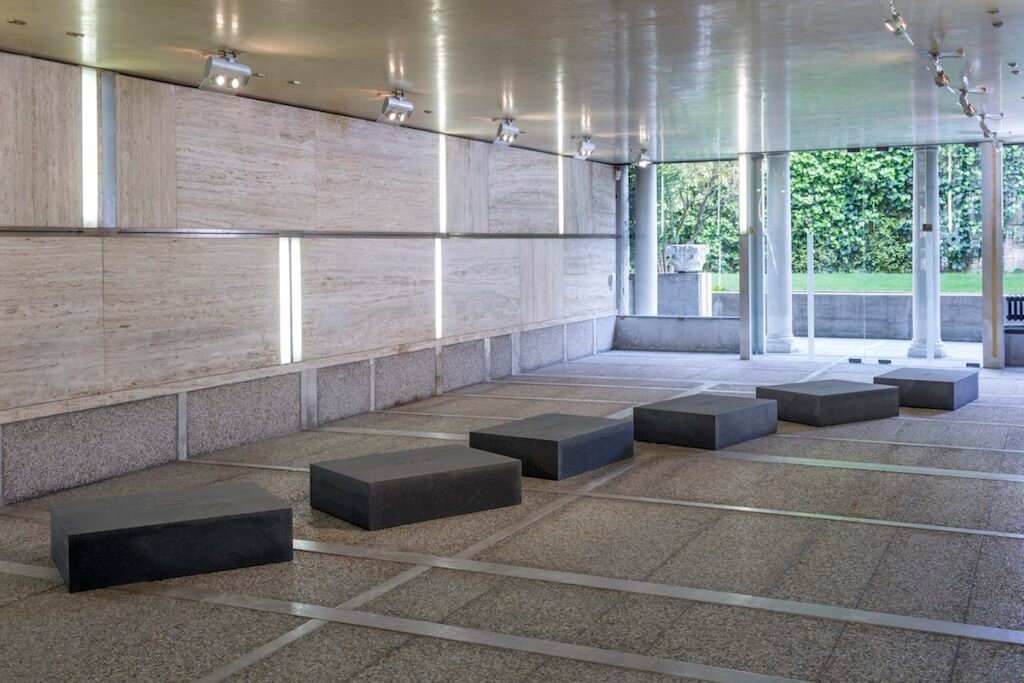
Sei blocchi di granito invitano a salire in Dove le stelle si avvicinano di una spanna in più (2001–2016). Il corpo si alza di una misura domestica, quasi nulla nello spazio astronomico, e tuttavia effettiva. La pietra sostiene l’esattezza di quel movimento; il soffitto non basta più a chiudere la stanza. In Mentre oltremare appare verso Sud-Est (1981–2016), un ago magnetico e una superficie di pigmento oltremare, su due blocchi di pietra, affidano al colore e all’orientamento un’altra apertura. La stanza veneziana offre un punto da cui orientarsi, mentre il nome del blu porta con sé una provenienza remota.
Nel museo, Particolare (1972–2017) proietta la parola nell’infilata delle sale. La luce incontra una porzione dell’ambiente, può raggiungere il corpo che attraversa e comprenderlo per un momento in ciò che nomina. Anche noi occupiamo un posto fra le cose, per il tempo che ci è concesso. La casa custodisce opere che hanno preceduto il nostro arrivo e rimarranno dopo che saremo usciti; Anselmo lascia che questa sproporzione diventi sensibile nella brevità di una presenza. Sostiamo fra cose che ci sopravvivranno, dentro un edificio che non basta a circoscrivere lo spazio cui appartiene.
Il tempo che ci è concesso finisce, mentre quello delle cose può proseguire. Nei Détails di OPALKA 1965 / 1–∞ (1965–2011), Roman Opałka spende nella sequenza numerica la stessa vita di cui il numero dà testimonianza. Ogni cifra chiama la successiva e ogni avanzamento riduce il tempo a disposizione della mano che deve continuare. Dire il tempo (2019) accosta questo lavoro a quello di Mariateresa Sartori. Nella dimora delle generazioni, il conto di un solo corpo incontra il limite dal quale nasce ogni lascito: il momento in cui ciò che abbiamo cominciato dovrà continuare senza di noi.
Sartori segue i pedoni nella Piazzetta San Marco. In Tutti quelli che vanno, presentato in una realizzazione del 2019, i loro tragitti diventano linee sulla carta, e ciascuno contribuisce a un disegno che non conosce. Si va verso una destinazione, si incrocia qualcuno, ci si allontana; soltanto nel lavoro dell’artista quei movimenti trovano una figura comune. Accanto ai numeri di Opałka, la trama dei percorsi fa affiorare un tempo nel quale siamo compresi senza poterlo abbracciare, un intreccio che conserva qualcosa di noi anche quando abbiamo già lasciato lo spazio.
Per accorgersi di un tempo che procede senza di noi occorre talvolta fermarsi più a lungo. Nell’inquadratura fissa di Luca Rento, una variazione della luce o un piccolo movimento possono sfuggire al primo sguardo. Prima che tutto svanisca (25 settembre 2026–17 gennaio 2027), a cura di Alfredo Cramerotti, raccoglie venticinque anni di ricerca sul video. Una ripresa può attendere anni prima di diventare opera; esposta, non ha ancora finito di domandare tempo. Qualcosa forse stava già accadendo al nostro arrivo. Il sospetto di averlo mancato ci trattiene, senza promettere che restare basterà.
Il lettore atteso da Giovanni Querini poteva chiudere il libro senza aver trovato ciò che cercava e tornare la sera successiva. La disposizione testamentaria lasciava posto anche a quella ricerca incompiuta, alla lentezza con cui una pagina diventa conoscenza. Nelle stanze, qualcuno incontra oggi una cosa che altri hanno custodito per lui e non sa ancora che cosa ne riceverà. Il conte aveva potuto assicurare un luogo, dei libri, ore disponibili. La sera che sarebbe venuta dopo la sua ultima sera rimaneva affidata a una vita della quale non conosceva il nome.
Cover: Facciata con Joseph Kosuth, “La materia dell’ornamento” (1997) – Foto di Adriano Mura
IN THE TIME OF THE OTHER
The House of Those Yet to Come
At the Fondazione Querini Stampalia
The twelfth episode of “In the Time of the Other”, the series by Rita Selvaggio, enters a house bequeathed to those who would come after. At Venice’s Fondazione Querini Stampalia, books, artworks and architecture hold a promise of knowledge. Contemporary interventions question that promise, between the care of things and the freedom to imagine another life for them.
A house may begin to belong to others at the hour when daylight withdraws. Giovanni Querini Stampalia had imagined it still open, its books available to those who could make time to read only after work. He did not know the faces that would enter, or the questions they would bring. In his will of 1868, he stipulated that the library should remain accessible especially in the evenings and when other public libraries were closed: he was leaving strangers hours of the day they would not have found elsewhere, and a place in which to spend them.
The light that burned on into the evening expressed this idea of knowledge. To learn what one did not yet know required a table, a book, hours reclaimed from pressing needs; it required the freedom to return to the same page without yet knowing what it might yield. The bequest also extended to this freedom, which Giovanni had exercised throughout his life and, at its close, entrusted to people who did not share his name.
Born in 1799, two years after the fall of the Venetian Republic, Count Giovanni Querini Stampalia was the last descendant of one of its great families. In the mosaic portrait preserved in the palazzo, his dark cap, the hair curling at his temples, his thick sideburns and high cravat give his face a solemn expression, reinforced by his firmly closed mouth. His letters bring back a younger voice: ‘I desire nothing but study, and quiet,’ he wrote in 1817. He would answer his family’s wish for an heir by choosing not to marry, ending a family line whose continuation he would instead entrust to things.
After taking a law degree at Padua, he pursued Greek and Latin, numismatics and heraldry, botany and natural history. Riding and fencing found their place among the hours devoted to books; scientific curiosity drew him to instruments, leading him to establish a physics and chemistry laboratory in the palazzo, purchase equipment for the city’s hospital and experiment with electric lighting. On his estates, steam-powered drainage pumps and innovations in silk production gave his studies tangible consequences. To know something of the world also meant being able to alter the conditions of life.
In a different historical context, the conditions necessary for thought would become central to Virginia Woolf’s A Room of One’s Own (1929). In women’s exclusion from literary life, Woolf recognises the weight of money, interruptions, time that others may lay claim to; the room gives a voice the time it needs to unfold. By opening his library in the evening, Giovanni offered strangers a space of intellectual freedom during the hours left to them after work. Knowledge could begin there, in the quiet habit of keeping company with a book.
At his death in 1869, the books were made available for public use, together with the palazzo, the paintings, the furniture and the objects gathered over generations. At Santa Maria Formosa, the sixteenth-century residence, enlarged and refurbished in the eighteenth century, retains in its succession of rooms something of the distance a family had placed between its own life and the lives of others. Reception rooms give way to more intimate spaces; an opening offers a glimpse of what lies a little further on, while another part of the house remains hidden from the first glance. The building arranges encounters before the artworks do.
On the second floor, the portego, the great hall where the family received its guests, brings this arrangement together. The central position of the room, aligned with the mullioned window, reflects both the layout of the Venetian palazzo and its display of patrician prestige; on the ceiling, Jacopo Guarana’s Allegoria dell’Aurora (Allegory of Dawn) (late eighteenth century) commemorates the marriage of Alvise Querini and Maria Teresa Lippomano. Stucco work by Giuseppe and Pietro Castelli articulates the surfaces around an image that once accompanied the hope of a continuing family line. Those who look at it today come after the promise it held, inside a house whose future has become public.
In the rooms, the furniture suggests gestures that now survive only as possibilities. A portrait still stands near an object that might have belonged to the person depicted, but we shall never hear the voice that belonged to that face. We approach what others have known across a distance no care can bridge. In Specters of Marx (1993), examining the inheritance of a political tradition, Jacques Derrida understands inheritance as a task: to receive entails interpreting, distinguishing, choosing. Here too, fidelity must reckon with that difficulty. The house outlives those who arranged it and asks those who arrive what they will do with it.
The bequest therefore had to take a form that could accommodate readers and visitors. The presence of other bodies called for entrances, routes and spaces that could be walked through and used within a building whose conservation would have to meet the demands of use. In The Modern Cult of Monuments (1903), Alois Riegl distinguishes age-value from use-value, illuminating the conflict between the time embedded in things and the needs of the present. At the Querini, that conflict takes the tangible form of a footstep, a staircase, a ground floor within reach of the water: preserving the house also means allowing someone to enter it.
Between 1959 and 1963, Carlo Scarpa redesigns part of the ground floor and the garden in the courtyard. The bridge from campiello Querini leads to an entrance where the canal laps against the palazzo and sets the terms of the design. Giuseppe Mazzariol would have liked to keep the acqua alta out; Scarpa replies: ‘Inside, let the high water in, inside as throughout the city.’ A few centimetres separate the tide’s path from the visitor’s, while gates and steps accompany its advance. Safety here depends on a precise level, to which the city continues to address its question.
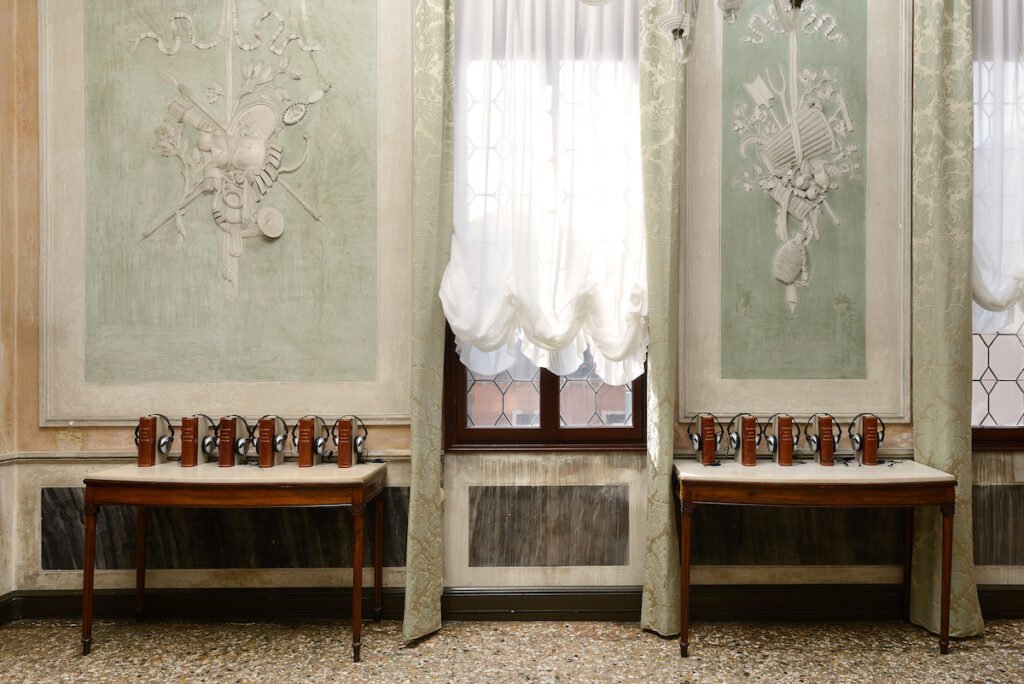
Light reflected from the water rises along the walls, reaches the ceiling and alters the colour of the surfaces. In the garden, pools and small channels give the water another rhythm, marked out by stone, concrete and mosaic. The sound of dripping water gives the courtyard a time of its own, distinct from that of anyone who stops to listen. Between the entrance hall, the room for exhibitions and gatherings, and the garden, Scarpa creates the conditions for coexistence: each material retains its resistance, and the palazzo admits something it will never possess.
Valeriano Pastor’s circulation routes, built between 1982 and 1997, carry this work into the depths of the building. A new staircase reaches the upper floors from the small inner courtyard; the wooden slats of its curved cladding and the little portholes recall a boat’s hull, giving the ascent a memory of Venice. The footbridge between the Library and the book repository shortens a journey essential to the institution’s life. These routes too, less likely than the rooms to attract admiration, belong to the work of care: they enable a book to reach the hands of the person who has requested it.
From 1994, Mario Botta reorganises spaces and services, moving the main entrance towards campo Santa Maria Formosa. Around the covered courtyard, the entrance, auditorium and new routes bring different parts of the complex together; the staircase’s red Verona stone meets metal, and light filtered from above guides people towards the other rooms. The Mazzariol courtyard offers a place to pause between one destination and another. Needs that have grown over time find a home in this part of the building, allowing Scarpa’s intervention to be preserved without further adaptation.
In the rooms intended to house the Intesa Sanpaolo Collection, Michele De Lucchi restores the vista through the aligned doorways. Completed in 2018, the project removes partition walls and allows the colour of the walls to grow paler from one room to the next, so that the eye can travel ahead of the body. The palazzo brings together these different ways of opening itself to others. Those who pass through it encounter decisions made in different periods, still at work in the space allowed to their bodies, in the light through which an artwork comes into view.
Conservare il futuro (Conserving the Future) engages with a house already transformed by many presences. The interventions begin in 1997; Chiara Bertola, who curated the contemporary art programme until 2022, develops a line of enquiry whose first twenty-five years are explored in the volume of the same name, published in 2023. The artist, as the figure of the intruder that Bertola invokes, enters an order they did not establish. They may alter it, but a detail of the house may in turn correct the project, demand a different scale, make the gesture on which the artist had initially relied unnecessary.
This enquiry includes, among others, Michelangelo Pistoletto, Lothar Baumgarten, Giulio Paolini, Georges Adéagbo, Anita Sieff, Marisa Merz, Qiu Zhijie, Haris Epaminonda, Danh Vō, Isamu Noguchi and Park Seo-Bo; Roman Opałka, Mariateresa Sartori, Mona Hatoum, Jimmie Durham, Giovanni Anselmo and Elisabetta Di Maggio. Yona Friedman and Jean-Baptiste Decavèle, Paolo Icaro, Andrea Zanzotto and Giuseppe Caccavale also draw on the Luigi Ghirri holdings. Some works remain as gifts, entrusting to the collections the memory of the encounter from which they arose. The family inheritance is thus opened to questions none of its owners could have formulated.
The decisions of those who care for the institution also become part of its inheritance. Alongside paintings and furniture, the Foundation safeguards relationships no inventory could describe. Cristiana Collu, its director since September 2024, adopts the archipelago as a metaphor for the institution in the manifesto A Wonder Booster (2024): museum, library, architecture and public activities retain their distinct identities, while the connections between them renew their possibilities.
This geography is redrawn by The Dreamer (2026), the redisplay of the collection opened on 5 May, conceived and directed by Collu. The passions of Giovanni and his sister Caterina become the thread of a narrative that passes through the rooms, weaving paintings, furnishings and contemporary presences together with echoes of Luchino Visconti’s Senso (1954). Textiles, sounds and fragrances accompany the visitor into a dwelling restored to the imagination. The staging makes us feel the longing for a life now past; less certain is how much room it leaves the objects to tell that life in their own voice.
A place extends beyond the walls that house the work. In One Place after Another: Site-Specific Art and Locational Identity (2002), Miwon Kwon traces the shift from the physical specificity of the site to its institutional and social conditions. At the Querini, these include the founder’s wishes, the uses of the rooms, the history of the site’s protection and of the interpretations it has accommodated. The intervention encounters all this before it even finds its place. Its necessity becomes apparent when something in the house makes it different from what it would be elsewhere, and when the house, having received it, reveals what it previously held in reserve.
The Dreamer, too, calls for assessment in these terms. For all its seductive power, the montage leaves open the question of whether the contemporary interventions are necessary: their connection with the collection seems to rest chiefly on a shared atmosphere, and the reason for bringing them together is less clear than the scene in which they meet. Furniture gathered into groups and sheets veiling its surfaces give absence a theatrical presence, yet conceal part of the material life the house has been entrusted to pass on. What remains in question is the extent of the transformation: how much of the works can still be encountered on terms the narrative has not already set? At the Querini, where the bequest began by making study possible, enchantment too must leave time and space for knowledge.
A façade may be read, a colour rediscovered, an inlay echoed where the life of the building calls for it. Joseph Kosuth’s twelve neon inscriptions, La materia dell’ornamento (The Matter of Ornament) (1997), bring Ruskin’s categories in The Stones of Venice (1851–1853) back to stone. Maria Morganti follows the colours of the nineteenth-century room: in Quadro per la Sala dell’800 (Painting for the Nineteenth-Century Room) (2008), even the flower in the hair of the figure in Alessandro Milesi’s La modella (The Model) (1910) enters the time of another painting. The detail survives because someone has looked at it long enough. In Porte tagliafuoco (Fire Doors), presented in 2008 in Disegni dimessi (Discarded Drawings), the adhesive films with which Stefano Arienti covers the doors adapt the antique inlays to a present-day need. The language of the house continues where those who use it must pass.
Reading things is not enough to restore the life that once inhabited them. On the table in the portego, Kiki Smith’s porcelain figures, brought together in Homespun Tales. Storie di occupazione domestica (Homespun Tales: Stories of Domestic Occupation) (2005), evoke female presences for whom the rooms still hold a place. The small scale of the bodies makes one feel how much space remains around an absence. Ilya and Emilia Kabakov also unsettle the visitor’s sense of scale: in Where Is Our Place? (2002), presented in 2003, the visitor stands between gigantic figures and a miniature world beneath the floor. The house is recognisable, yet we can no longer take our own bodies as the measure of everything it contains.
That familiarity is more treacherous still in the antique display cases, where Mona Hatoum undermines the trust we place in things held in safekeeping. The exhibition Interior Landscape (2009) moves through the temporary exhibition spaces and the collection; in Natura morta (Still Life) (2009), Murano glass takes forms resembling hand grenades, with contours that also evoke fruit. Colour and lustre precede recognition. Once the shape becomes clear, the delicacy of the glass continues to draw us, and the object remains protected with the attention due to a precious possession. Our desire to look at it persists despite what we have discovered; the display case holds it before us, now inseparable from the memory of violence.
In the installation Interior Landscape (2008), the outline of Palestine appears in hair on a pillow and in the altered shape of a metal coat hanger, among a steel bed, a table and other domestic elements. In a place of rest, what might have been the trace of a head delineates a distant territory. The room bears a separation its objects cannot mend and, within the Venetian palazzo, makes the continuity of the collections seem less self-evident. Having been able to stay, having found a way to take things with us: much of what we call heritage depends on these possibilities. Hatoum’s pillow reveals how fragile they are.
To inherit also means receiving what someone has chosen to take away. The ashes in John Baldessari’s Cremation Project (1970) come from paintings made between 1953 and 1966 that were still in his possession: gathered in a bronze urn shaped like a book, they are presented with a plaque, a statement and photographs. John Baldessari. No Stone Unturned – Conceptual Photography (2025), organised with the participation of the Estate of John Baldessari, brings this memory into a house itself bequeathed to others. That book-shaped urn preserves the wish that certain works should not survive in their original form. Alongside the continuity Hatoum renders precarious comes a continuity deliberately interrupted: fidelity to the person making the bequest may ask us to honour what they chose to relinquish.
Other things risk disappearing without anyone having wished it. In a room behind the boudoir, Elisabetta Di Maggio gives them the patient attention of her hands and eyes. Natura quasi trasparente (Almost Transparent Nature) (2017) places finds collected by the artist alongside small objects from the collections in an eighteenth-century wardrobe, forming a cabinet de curiosités. The objects, though different in origin, share the time someone has set aside to gather and keep them. In the light of that room, what might have been overlooked still finds someone to notice it.
Attention may come late. The medallion identified as a work by Antonio Corradini himself had remained in storage; in Disapparire. Antonio Corradini e Luigi Ghirri (Disappearing: Antonio Corradini and Luigi Ghirri) (2025–2026), the veiled face encounters photographs of a landscape emerging through mist that never quite clears. In the marble, the face and what conceals it belong to the same material. The work of looking begins with this resistance, even after the work has been reunited with its maker’s name. Curated by Elisabetta Dal Carlo, Lara Marchese, Marta Savaris and Babet Trevisan, with Monica De Vincenti, the exhibition leaves open the gap between having safeguarded a thing and having learnt to see it.
That patience also includes the hours in which a work does not yet exist. In the Library’s portego, Nigel Cooke’s studio makes room for revisions, for waiting, for painting that has not yet decided how to proceed. The five canvases of Bad Habits (5 May–22 November 2026), curated by Evelyn C. Hankins, are shown where they were completed; in their nocturnal palette, among fragments of figures, animals and objects, the work now visible carries the memory of those hours. The house welcomed something before it could safeguard it.
The inherited paintings, too, were once unfinished, and to trace the circumstances of their making is to try to hear something of that life. Painting temporarily welcomed into the house, rather than inherited with it, pursues the same enquiry through sound: in The Invisible Chord. Hans Hartung and Music (5 May–13 September 2026), curated by Thomas Schlesser, paintings, documents and instruments present music not as inspiration but as a condition of the gesture. Listening opens up a dimension of time within painting that the canvas alone cannot make audible. The painted gesture is given a further span of time, entrusted to whoever stops before the picture; the past life with which the rooms are filled finds in sound a form that cannot be held.


Outside the rooms, that work continues in the hands that keep Venice alive. For Venice: Objects, Work and Tourism (2015), Jimmie Durham conducts research over four years through conversations with boatbuilders, glassmakers, goldbeaters, woodcarvers, catering staff and office workers. The city needs people to repair it, supply it, make everyday life there possible; those who arrive encounter above all its beauty, already there to be looked at. Artists and curators on their way to the Biennale also enter the conversations, taking part in an exchange of desires from which Durham does not exempt himself. Knowing a place and consuming its image begin to blur just as one tries to tell them apart.
In the assemblages in the Scarpa Area and the museum, fragments of glass, paints, old bricks and items of everyday commerce bear the marks of earlier fractures and work. The artist picks up things on which other hands have already worked, and their weight asks him how he will support them, what intervals he will maintain between them. In Lapis Lazuli with Venetian Red Glass, a Valve, Et Cetera (2015), the precious stone sits beside red glass, a valve, steel and brass. The title continues beyond the list, leaving room for the city to add something. The work seems to preserve that openness in the very form through which it holds its parts together.
Glass, leather, piranha teeth, papier-mâché and paint make up Carnivalesque Shark in Venice (2015). The shark promised by the name arrives through incongruous elements, so that recognition must linger between what it expected and what it has found. Within the historical collection, the salvaged fragment and the precious stone both point back to those who worked them, even though their placement in the museum distinguishes them by value and provenance. Durham questions that hierarchy and allows a day’s labour, often spent beyond our field of vision, to emerge in the material. The time of the other enters the house through the effects of labour to which we cannot put a face.
Hands also leave in the material a trace of the order they have followed. In Appearance of Crosses, a series begun in 1988, Ding Yi repeats a cross; the eye discovers incisions and intervals that make every mark irreducible to the rule. Cosmotechnics: Ding Yi as a Planetary Code (9 May–22 November 2026), curated by Alfredo Cramerotti and Auronda Scalera, brings works from different periods, twelve monochrome panels and two stelae into the Scarpa Area, along a route recalling traditional Chinese gardens. Walking among the works allows us to discern the differences that persist within the repeated sign.
The cosmotechnics Yuk Hui develops in The Question Concerning Technology in China (2016) binds technical activity to a cosmic and moral order and here meets the question Scarpa had already addressed to water: how much can a form encompass before something asks it to change? The worked stone and the level set to accommodate the tide give that question the substance of a building. Ding Yi’s sign and the path of the water belong to different histories of making; in the Venetian rooms, neither allows the rule to forget what exceeds it.
Even the stillness of things may be work in progress. In Giovanni Anselmo’s Senza titolo (Untitled) (1967), a hooked iron rod keeps a sheet of Plexiglas bent: the tension has not ceased to act when the visitor stops to look. The museum must preserve the conditions that keep it happening. Presented in 2017, Senza titolo, invisibile, dove le stelle si avvicinano di una spanna in più, mentre oltremare appare verso Sud-Est, e la luce focalizza… (Untitled, Invisible, Where the Stars Come a Handspan Closer, While Ultramarine Appears towards the South-East, and the Light Focuses…) places four works in the Scarpa Area and one intervention within the collections. The quiet of the room holds forces that endure far beyond the instant of our passing.
Six granite blocks invite us to step up in Dove le stelle si avvicinano di una spanna in più (Where the Stars Come a Handspan Closer) (2001–2016). The body rises by a handspan, an everyday measure that scarcely registers on an astronomical scale, yet makes a real difference. The stone gives that precise movement a firm footing; the ceiling no longer suffices to enclose the room. In Mentre oltremare appare verso Sud-Est (While Ultramarine Appears towards the South-East) (1981–2016), a magnetic needle and a surface of ultramarine pigment, on two blocks of stone, open the room in another way, through colour and orientation. The Venetian room offers a point from which to find our bearings, while the name of the blue carries the memory of a distant origin.
In the museum, Particolare (1972–2017) projects the Italian word particolare (‘detail’) along the enfilade of rooms. The light falls on part of the surrounding space; it may reach a passing body and include it for a moment in what it names. We too occupy a place among things, for the time we are given. The house preserves works that preceded our arrival and will remain after we have left; Anselmo makes this disparity felt in the brevity of our presence. We pause among things that will outlive us, inside a building that cannot circumscribe the space to which it belongs.
The time we are given ends, while the time of things may continue. In the Détails (Details) of OPALKA 1965 / 1–∞ (1965–2011), Roman Opałka spends on the numerical sequence the very life to which the number bears witness. Each figure calls for the next, and each advance reduces the time available to the hand that must continue. Dire il tempo (Telling Time) (2019) places this work alongside that of Mariateresa Sartori. In this home to successive generations, one body’s act of counting reaches the limit from which every bequest arises: the moment when what we have begun will have to continue without us
Sartori follows pedestrians in the Piazzetta San Marco. In Tutti quelli che vanno (All Those Who Go), presented in a 2019 version, their routes become lines on paper, and each person contributes to a drawing of which they are unaware. We move towards a destination, cross someone’s path, move away; only in the artist’s work do these movements resolve into a shared pattern. Alongside Opałka’s numbers, the interwoven paths reveal a time that holds us within it, though we cannot encompass it, and keeps something of us even after we have left the space.
To become aware of a time that unfolds without us, we must sometimes stay a little longer. In Luca Rento’s fixed frame, a change in the light or a small movement may escape the first glance. Prima che tutto svanisca (Before Everything Fades Away) (25 September 2026–17 January 2027), curated by Alfredo Cramerotti, brings together twenty-five years of research into video. Footage may wait years before becoming a work; once exhibited, it has not finished asking for time. Something may already have been happening when we arrived. The suspicion that we may have missed it keeps us there, without promising that staying will be enough.
The reader Giovanni Querini awaited could close the book without having found what they were looking for, and return the following evening. The terms of the will left room for that unfinished search too, for the slow unfolding through which a page becomes knowledge. In the rooms, someone today encounters a thing others have kept for them and does not yet know what it will yield. Count Giovanni had been able to provide a place, books, hours free for reading. The evening that would follow his own last evening was left in the keeping of someone whose name he did not know.