English version below —
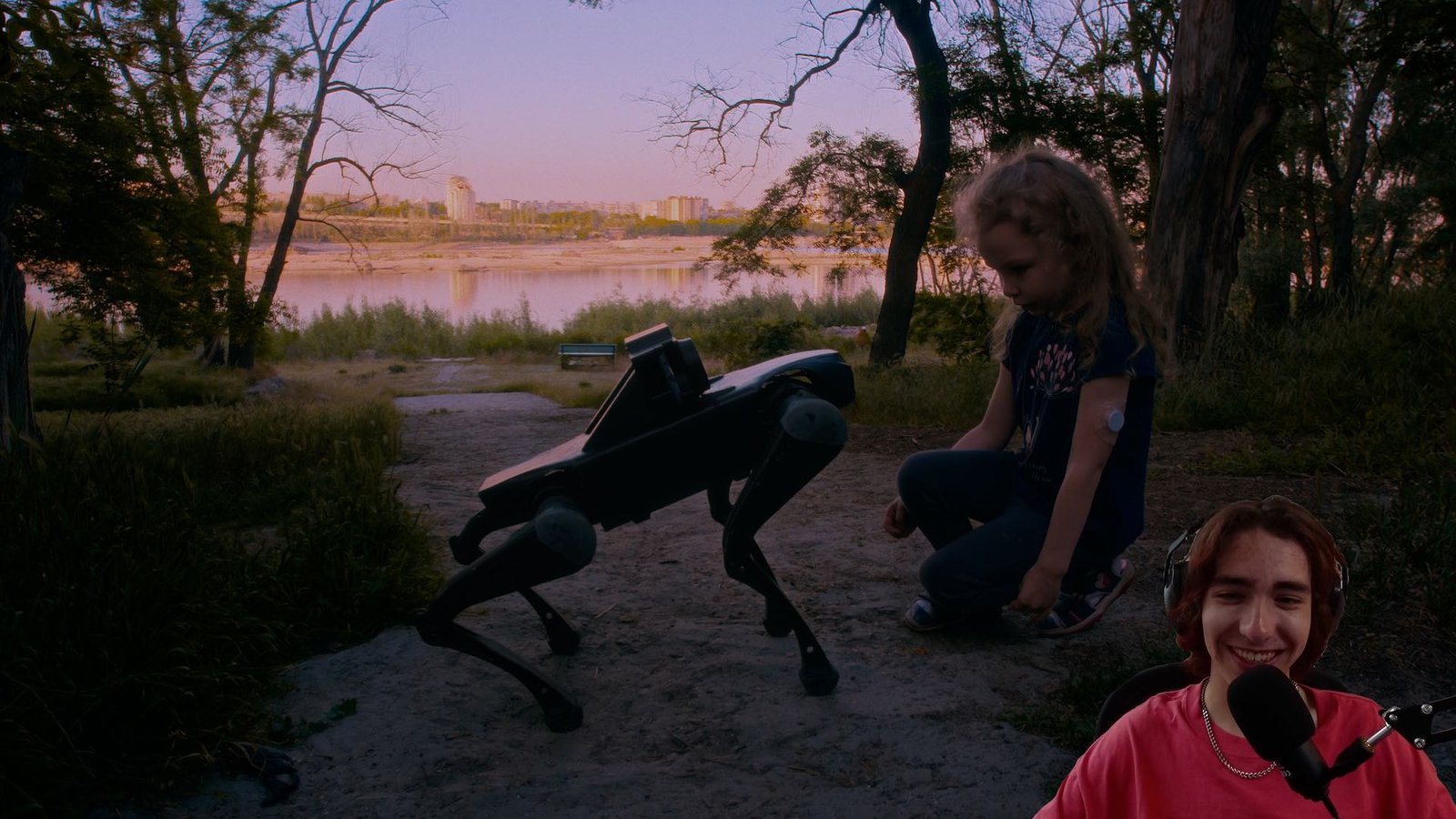
Un giovane ragazzo ucraino, costretto a vivere lontano dalla propria casa a causa della guerra, cerca di rivedere i luoghi della sua infanzia attraverso un cane robotico. Dalla Polonia, dove si trova, lo controlla a distanza e, grazie a questo dispositivo, riesce a tornare, almeno virtualmente, a Zaporižžja, la città in cui è cresciuto.
È questa la premessa di Homecoming, il film di Yarema Malashchuk e Roman Khimei, presentato in anteprima italiana sabato 14 novembre al festival Lo Schermo dell’Arte.
Attraverso uno sguardo intimo e al tempo stesso profondamente sociale, il film esplora il rapporto tra memoria, distanza e desiderio di mantenere un legame con i luoghi e le persone da cui si è stati costretti a separarsi. La guerra rimane sullo sfondo, ma è una presenza costante: si manifesta nel paesaggio e nella nuova forma che sono costrette ad assumere le relazioni tra le persone e i luoghi.
Il cane robot diventa così uno strumento per ritornare, ma anche una sorta di corpo sostitutivo, l’unica possibilità di riappropriarsi, seppur virtualmente, di uno spazio ormai inaccessibile. Da qui emerge una domanda che attraversa tutto il film: Il ritorno a casa implica necessariamente un ritorno fisico?
Tra cinema, performance e osservazione sociale, Malashchuk e Khimei riflettono su come le tecnologie di controllo remoto stiano trasformando l’esperienza della memoria e del ritorno.
Abbiamo fatto qualche domanda sul film ai due registi.
In Homecoming, il protagonista cerca di tornare nei luoghi della propria infanzia attraverso un cane robot. Perché avete scelto di raccontare il ritorno a casa attraverso una macchina? Che cosa può fare questo corpo artificiale che il corpo umano non può più fare?
Il cane robotico non può fare nulla meglio di un corpo umano. Tuttavia, quando il ritorno di un corpo umano diventa impossibile o altamente rischioso, una macchina può trasformarsi in un avatar – un tramite attraverso il quale è possibile tornare, esplorare e ristabilire una connessione con un luogo altrimenti inaccessibile. In questo senso, il robot diventa al tempo stesso uno strumento per ritornare e un sostituto della presenza fisica.
Il protagonista riesce a esplorare la propria città a distanza, ma non può tornarci fisicamente. Secondo voi, è possibile sentirsi a casa in un luogo che possiamo vedere, ma che non possiamo raggiungere?
Questa è forse la domanda centrale che ci siamo posti durante la realizzazione del film e, in ultima analisi, la domanda che il film stesso pone: che cosa significa tornare a casa? Il ritorno a casa implica necessariamente un ritorno fisico? E che cosa rende la presenza fisica più importante della connessione audiovisiva di cui già disponiamo?
Attraverso il cane robotico, è persino possibile acquisire un corpo-avatar e una certa libertà di movimento all’interno di un luogo che non si può raggiungere fisicamente. Un mondo sempre più interconnesso sta ridefinendo la nostra concezione della distanza, della presenza e, in ultima analisi, di ciò che consideriamo casa.
In Homecoming la guerra è una presenza costante, anche se non viene mostrata in maniera esplicita. Come avete lavorato per renderla percepibile attraverso l’assenza, i luoghi e gli incontri del cane robot, senza ricorrere alle immagini di violenza a cui i media ci hanno ormai abituati?
Crediamo che l’arte e il cinema debbano sviluppare un proprio linguaggio, piuttosto che riprodurre quello dei mezzi di informazione. Questo significa anche resistere alla tentazione di duplicare immagini di violenza ormai familiari, persino quando farlo potrebbe sembrare funzionale a una causa giusta.
Non crediamo che l’arte debba avvicinarsi al proprio soggetto con un intento pedagogico o una missione prestabilita. Siamo invece interessati a individuare una forma che permetta al soggetto di emergere attraverso incontri indiretti, assenze e situazioni apparentemente ordinarie.
In Homecoming, la guerra non è qualcosa che deve essere illustrato o spiegato: è già inscritta nel paesaggio, nell’impossibilità di ritornare e nelle relazioni trasformate tra le persone e i luoghi che un tempo chiamavano casa.
Cover: Yarema Malashchuk e Roman Khimei – HOMECOMING – 2026 film Still
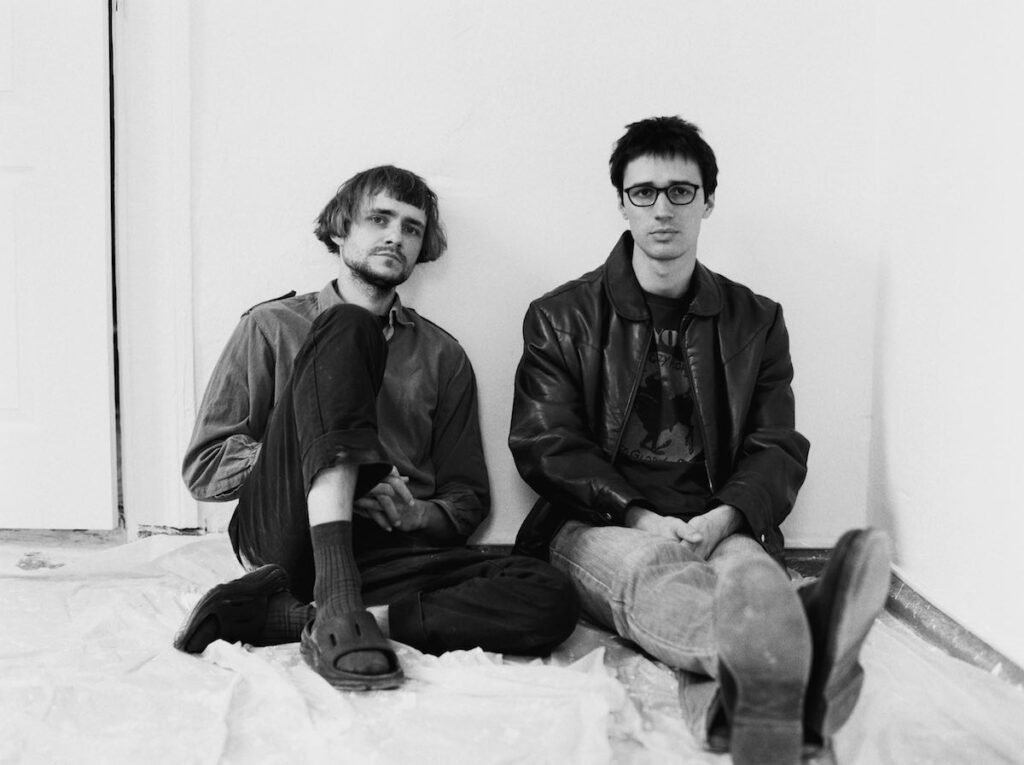
What does it mean to return home? | Interview with Yarema Malashchuk and Roman Khimei on the occasion of Lo Schermo dell’Arte
A young Ukrainian boy, forced to live far from his home due to the war, tries to revisit the places of his childhood through a robotic dog. From Poland, where he is, he controls it remotely and, thanks to this device, he manages to return, at least virtually, to Zaporižžja, the city where he grew up.
This is the premise of Homecoming, the film by Yarema Malashchuk and Roman Khimei, presented in Italian preview on Saturday 14 November at the Lo Schermo dell’Arte festival.
Through an intimate yet profoundly social perspective, the film explores the relationship between memory, distance and the desire to maintain a connection with the places and people from which one was forced to separate. The war remains in the background, but it is a constant presence: it manifests itself in the landscape and in the new form that relationships between people and places are forced to take.
The robot dog thus becomes a tool for returning, but also a sort of replacement body, the only possibility of reclaiming, albeit virtually, a space that is now inaccessible. From here a question emerges that runs through the entire film: Does returning home necessarily imply a physical return?
Between cinema, performance and social observation, Malashchuk and Khimei reflect on how remote control technologies are transforming the experience of memory and return.
We asked the two directors a few questions about the film.
Arianna Canalicchio: In Homecoming, the protagonist tries to return to the places of his childhood through a robotic dog. Why did you choose to tell the story of returning home through a machine? What can this artificial body do that the human body can no longer do?
The robotic dog cannot do anything better than a human body. But when the return of a human body becomes impossible or highly dangerous, a machine can become an avatar — a proxy through which one can return, explore, and reconnect with a place that is otherwise inaccessible. In this sense, the robot becomes both a tool for returning and a substitute for physical presence.
The protagonist can explore his city remotely, but he cannot physically return to it. Do you think it is possible to feel at home in a place that we can see but cannot reach?
This is perhaps the central question we asked ourselves while making the film, and ultimately the question the film poses: what does it mean to come home? Is homecoming necessarily a physical return? And what makes physical presence more important than the audiovisual connection we already have? Through the robotic dog, one can even acquire an avatar body and a certain freedom of movement within a place one cannot physically access. The increasingly interconnected world is reshaping our understanding of distance, presence, and, ultimately, what we consider home.
In Homecoming, war is a constant presence, even though it is never shown explicitly. How did you approach making it perceptible through absence, places, and the robotic dog’s encounters, without resorting to the images of violence that the media have made us so accustomed to?
We believe that art and cinema should develop their own language rather than reproduce the language of news media. This also means resisting the temptation to duplicate familiar images of violence, even when doing so might serve a seemingly good cause. We don’t believe that art should approach its subject with a predetermined missionary agenda. Instead, we are interested in finding a form that allows the subject to emerge through indirect encounters, absences, and seemingly ordinary situations. In Homecoming, war is not something that needs to be illustrated or explained; it is already embedded in the landscape, in the impossibility of returning, and in the altered relationships between people and the places they once called home.