
English version below —
Testo di Sara Cirillo —
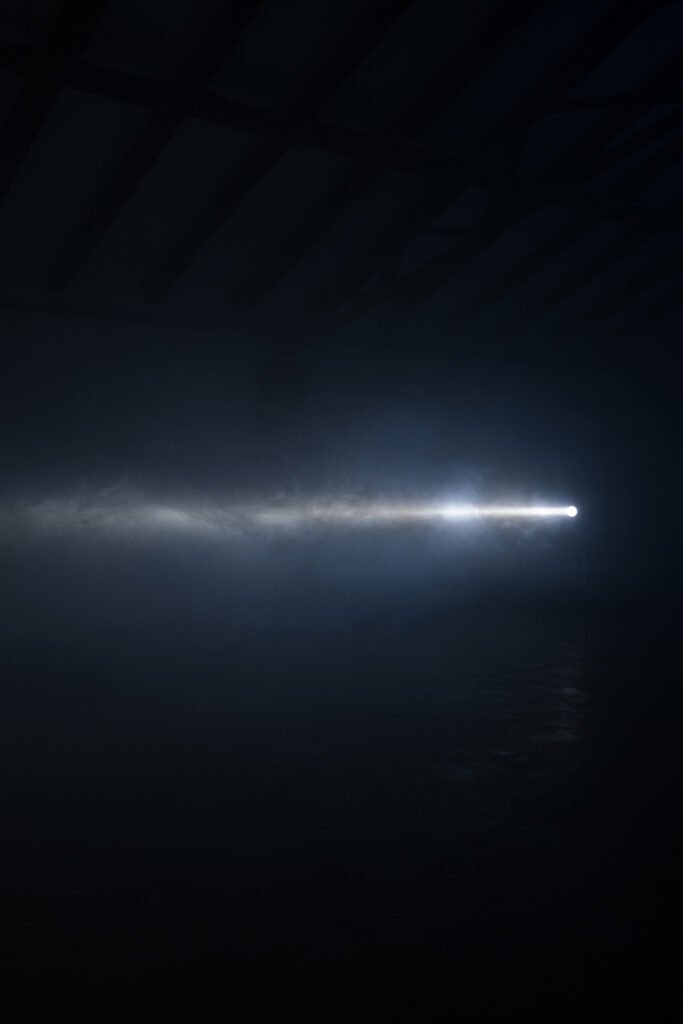
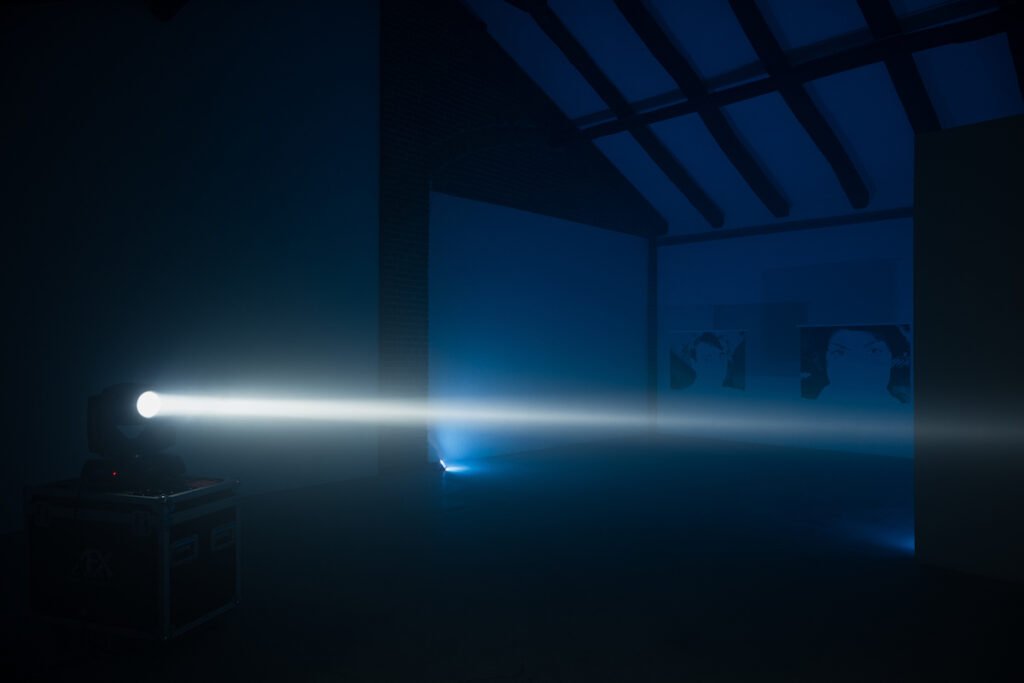
In teatro si chiama occhio di bue: il proiettore che isola un corpo sulla scena e lo consegna allo sguardo della sala. Da Société Interludio la sala non c’è. Le vetrate sono oscurate, si apre la porta e un faro colpisce in pieno volto chi entra. Per qualche secondo non si vede nulla, e si ha la certezza di essere visti. Prima ancora di incontrare un’opera, il visitatore si trova nella posizione dell’attore che entra in scena, abbagliato e privo di riferimenti. Il film da cui Gaia De Megni (1993) prende le immagini della mostra lo dice già nel titolo: Stage Fright, paura del palcoscenico.
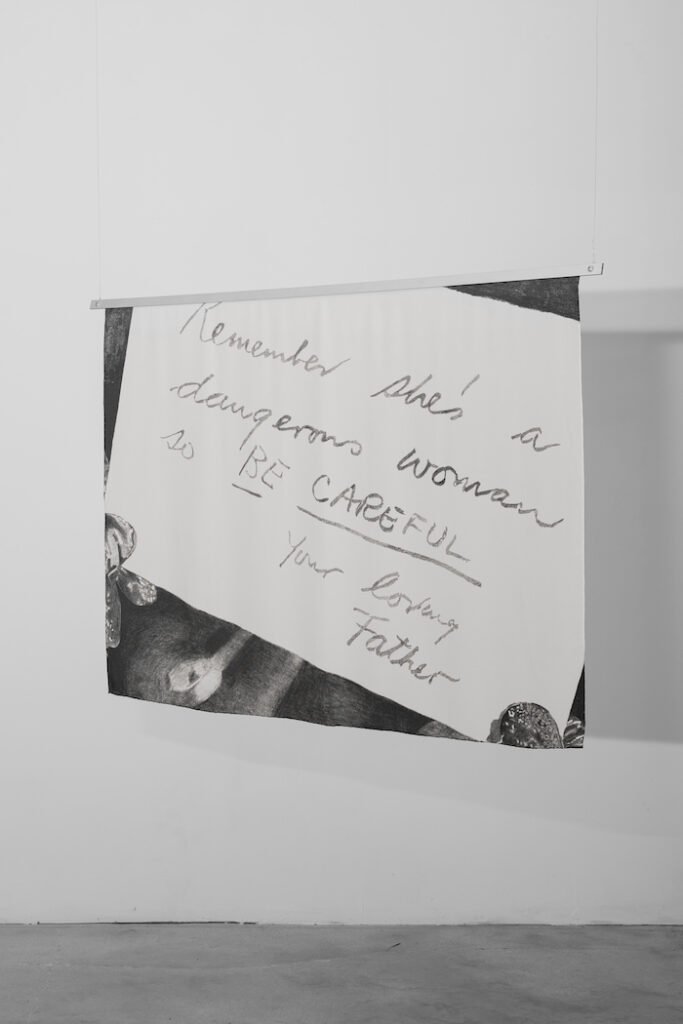
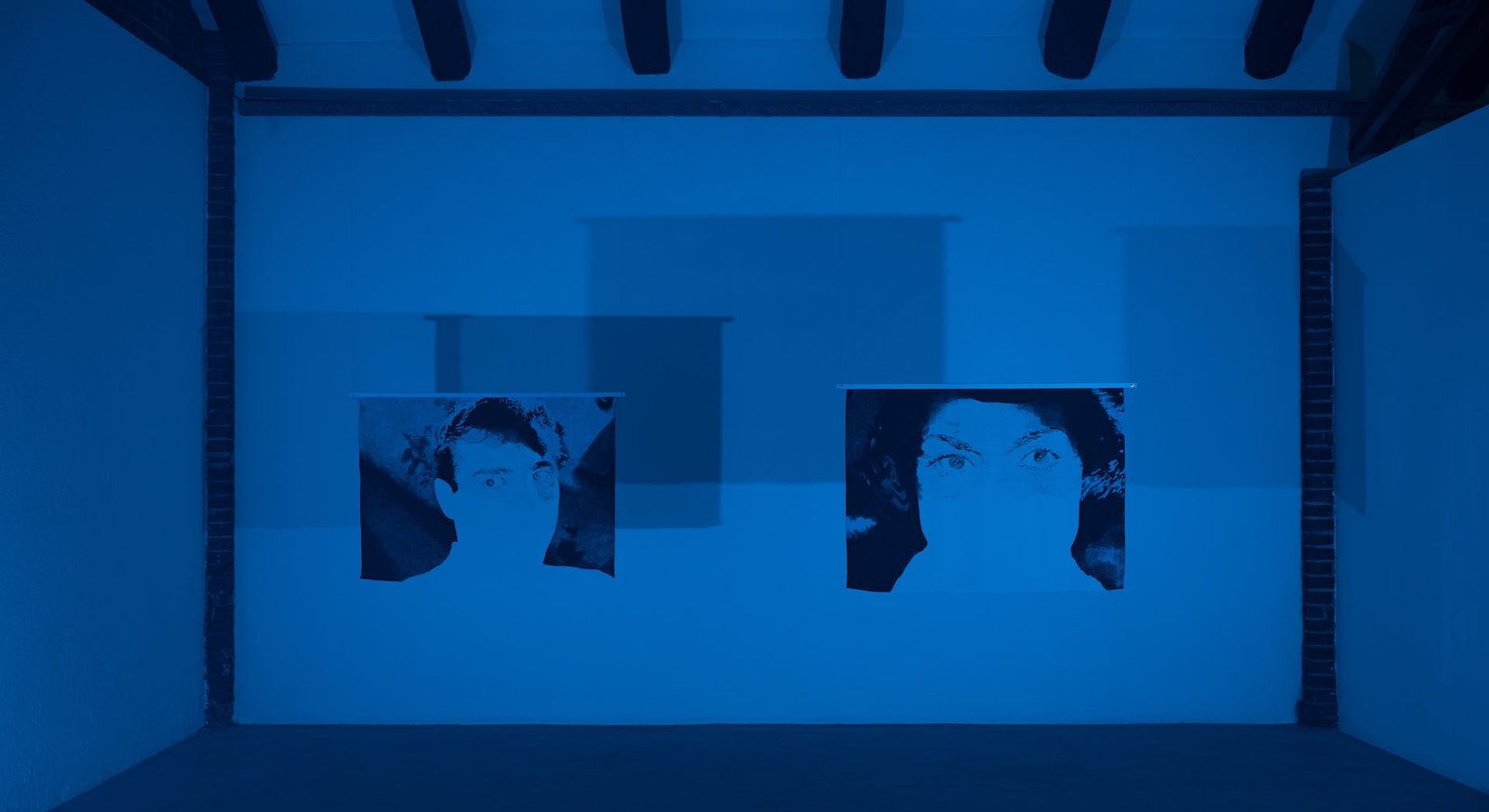
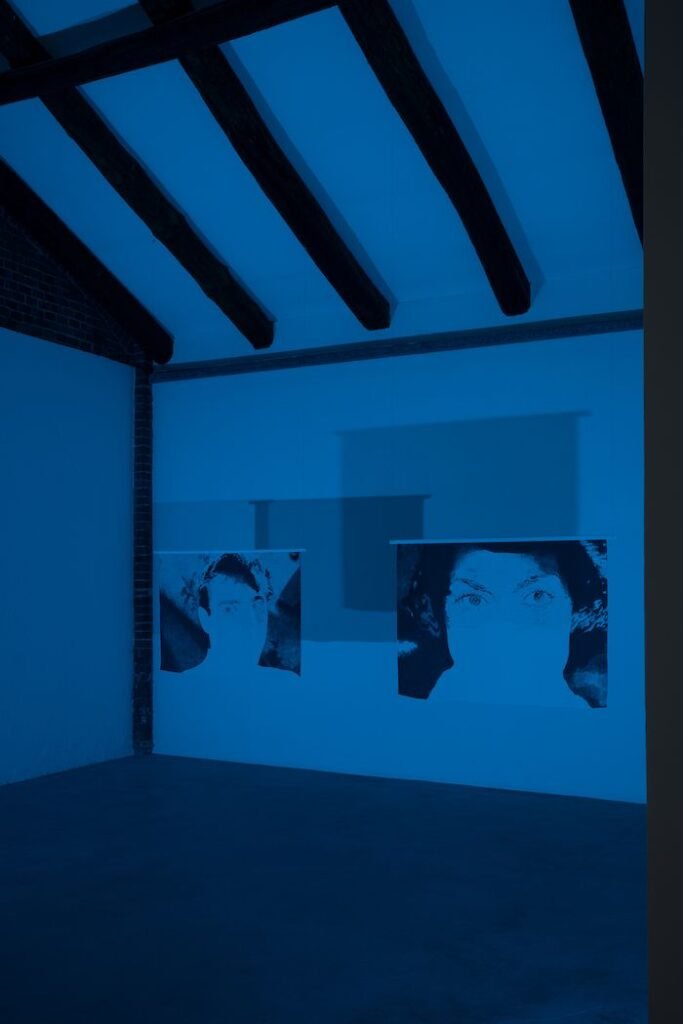
Girato da Alfred Hitchcock nel 1950, Paura in palcoscenico è un film sulla recitazione più che un giallo. Eve Gill, studentessa della Royal Academy of Dramatic Art, si traveste da cameriera per avvicinare la diva interpretata da Marlene Dietrich, vestita per l’occasione da Christian Dior. Tutti interpretano un ruolo, tutti mentono, e il film si apre con un flashback falso, il più celebre inganno narrativo di Hitchcock. De Megni ne sceglie tre fotogrammi e non li riproduce: li ridisegna in tavoletta grafica, modificandoli leggermente, e solo dopo li stampa su grandi sete sospese nella penombra. Il passaggio è decisivo. Tra il film e l’opera si interpone la mano dell’artista, che è anche una disegnatrice di grande precisione, e il fotogramma smette di essere un prelievo per diventare un’immagine nuova, che del modello conserva la posa ma non la superficie. Anche la scelta del materiale conta. La seta è il tessuto del costume e del sipario, una superficie fatta per coprire e insieme per lasciar passare la luce. Le immagini non stanno ferme sul tessuto: lo attraversano, si allungano sulle pareti, cambiano a seconda di dove ci si ferma. Hitchcock, riscritto a mano e ridotto a tre pose, smette di essere una citazione cinefila e diventa scenografia.
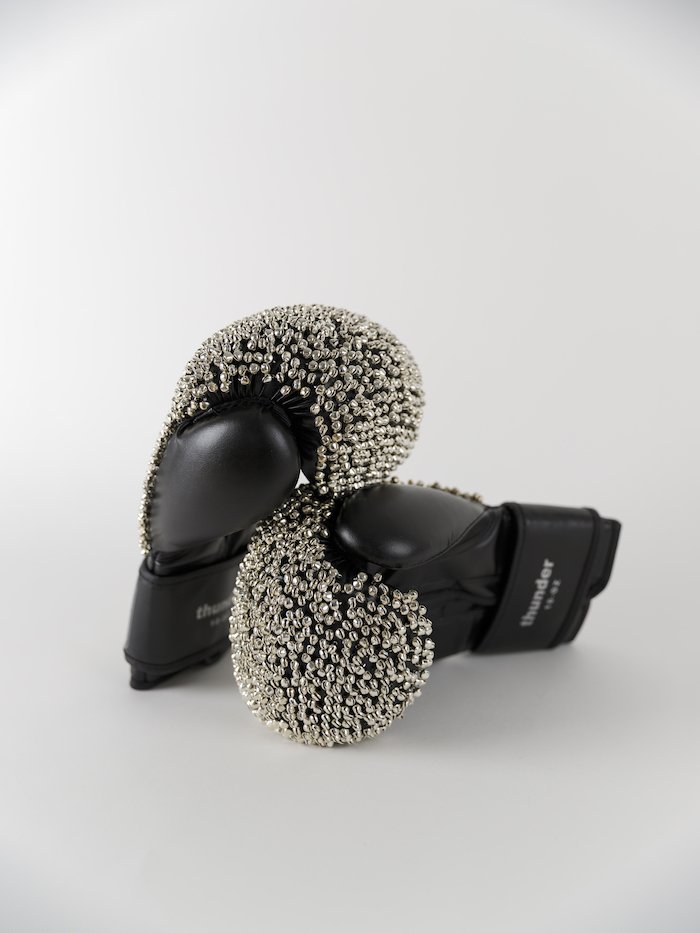
Il rapporto con il film ha una storia nel lavoro dell’artista. In Sunday Best, performance presentata al Lazzaretto di Milano, una pugile combatteva contro un fascio di luce mentre recitava battute di Stage Fright che De Megni le dettava in un auricolare. Era la figura del suggeritore, portata dentro il corpo. Viene in mente il Paradosso sull’attore di Diderot, secondo cui il grande interprete non prova ciò che esprime e dice le parole di un altro a sangue freddo, con la lucidità di chi calcola i colpi. La pugile di De Megni mette in scena proprio questo sdoppiamento: le braccia combattono, la bocca recita, e l’avversario è il riflettore stesso. Boxe e teatro condividono del resto la stessa architettura, un quadrato di luce circondato dal buio e dagli sguardi.

A Cambiano la performance non viene documentata. Il curatore ha smontato lavori precedenti dell’artista e li ha ricomposti sulla pianta della galleria, lasciando che ne sopravvivessero soltanto alcuni elementi. Il più preciso è quasi invisibile. Una stampa olografica filtra la luce e per alcune ore proietta sul cemento del pavimento la sagoma di un paradenti. L’oggetto che protegge la bocca del pugile, e che gli impedisce di parlare, torna come ombra dopo che tutto il testo è stato detto. È il controcanto muto della voce suggerita in Sunday Best, il segno di un corpo che ha smesso di recitare.
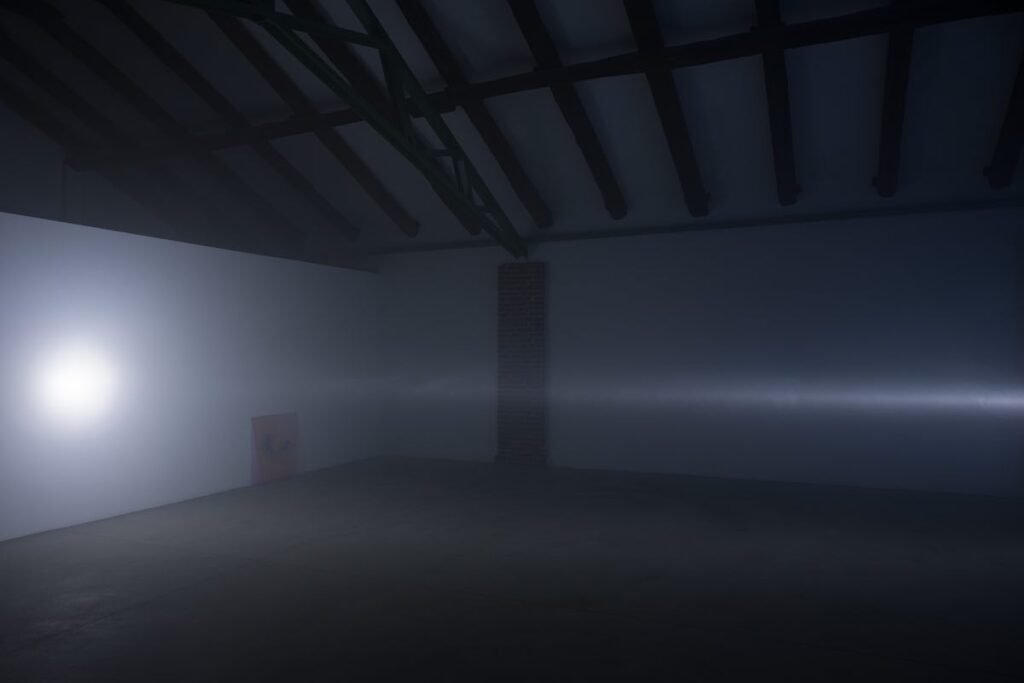
Tutta la mostra lavora su questa economia del togliere. Non ci sono schermi, né immagini in movimento, né film proiettati. C’è una luce che non illumina qualcosa ma colpisce qualcuno, e ci sono materiali che la frenano, la filtrano, la deviano. In questo senso La Scia ribalta la geometria della sala cinematografica. Al cinema lo spettatore siede protetto nel buio e la luce passa sopra la sua testa per arrivare allo schermo. Qui la luce punta diritta su di lui, e il buio serve a esporlo, non a nasconderlo. Chi si muove tra le sete ne interrompe i fasci, proietta ombre sui disegni tratti da Hitchcock, entra nell’inquadratura. Il pubblico diventa la compagnia e la mostra il suo palcoscenico.
Non è un’esperienza comoda, e non vuole esserlo. De Megni appartiene a una generazione che ha conosciuto il cinema soprattutto attraverso frammenti, fotogrammi e citazioni, e che pratica la cinefilia come un repertorio da smontare più che come un culto. Il suo interesse non va all’immagine ma a ciò che la precede e la rende possibile: la sorgente di luce, il costume, la voce fuori campo, il corpo di chi recita. La Scia porta queste componenti allo scoperto, le separa, le lascia agire ciascuna per conto proprio.
Resta, uscendo, la sensazione di un leggero imbarazzo, quello di chi è stato osservato senza poter guardare a sua volta. È forse la cosa più precisa che la mostra riesce a produrre: una paura del palcoscenico in scala ridotta, provata da chi era venuto soltanto a vedere.
Gaia De Megni, La Scia, a cura di Vincenzo Estremo. Société Interludio, Cambiano (TO), 13 settembre – 18 ottobre 2026.
Spotlight. Gaia De Megni, La Scia | Société Interludio, Cambiano
Text by Sara Cirillo —
Until 18 October, Société Interludio presents Gaia De Megni’s first solo exhibition at the gallery, curated by Vincenzo Estremo. A show built like a stage, in which it is the visitor who ends up under the spotlight.
In the theatre it is called a follow spot: the lamp that isolates a single body on stage and delivers it to the gaze of the audience. At Société Interludio there is no audience. The windows are blacked out, the door opens and a floodlight hits whoever walks in full in the face. For a few seconds nothing can be seen, and one is certain of being seen. Before encountering a single work, the visitor is placed in the position of an actor stepping on stage, dazzled and without bearings. The film from which Gaia De Megni (b. 1993) draws the exhibition’s images says as much in its title: Stage Fright.
Shot by Alfred Hitchcock in 1950, Stage Fright is a film about acting more than a thriller. Eve Gill, a student at the Royal Academy of Dramatic Art, disguises herself as a maid to get close to the star played by Marlene Dietrich, dressed for the occasion by Christian Dior. Everyone plays a part, everyone lies, and the film opens with a false flashback, Hitchcock’s most notorious narrative deception. De Megni selects three frames and does not reproduce them: she redraws them on a graphics tablet, altering them slightly, and only then prints them on large silks suspended in the half-light. This step is decisive. Between the film and the work stands the artist’s hand, that of a draughtswoman of remarkable precision, and the frame ceases to be a borrowing to become a new image, one that keeps the pose of its model but not its surface. The choice of material matters too. Silk is the fabric of costume and of the curtain, a surface made both to conceal and to let light through. The images do not sit still on the fabric: they pass through it, stretch across the walls, shift depending on where one stands. Redrawn by hand and reduced to three poses, Hitchcock stops being a cinephile quotation and becomes stage set.
The film has a history in the artist’s work. In Sunday Best, a performance staged at the Lazzaretto in Milan, a female boxer fought against a beam of light while reciting lines from Stage Fright that De Megni fed her through an earpiece. It was the figure of the prompter, carried inside the body. Diderot’s Paradox of the Actor comes to mind, according to which the great performer does not feel what she expresses and speaks another’s words in cold blood, with the clarity of someone calculating her punches. De Megni’s boxer stages precisely this split: the arms fight, the mouth recites, and the opponent is the spotlight itself. Boxing and theatre share, after all, the same architecture, a square of light surrounded by darkness and by gazes.
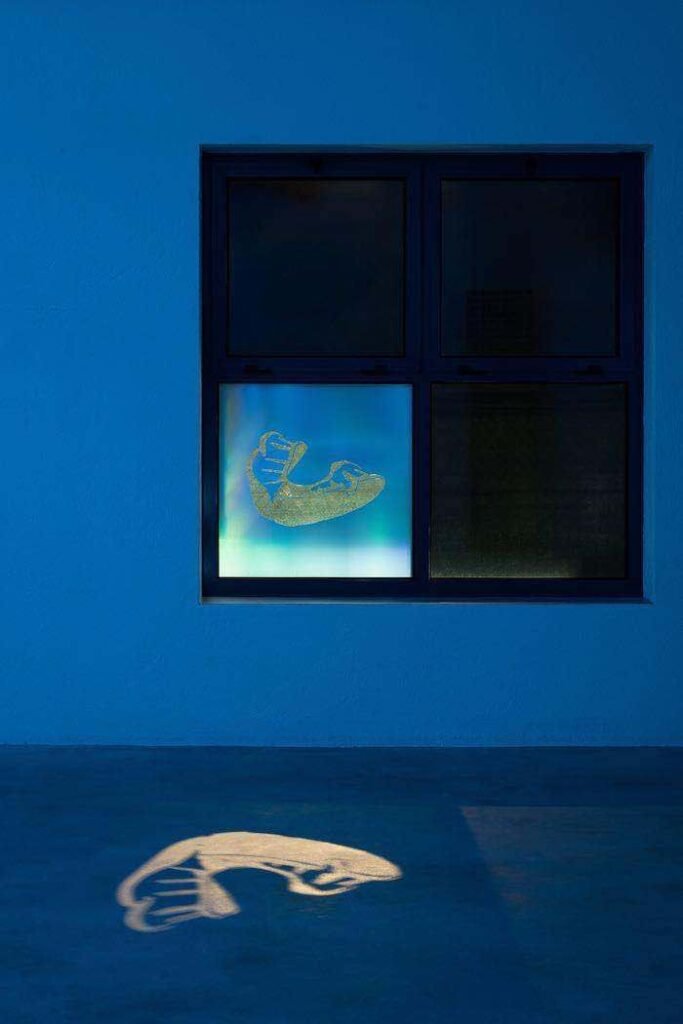
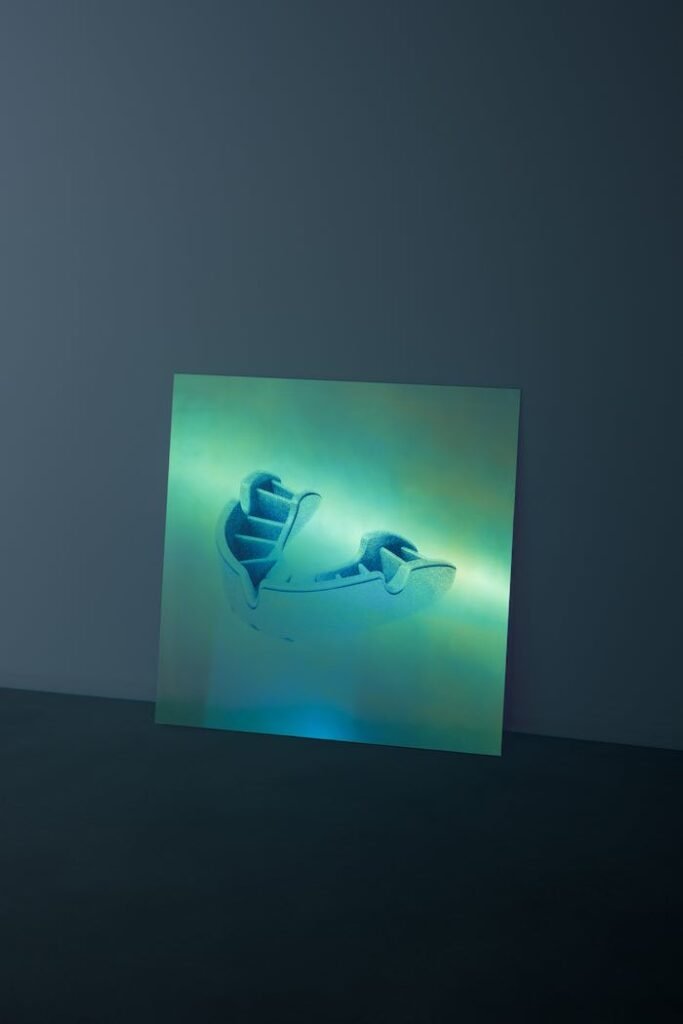
In Cambiano the performance is not documented. The curator has taken apart earlier works by the artist and reassembled them on the gallery’s floor plan, allowing only a few elements to survive. The most precise is almost invisible. A holographic print filters the light and, for a few hours, casts the outline of a mouthguard onto the concrete floor. The object that protects the boxer’s mouth, and prevents her from speaking, returns as a shadow once the whole script has been spoken. It is the mute counterpoint to the prompted voice of Sunday Best, the sign of a body that has stopped acting.
The whole exhibition works through this economy of subtraction. There are no screens, no moving images, no projected films. There is a light that does not illuminate something but strikes someone, and there are materials that slow it, filter it, deflect it. In this sense La Scia overturns the geometry of the cinema. In the movie theatre the spectator sits sheltered in the dark while the light passes over their head on its way to the screen. Here the light points straight at them, and the darkness serves to expose rather than to hide. Whoever moves among the silks interrupts their beams, casts shadows on the drawings taken from Hitchcock, steps into the frame. The audience becomes the company, and the exhibition its stage.
It is not a comfortable experience, nor does it want to be. De Megni belongs to a generation that has known cinema mostly through fragments, stills and quotations, and that practises cinephilia as a repertoire to be dismantled rather than a cult. Her interest lies not in the image but in what precedes it and makes it possible: the light source, the costume, the voice off-screen, the body of the one who performs. La Scia brings these components into the open, separates them, lets each act on its own.
What remains on the way out is a slight embarrassment, that of having been observed without being able to look back. It is perhaps the most precise thing the exhibition manages to produce: stage fright on a reduced scale, felt by someone who had only come to watch.
Gaia De Megni, La Scia, curated by Vincenzo Estremo. Société Interludio, Cambiano (Turin), 13 September – 18 October 2026.