English version below —
Dal 23 al 25 ottobre, Art Basel Paris torna sotto la vetrata del Grand Palais. Le opere arrivano, sostano, si offrono allo sguardo; alcune ripartiranno verso luoghi ancora sconosciuti. Il palazzo le accoglie nella luce che ha attraversato tante altre presenze, lasciando che per pochi giorni nuove forme ne abitino la misura. Anche il valore prende forma in questo incontro: la storia dell’edificio accompagna ciò che vi appare, mentre ogni passaggio aggiunge qualcosa alla sua memoria. La fiera rinnova così una domanda che attraversa la storia del palazzo: che cosa rimane delle opere che ne hanno occupato la navata, delle distanze che hanno aperto, di ciò che hanno lasciato nello sguardo di chi c’era? Il pavimento è tornato libero molte volte. Non per questo è rimasto vuoto.
La vita sotto vetro
Nel Grand Palais di Parigi
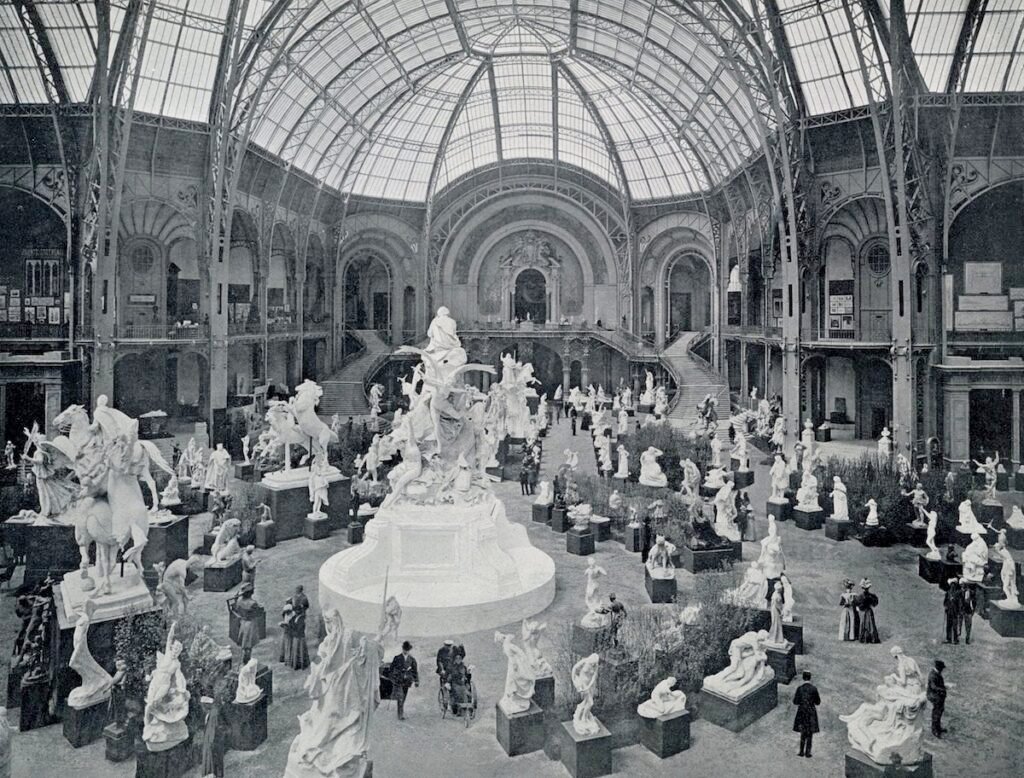
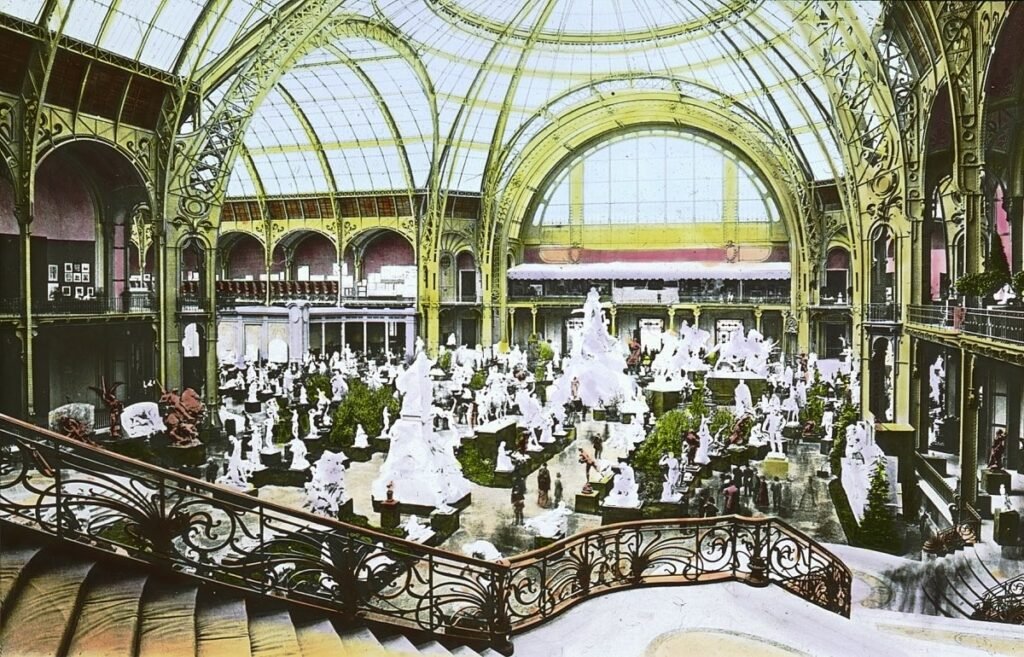
La luce entra prima delle opere. Attraversa il vetro, incontra il ferro, raggiunge il pavimento; nelle ore successive torna sugli stessi punti senza illuminarli nello stesso modo. Al Grand Palais una parte della visita appartiene a questo movimento. Anche quando lo sguardo cerca ciò che è stato esposto, l’edificio continua a richiamarlo verso l’alto, lungo una struttura che lascia vedere il cielo e insieme lo divide. La vastità si avverte prima di riuscire a comprenderla: occorre camminare, allontanarsi, voltarsi. Fra una posizione e l’altra, ciò che sembrava vicino cambia misura.
Sotto questa vetrata, l’arte contemporanea ha introdotto volumi, ostacoli, superfici colorate, abiti dismessi. Ha occupato lo spazio e modificato il tempo necessario per conoscerlo. Un’opera può trattenere il visitatore in un punto, costringerlo a deviare, far riapparire una distanza che l’occhio aveva attraversato troppo in fretta. Il monumento acquista allora una prossimità inattesa. Il suo passato diventa qualcosa con cui il corpo deve misurarsi, mentre cerca un percorso fra le forme del presente.
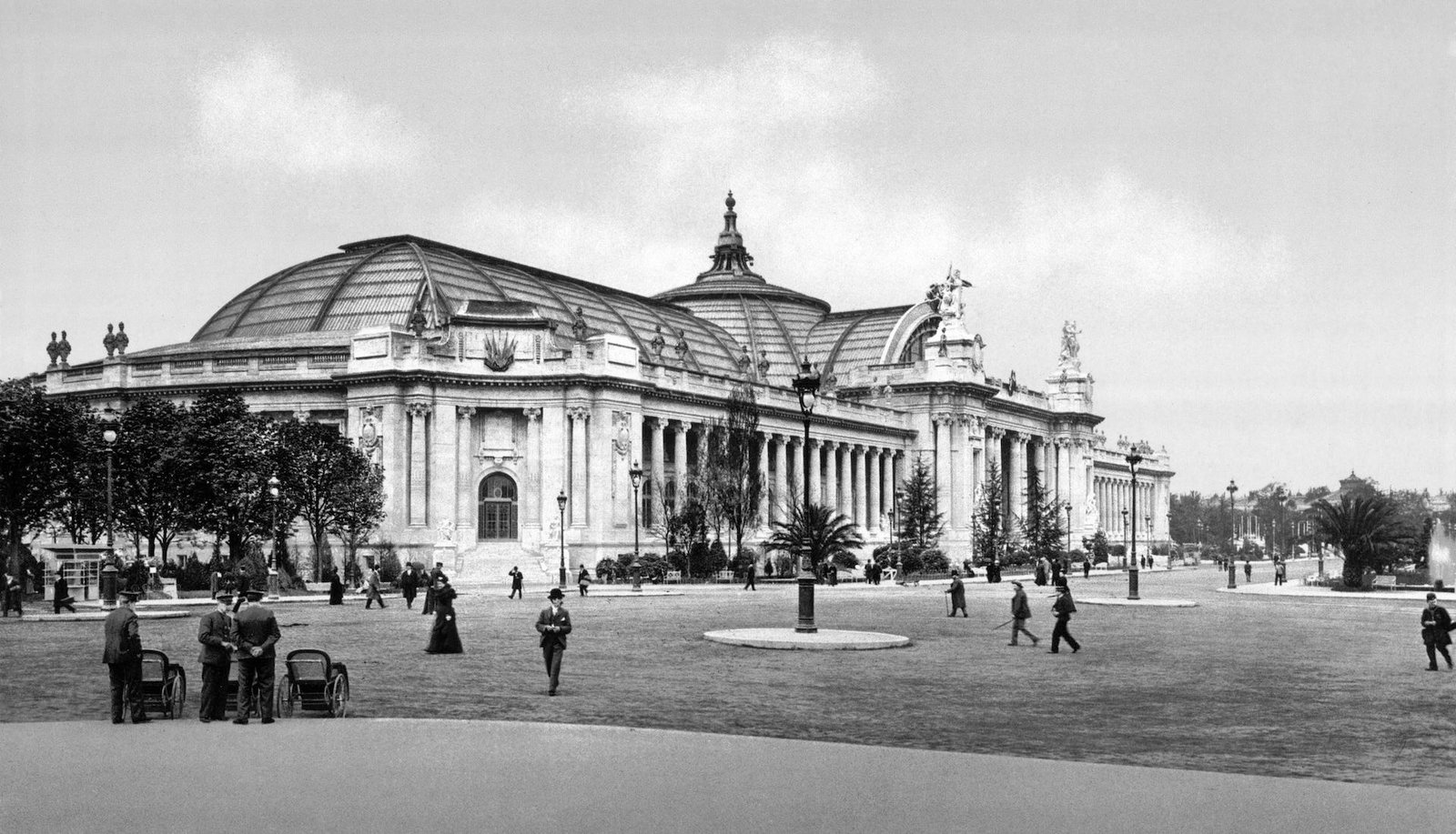
Prima di questi incontri, il Grand Palais era stato costruito per dare un’immagine al futuro. Nato per l’Esposizione universale del 1900, insieme al Petit Palais e al ponte Alexandre III, apparteneva a una città che si preparava a mostrare il progresso attraverso edifici, macchine, oggetti e opere d’arte. Destinato fin dall’origine a ospitare i Salons, il palazzo offriva alle esposizioni un’architettura permanente: la festa sarebbe terminata, ma lo spazio predisposto per accogliere il pubblico avrebbe continuato a ricevere altre immagini del mondo.
Il progetto riuniva il lavoro di tre architetti, coordinati da Charles Girault, autore del vicino Petit Palais. Henri Deglane disegnò il corpo principale e la grande navata; Albert Louvet la parte intermedia, con lo scalone e il Salon d’honneur; Albert Thomas il settore occidentale, il Palais d’Antin.
All’esterno, colonnati, sculture e facciate in pietra affidano all’edificio l’autorità di un palazzo delle belle arti. I quadrighi di Georges Récipon ne segnano gli angoli verso la Senna e gli Champs-Élysées. All’interno, la struttura metallica sostiene il vetro e lascia che la luce raggiunga una navata di 13.500 metri quadrati. Il linguaggio monumentale della pietra e le possibilità costruttive dell’industria appartengono allo stesso progetto: ciò che appare stabile sulla facciata si apre, oltre l’ingresso, a un volume attraversato dalle variazioni del cielo.
Fin dai primi anni, esposizioni artistiche e manifestazioni dedicate all’automobile e all’aviazione condivisero il palazzo. Oggetti, invenzioni e forme del vedere entravano nello stesso spazio pubblico, portando con sé idee diverse della modernità. Quella fiducia avrebbe incontrato presto altre necessità. Durante la Prima guerra mondiale, il Grand Palais venne requisito e trasformato in ospedale militare e centro di riabilitazione. Lo spazio predisposto per esporre accolse corpi feriti, cure, attese. Le architetture durano anche così, attraversate da esigenze che i loro costruttori non avevano previsto.
Nel 1937, il Palais de la découverte si insediò nell’ala occidentale, su impulso di Jean Perrin, introducendo nel complesso un’istituzione dedicata alla divulgazione scientifica. Nel 1966, con André Malraux, l’apertura delle Galeries nationales consolidò la funzione del Grand Palais come sede di grandi esposizioni temporanee. L’arte e la scienza continuavano a occupare parti diverse dello stesso edificio.
Il Grand Palais non possiede una collezione permanente. Le opere delle sue esposizioni provengono da musei, fondazioni, raccolte private e artisti, e il loro incontro viene composto per una durata limitata. Il patrimonio che il visitatore ritrova a ogni ritorno è anzitutto l’edificio, con la memoria dei suoi usi. Questa condizione dà alle esposizioni un peso particolare: le opere ripartono, mentre il palazzo rimane associato a ciò che ha reso possibile. L’assenza di una raccolta stabile non lo sottrae all’accumulo; cambia ciò che può accumularsi. Accanto alla materia conservata cresce una reputazione, fatta anche delle presenze che hanno abitato temporaneamente la navata.
Anche questa continuità ha conosciuto interruzioni. Chiusa nel 1993 per problemi di sicurezza, la navata riaprì nel 2005 dopo i lavori di consolidamento. Due anni dopo, nel 2007, prende avvio Monumenta: un artista è invitato a concepire un intervento per questo spazio. La vastità dell’edificio entra nelle condizioni del lavoro, insieme alla luce, alle proporzioni e ai percorsi possibili. L’invito contiene già una richiesta: misurarsi con il monumento, farne un evento. L’artista dispone del palazzo per poche settimane; l’istituzione può continuare a inscrivere quell’incontro nella propria storia. Fra queste durate diseguali, la libertà dell’opera incontra una condizione della committenza: il luogo che le concede di trasformarlo sarà anche quello che sopravvivrà per raccontarne il passaggio.
Dentro questa reciprocità il Grand Palais incontra il tempo dell’altro. Un’opera destinata a rimanere poche settimane si confronta con una struttura che ha attraversato più di un secolo. Per la durata dell’incontro, l’architettura viene conosciuta attraverso qualcosa che presto le sarà sottratto. Dopo lo smontaggio, il pavimento torna libero, la luce continua il proprio corso. Ma chi ha visto quello spazio occupato porta con sé una misura ulteriore: il ricordo di una forma diventa parte del modo in cui riconosce il luogo.
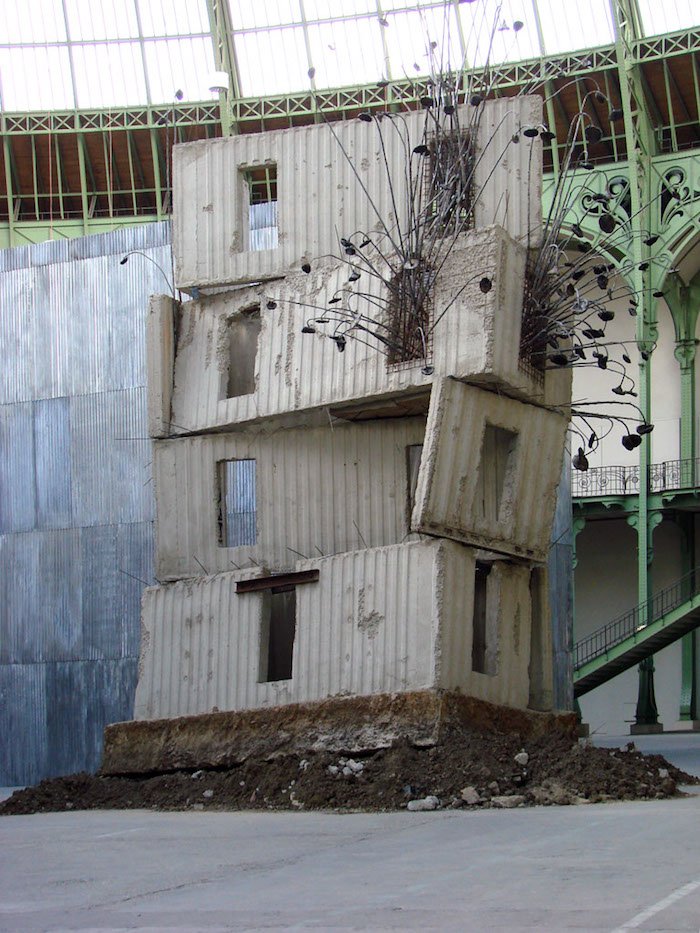
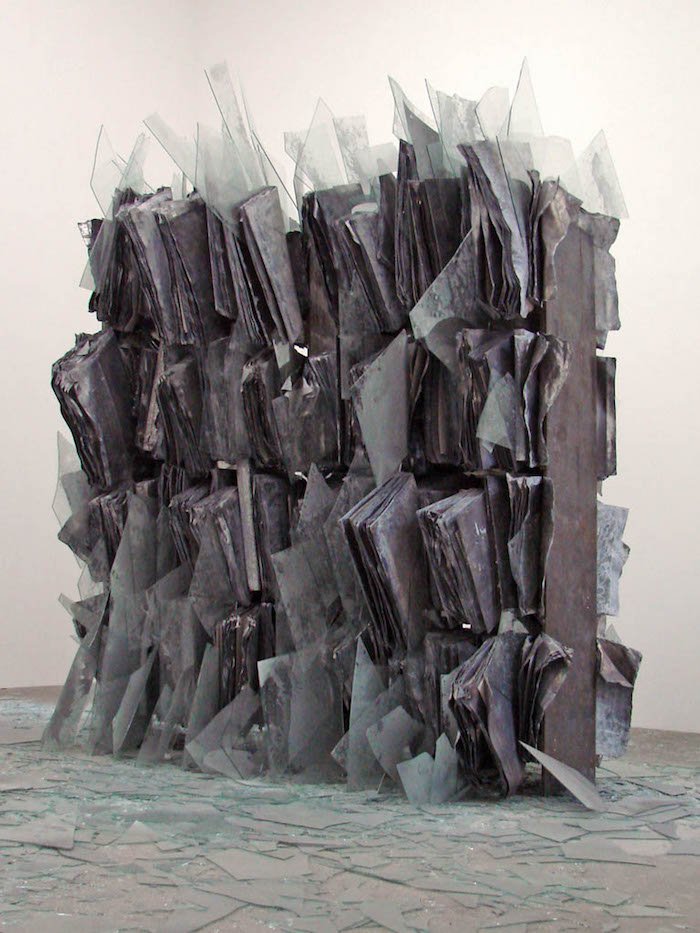
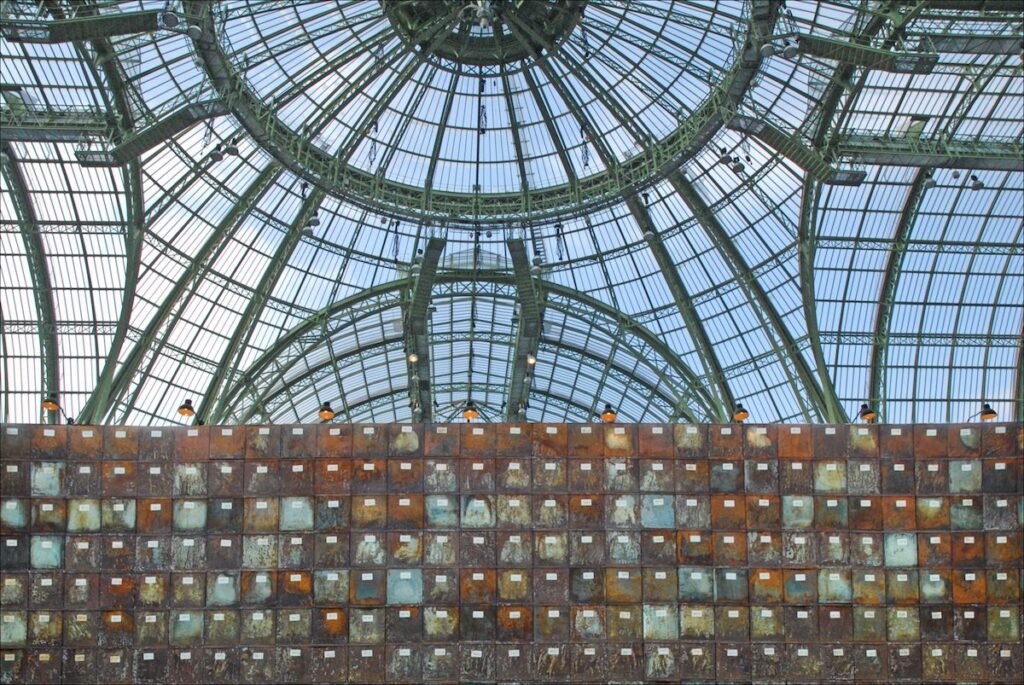
La prima presenza chiamata a misurarsi con questa vastità fu quella di Anselm Kiefer. Con Chute d’étoiles / Sternenfall (2007), l’artista introdusse nella navata sette case a forma di torre: costruzioni dentro una costruzione, luoghi raccolti sotto un tetto che sembrava contenerli senza riuscire a proteggerli. Il Grand Palais riceveva un paesaggio nel quale la materia portava già il segno della propria vulnerabilità. Alla fiducia costruttiva dell’edificio si affiancava un’altra esperienza della durata, attraversata da rovine, stratificazioni e memorie difficili da ricomporre.
L’omaggio a Paul Celan e Ingeborg Bachmann affidava alla poesia una parte di questa tensione. Le parole entravano nello spazio insieme alle cose, portando con sé la storia dalla quale erano emerse. La vastità del palazzo veniva suddivisa, interrotta, resa abitabile attraverso luoghi che conservavano qualcosa dell’isolamento.
Pochi anni dopo la nascita del Grand Palais, Alois Riegl aveva pubblicato Il culto moderno dei monumenti (1903), distinguendo i diversi valori attraverso i quali il presente riconosce un edificio e decide che cosa conservarne. La durata non appartiene soltanto alla materia: dipende anche dall’attenzione che ogni epoca le rivolge. Le case di Kiefer portavano sotto la vetrata una rovina che il palazzo, pur contenendola, non poteva risanare. La permanenza dell’architettura perdeva qualcosa della propria sicurezza: il tetto continuava a coprire quel paesaggio, senza promettergli un riparo. Il monumento durava accanto a ciò che rimaneva vulnerabile.
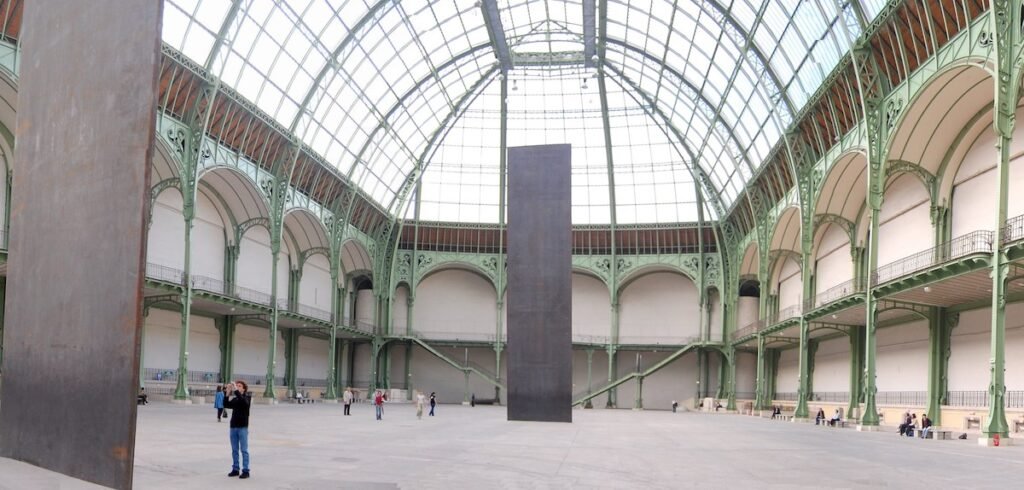
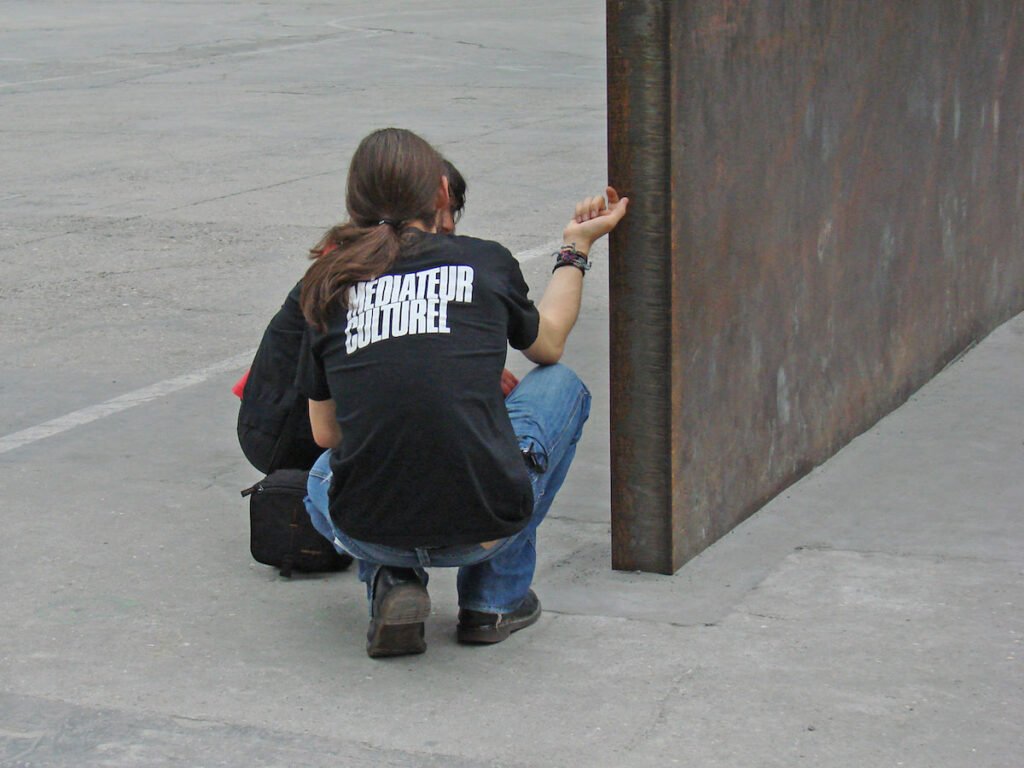
Con Richard Serra, questa attenzione prende il passo del visitatore. Promenade (2008) disponeva cinque lastre d’acciaio, alte diciassette metri, lungo l’asse maggiore della navata, scostandole dalla sua simmetria. La loro lieve inclinazione rendeva sensibile una tensione che la regolarità dell’architettura avrebbe potuto assorbire. Da lontano apparivano come presenze sottili, quasi linee tracciate nel volume; avvicinandosi, la superficie acquistava peso e interrompeva la continuità dello sguardo.
Il titolo descriveva dunque una condizione della scultura. La passeggiata era il modo in cui le cinque lastre entravano in relazione, senza essere mai raccolte in una visione definitiva. Ogni avanzamento modificava le distanze, faceva sovrapporre o separare le forme, apriva una porzione diversa della navata. Anche l’edificio cambiava: le sue proporzioni, apparentemente offerte tutte insieme, si distribuivano nella durata del percorso.
In Éléments de rythmanalyse (1992), Henri Lefebvre aveva cercato nel rapporto fra corpo, spazio e tempo una via per comprendere i ritmi dell’esperienza. Promenade mette alla prova questa relazione attraverso il gesto elementare del camminare. Il passo misura una distanza e, nello stesso momento, viene modificato da ciò che incontra. Si rallenta davanti alla massa, si cerca un margine, si torna indietro per verificare qualcosa che da un’altra posizione non era apparso.
L’acciaio di Serra incontrava così il ferro della struttura senza ripeterne la funzione. La materia che nell’edificio sosteneva il vetro e rendeva possibile la luce tornava, nella scultura, come peso esposto. Rimosse le lastre, la navata ritrovava la propria simmetria. Il visitatore portava altrove le distanze attraversate, il ricordo di essersi avvicinato a una lastra e di averla vista cambiare. Una parte dell’incontro rimaneva fuori da ciò che l’edificio poteva raccogliere di sé.
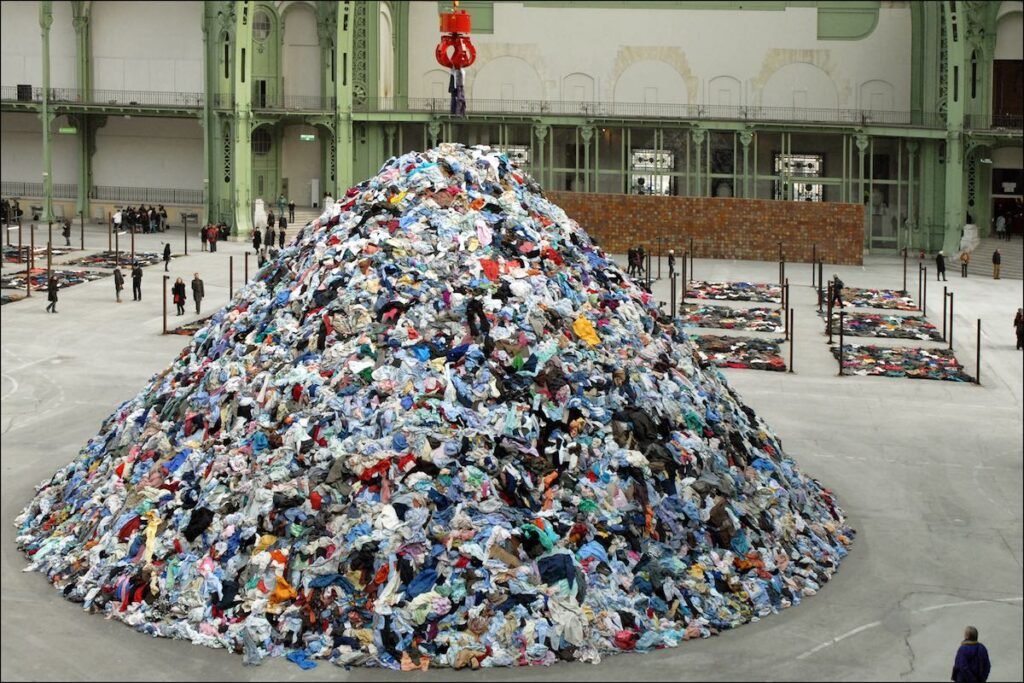
Le distanze rese percepibili da Serra acquistano, con Christian Boltanski, un’altra densità. In Personnes (2010), la navata accoglieva abiti usati, disposti in campi regolari sul pavimento e raccolti, più lontano, in un grande cumulo. Sopra quella massa, una pinza meccanica scendeva, afferrava alcuni indumenti, li sollevava e li lasciava ricadere. Il gesto ricominciava senza che fosse possibile riconoscervi una scelta. Fra l’ordine delle superfici a terra e il movimento della macchina, ogni abito rimaneva esposto a una sorte che non dipendeva dalla storia di chi lo aveva indossato.
Una manica conserva la possibilità di un braccio, una giacca la misura di un torace. Anche svuotati, gli indumenti continuano a suggerire posture, abitudini, modi di stare fra gli altri. Boltanski lavorava su questa prossimità incompleta: il corpo mancava, ma qualcosa della sua forma restava disponibile allo sguardo.
Anche il titolo tratteneva questa oscillazione. In francese, personnes indica delle persone, mentre personne può significare nessuno. Il suono avvicina ciò che la lingua distingue: una pluralità di esistenze e il vuoto lasciato dalla loro assenza. Nel palazzo, questa ambiguità assumeva una dimensione fisica. Si camminava lungo gli indumenti senza poter risalire a un nome, a un volto, alla vicenda che avrebbe permesso di riconoscerli.
I battiti cardiaci diffusi nello spazio introducevano un tempo diverso da quello della macchina. Il loro suono raggiungeva il visitatore mentre il suo stesso cuore continuava a battere, mettendo in relazione un ritmo ascoltato e uno quasi sempre inavvertito. Durante la mostra, Boltanski invitava inoltre il pubblico a donare la registrazione del proprio battito per le Archives du cœur, il progetto avviato negli anni precedenti. Chi attraversava l’installazione poteva lasciare una traccia della propria esistenza, un suono destinato a essere conservato e riascoltato. Quelle registrazioni non sarebbero rimaste nel palazzo: la loro destinazione era l’isola giapponese di Teshima, dove l’archivio ha una sede permanente, lontano dalla navata che per poche settimane le aveva accolte.
In Ghostly Matters (1997), Avery Gordon descrive il modo in cui ciò che appare assente continua ad agire nella vita sociale. Gli abiti di Personnes non documentano, ciascuno, una biografia perduta; la loro disposizione incontra memorie collettive, comprese quelle della deportazione e dello sterminio. Davanti a quella massa di effetti personali, il visitatore porta con sé storie che l’installazione non nomina. Il corpo mancante continua a interpellarlo attraverso una stoffa, anche quando non sarà possibile sapere a chi sia appartenuta.
Sapere che il Grand Palais era stato un ospedale militare aggiunge a quella visita il ricordo di altri corpi accolti sotto la vetrata. È un accostamento di chi legge il luogo, non un riferimento documentato di Boltanski. La storia dell’edificio resta distinta dall’opera, eppure la conoscenza delle cure e delle attese che vi si erano svolte accompagna lo sguardo sugli indumenti vuoti.
Nella navata, la vastità diventava una difficoltà dell’attenzione. Ogni indumento chiedeva di essere distinto, mentre l’insieme rendeva quella distinzione quasi impraticabile. Il passo poteva rallentare davanti a una stoffa, a una piega, a una misura riconoscibile. Al Grand Palais sarebbe rimasta la memoria dell’esposizione, con il nome di Boltanski nella successione degli artisti invitati. Le tracce di chi aveva partecipato prendevano invece un’altra direzione. Il palazzo poteva ricordare di averle accolte; la loro custodia era affidata altrove.
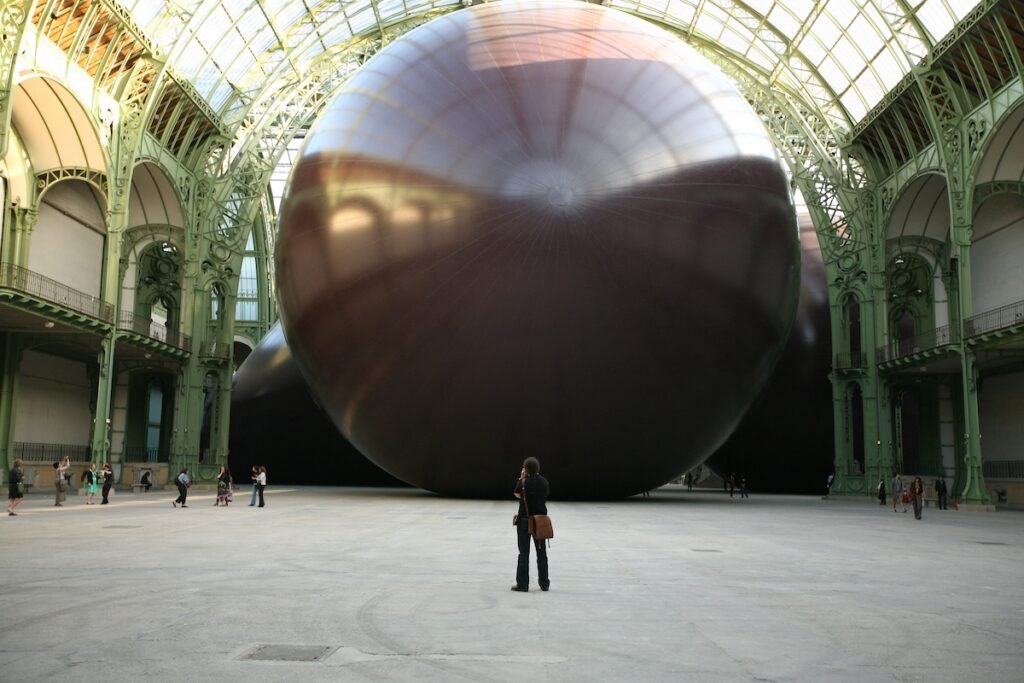
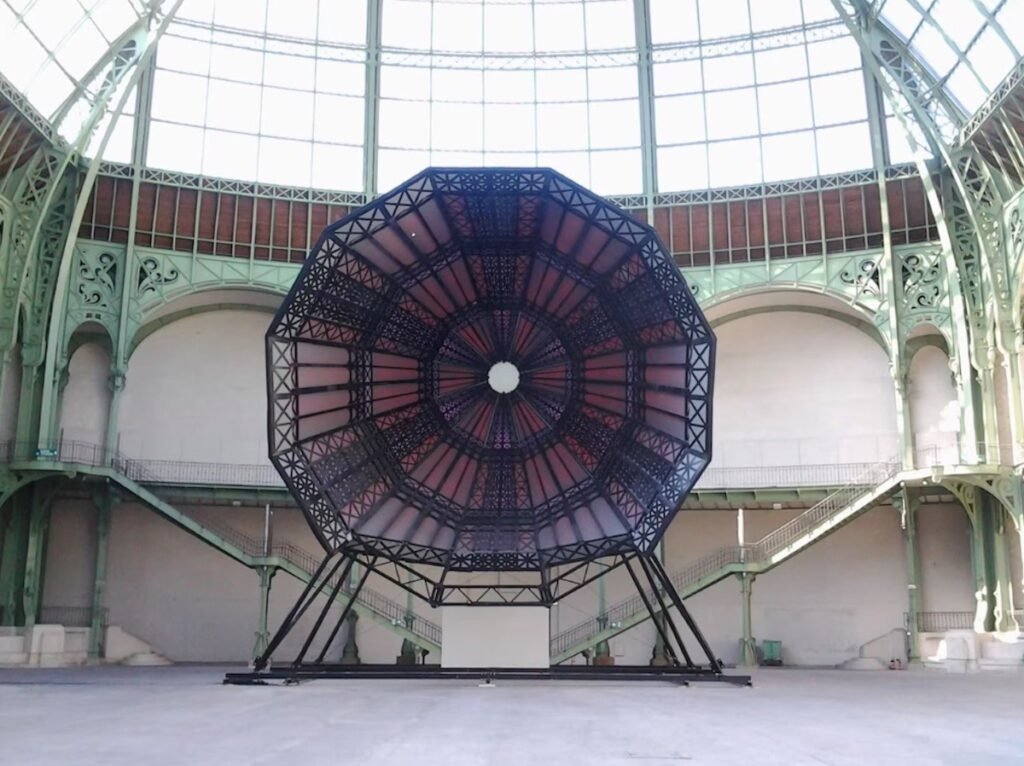
La presenza poteva acquistare anche la forma di un volume dentro il quale entrare. Con Leviathan (2011), Anish Kapoor introdusse nella navata una gigantesca struttura gonfiabile, la cui membrana separava due esperienze dello stesso oggetto. Dei quattro volumi che la componevano, uno soltanto era accessibile; gli altri si offrivano solo allo sguardo. All’interno, la luce filtrata dalla superficie produceva un ambiente rosso, avvolgente, nel quale diventava difficile riconoscere le distanze abituali. All’esterno, il visitatore ritrovava il palazzo occupato da una massa che ne impegnava la vastità. L’immagine appena conosciuta dall’interno doveva essere ripensata da un’altra posizione.
Questo passaggio modificava anche la percezione dell’edificio. Il Grand Palais veniva temporaneamente sottratto allo sguardo e poi restituito attraverso lo spazio rimasto intorno all’opera. La vetrata continuava a illuminare la navata, ma la sua luce aveva attraversato una seconda superficie, assumendo il colore di un ambiente che suggeriva un’interiorità corporea. Ci si trovava dentro qualcosa che, poco dopo, sarebbe apparso davanti a sé. La memoria dell’esperienza impediva alla forma esterna di diventare soltanto una figura da osservare.
Hans Ulrich Gumbrecht, in Production of Presence. What Meaning Cannot Convey (2004), riconosce nell’esperienza estetica una tensione fra il significato e la forza materiale di ciò che si incontra. Leviathan rendeva questa tensione sensibile attraverso la difficoltà di separare quanto si vedeva da ciò che si era appena attraversato.
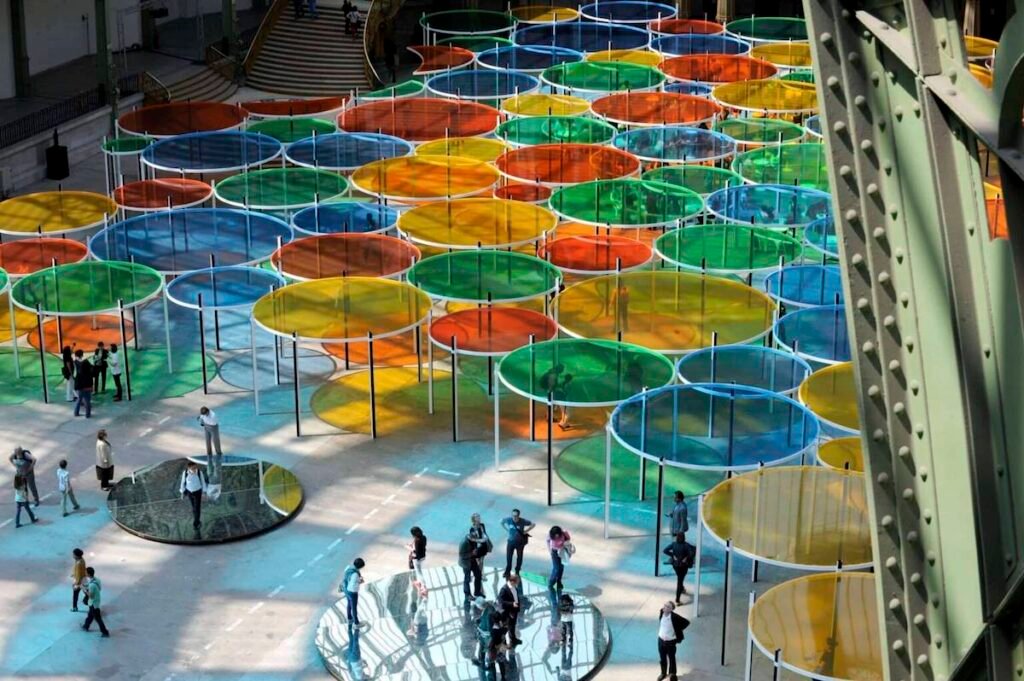
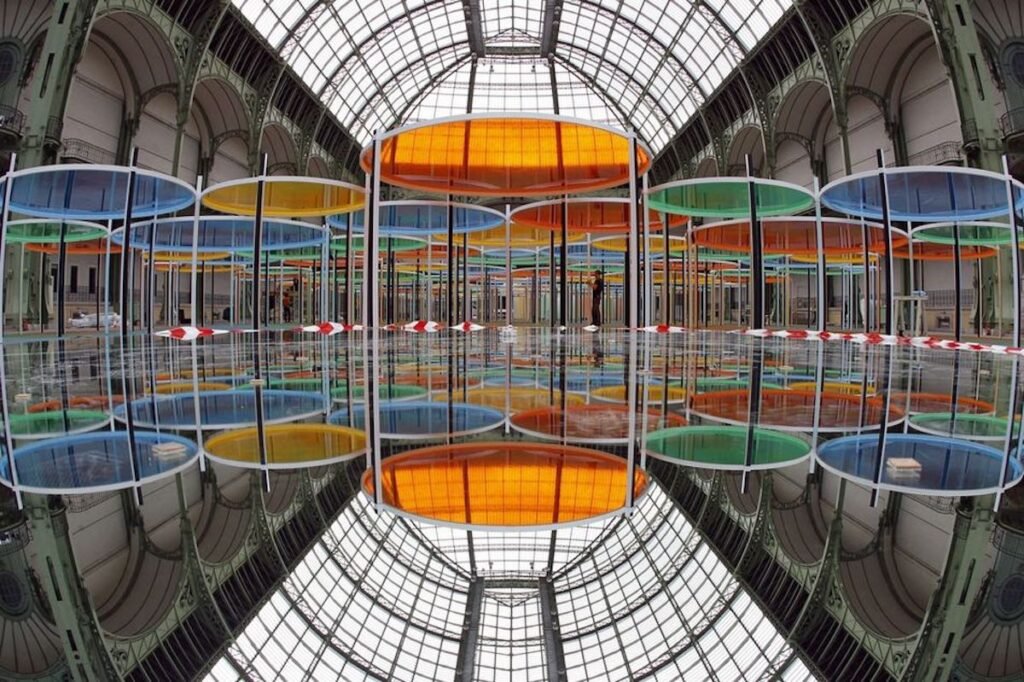
L’anno successivo, Daniel Buren riportò questa attenzione alla luce che aveva accompagnato il luogo fin dall’origine. In Excentrique(s), travail in situ (2012), dischi traslucidi colorati, sostenuti da esili elementi verticali, componevano un piano sotto la vetrata. I sostegni portavano le strisce bianche e nere dell’artista; sulla cupola, filtri blu disposti a scacchiera tingevano la luce prima che toccasse i dischi. Il visitatore camminava al di sotto di queste superfici, mentre il sole ne proiettava i colori sul pavimento, sui sostegni e sui corpi. L’opera dipendeva da una condizione che nessun allestimento avrebbe potuto stabilire una volta per tutte: il tempo atmosferico entrava nella sua forma.
Sotto la cupola centrale, specchi circolari disposti a terra riportavano verso il basso l’immagine dell’architettura. Guardare il pavimento significava incontrare ciò che si trovava sopra la propria testa, insieme alla propria presenza dentro quel riflesso. Il palazzo diventava conoscibile attraverso un’inversione che ne avvicinava le parti più lontane. Per un momento, il corpo e la struttura condividevano la stessa superficie, pur conservando distanze che lo specchio rendeva visibili in un altro modo.
Il lavoro in situ di Buren prendeva forma da queste relazioni. Miwon Kwon, in One Place after Another (2002), porta tuttavia l’attenzione su quanto rimane fuori dall’esperienza della luce: il luogo comprende anche l’istituzione che commissiona l’opera e ne orienta la ricezione. Il corpo può scoprire un’architettura senza che l’autorità di chi la governa venga messa in questione. In Excentrique(s), il colore e gli specchi espongono la vetrata e insieme ne rinnovano il fascino. Il palazzo riceve un’immagine di sé che può facilmente fare propria. Qui Buren mi sembra più convincente nell’analisi del vedere che nella critica della cornice istituzionale, pur essendo la cornice il terreno su cui il suo lavoro si è costruito, dalla Fonction du musée (1970) in poi: l’architettura si offre allo sguardo con una precisione nuova, mentre la committenza può riconoscere in quella stessa precisione il valore del proprio invito.
La forza percettiva dell’intervento restava intatta. Bastava che una nuvola coprisse il sole perché le superfici cambiassero intensità; bastava spostarsi perché un riflesso accogliesse un’altra porzione della navata. Il monumento continuava a essere quello del 1900, ma la sua visibilità dipendeva dal momento in cui lo si incontrava. Il tempo dell’opera e quello dell’edificio si raggiungevano nella luce.
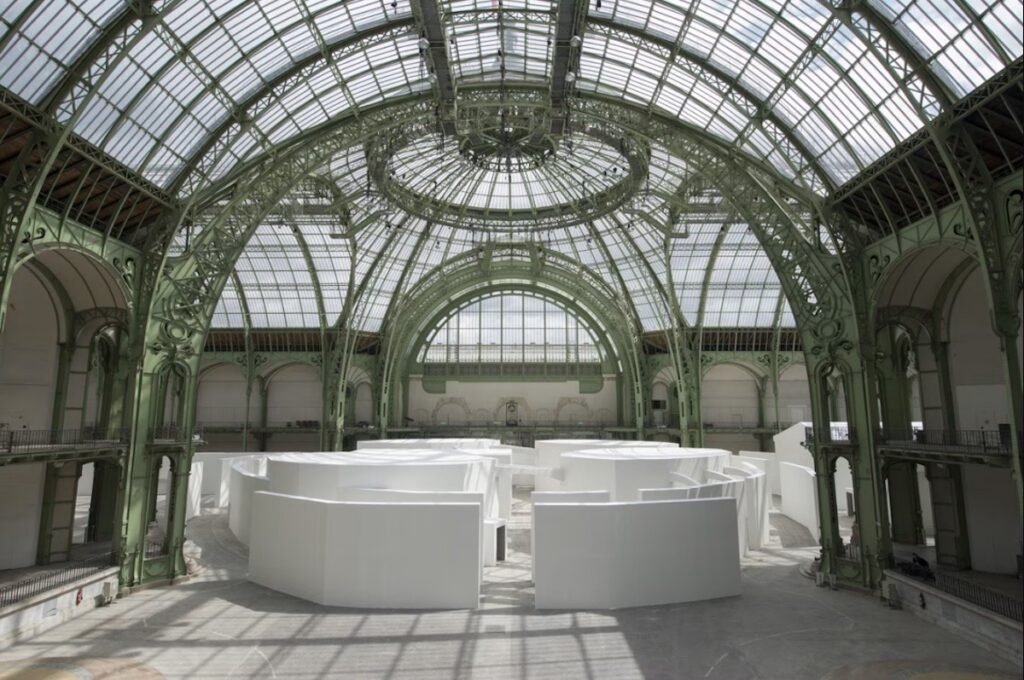
Questa disponibilità del luogo poteva accogliere anche un’architettura immaginata. Con L’Étrange Cité (2014), Ilya ed Emilia Kabakov costruirono dentro la navata una città di ambienti e padiglioni, nella quale il percorso assumeva il carattere di un racconto. Dopo le case di Kiefer, il Grand Palais tornava a contenere altri luoghi, ma il loro insieme proponeva una diversa possibilità di abitare il tempo. Le costruzioni restavano chiuse: Emilia Kabakov ha spiegato di aver temuto la luce mutevole della vetrata, e i padiglioni, privi di aperture verso l’alto, le voltavano le spalle. Dentro, in spazi come il Musée vide, si entrava chinando il capo, e ci si trovava davanti all’attesa, all’immaginazione, al desiderio di oltrepassare i limiti dell’esistenza quotidiana. Il palazzo diventava il riparo provvisorio di un’utopia, abbastanza concreta da essere attraversata e abbastanza fragile da non potersi confondere con una promessa.
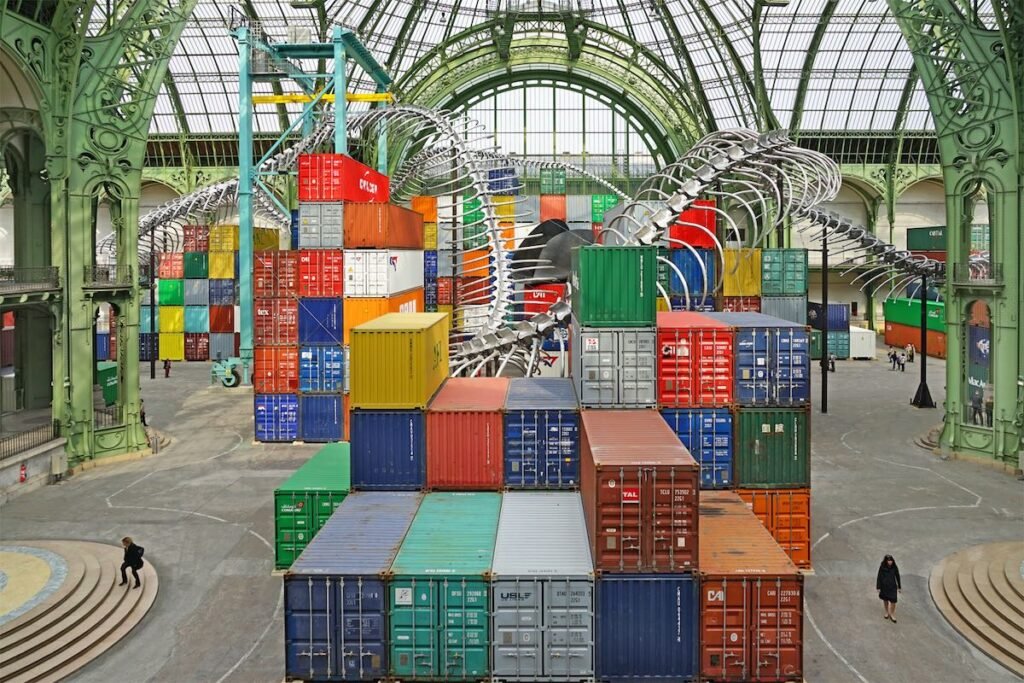
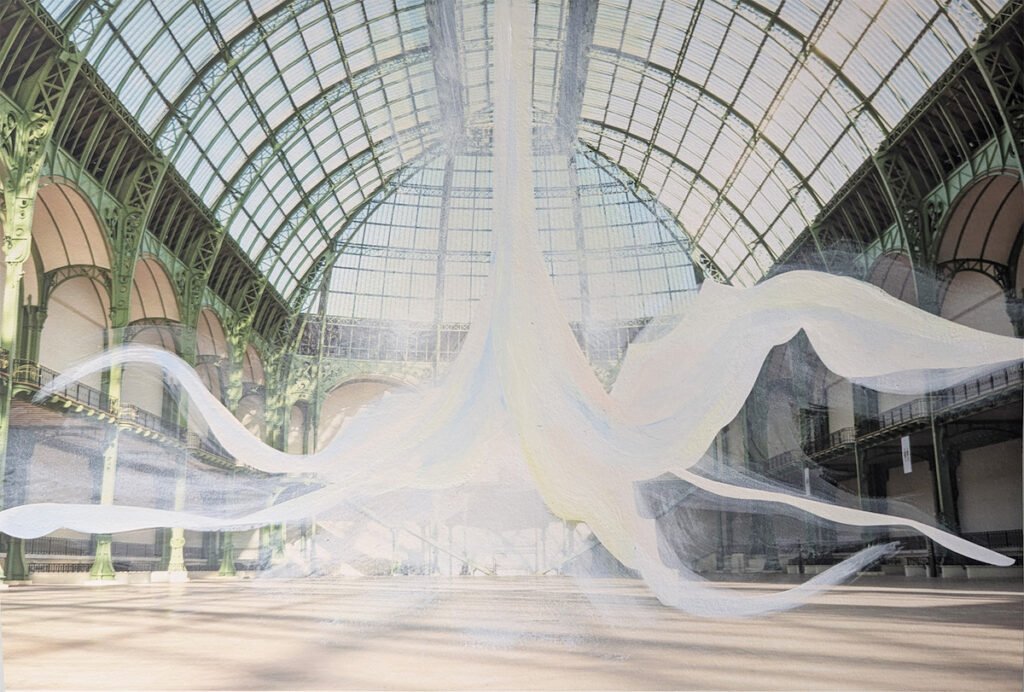
Con Huang Yong Ping, quella città immaginaria lasciò posto a un paesaggio riconoscibile nella circolazione delle merci. Empires (2016) raccoglieva trecentocinque container, disposti in gruppi sopra i quali si snodava un gigantesco scheletro di serpente. Un bicorno napoleonico, ingrandito fino a diventare una presenza architettonica, introduceva nel sistema dei trasporti un emblema del potere imperiale. Le dimensioni alterate rendevano possibile avvicinare elementi che appartenevano a ordini diversi: il contenitore standardizzato del commercio mondiale, la forma animale, l’oggetto attraverso il quale una figura storica continua a essere riconosciuta.
I container portavano nel palazzo la possibilità del viaggio e l’opacità di ciò che viene trasportato. La loro superficie lasciava immaginare provenienze, destinazioni, passaggi di proprietà. Sopra di essi, il serpente disegnava una continuità inquieta; il suo scheletro metallico richiamava la struttura della vetrata, come se l’edificio incontrasse un’altra figura di sé. La logica dell’ossatura che sostiene la luce tornava a comporre un corpo smisurato, sospeso fra movimento e immobilità.
Nel Grand Palais, nato per un’Esposizione universale, i container di Empires incontravano un edificio che aveva dato forma monumentale alla fiducia nel progresso. Del mondo in circolazione restavano visibili gli involucri; il contenuto era sottratto allo sguardo. Il serpente e il bicorno legavano quel movimento alla violenza e alla precarietà del potere, rendendo difficile contemplare il palazzo senza interrogare ciò che aveva celebrato. È l’attrito più forte di Monumenta, ma anche il punto in cui la committenza può guadagnare dalla propria esposizione alla critica. Nella successione delle grandi imprese ospitate, Empires diventa un’altra prova della capacità della navata di accogliere. La critica entra nella storia del monumento; il suo prestigio può crescere anche attraverso ciò che ne incrina l’autorità.
Il percorso di Monumenta trovava qui la sua settima e ultima edizione. Le opere erano state smontate, ma le loro immagini continuavano a mostrare una navata ogni volta diversa. Da una fotografia all’altra gli artisti cambiano e la vetrata torna, presenza durevole nella successione degli incontri. È attraverso quelle immagini che si può conoscere ciò che non è più visitabile. Fra la disposizione delle lastre e il tempo impiegato per attraversarle rimane però una distanza; un abito fotografato conserva una piega, senza restituire l’esitazione di chi vi si era fermato davanti. La storia del palazzo raccoglie le esposizioni, mentre una parte del loro tempo resta dispersa nella memoria di chi le ha incontrate.
Dopo Monumenta, una nuova campagna di restauro, avviata con la chiusura del marzo 2021 e diretta da François Chatillon, ha recuperato strutture, decorazioni e percorsi. La navata ha accolto le competizioni olimpiche e paralimpiche nel 2024; nel giugno 2025 il complesso ha completato la propria riapertura al pubblico. Ritrovare prospettive e collegamenti fra gli ambienti ha significato restituire alla visita una parte dell’unità architettonica che gli usi successivi avevano frammentato.
Nel 2026, Nous, frissons d’étoiles di Laure Prouvost ha riportato sotto la vetrata un ambiente nel quale video, scultura, suono, odori e luce coinvolgevano il visitatore. Presentato dal 10 giugno al 26 luglio, il progetto nasceva da ricerche sulla fisica quantistica e proponeva un’esperienza delle relazioni fra diverse forme della materia. L’installazione occupava la Nef Nord, una delle porzioni in cui la navata è oggi articolata, e adattava un’opera commissionata nel 2025 dalla LAS Art Foundation di Berlino. Una parte della navata tornava a essere conosciuta attraverso una presenza temporanea, mentre l’attenzione si spostava verso connessioni che eccedono la misura del corpo.
Il Grand Palais conserva se stesso e la memoria di ciò che ha accolto, ma quella memoria non gli appartiene per intero. Si prolunga nei passi di chi ha attraversato Serra, nelle tracce affidate da Boltanski a un altro luogo, nel dubbio che Kiefer lascia sotto un tetto ancora intatto. La permanenza del palazzo raccoglie i passaggi e ne riceve prestigio; la sua responsabilità è trasmetterne anche ciò che rende meno sicura la propria storia. La luce raggiunge ancora il pavimento. Chi vi ritorna può ricordare una lastra, un abito, un colore, e riconoscere in quel ricordo qualcosa che il luogo ha reso possibile senza poterlo trattenere tutto.
Cover: The Grand Palace, Exposition Universal, 1900, Paris, France
Nel tempo dell’altro è una rubrica che attraversa le presenze dell’arte contemporanea nei musei storici, archeologici, universitari. Luoghi dove il tempo si stratifica e l’opera agisce come incontro, attrito o apparizione. Qui si raccontano innesti e interferenze, ascoltando ciò che resta, ciò che torna, e il silenzio che li separa.
IN THE TIME OF THE OTHER
From 23 to 25 October, Art Basel Paris returns beneath the glass roof of the Grand Palais. Works arrive, linger, invite the gaze; some will leave for places as yet unknown. The building welcomes them into the light that has fallen on so many works before them, allowing new forms to inhabit its vastness for a few days. Value, too, takes shape in this encounter: the building’s history lends its resonance to what is shown, while each passing presence adds to its memory. The fair thus returns us to a question that runs through the history of the Grand Palais: what remains of the works that once occupied its nave, of the distances they opened up, of what those who saw them still carry within them? The floor has been cleared many times. That does not mean it has been left empty.
Life under Glass
At the Grand Palais in Paris
Text by Rita Selvaggio —
Light enters before the works. It passes through the glass, meets the iron, reaches the floor; over the hours that follow, it returns to the same points without illuminating them in quite the same way. At the Grand Palais, part of the visit belongs to this movement. Even when the eye seeks out what has been exhibited, the building keeps drawing it upwards, along a structure that reveals the sky while dividing it. The vastness is felt before it can be understood: one has to walk, move away, turn around. Between one position and the next, what seemed close changes scale.
Beneath this glass roof, contemporary art has introduced volumes, obstacles, coloured surfaces, discarded clothes. It has occupied the space and altered the time needed to come to know it. A work can hold visitors in one place, oblige them to change direction, make a distance reappear that the eye had crossed too quickly. The monument then feels unexpectedly close. Its past becomes something the body must reckon with as it seeks a path among the forms of the present.
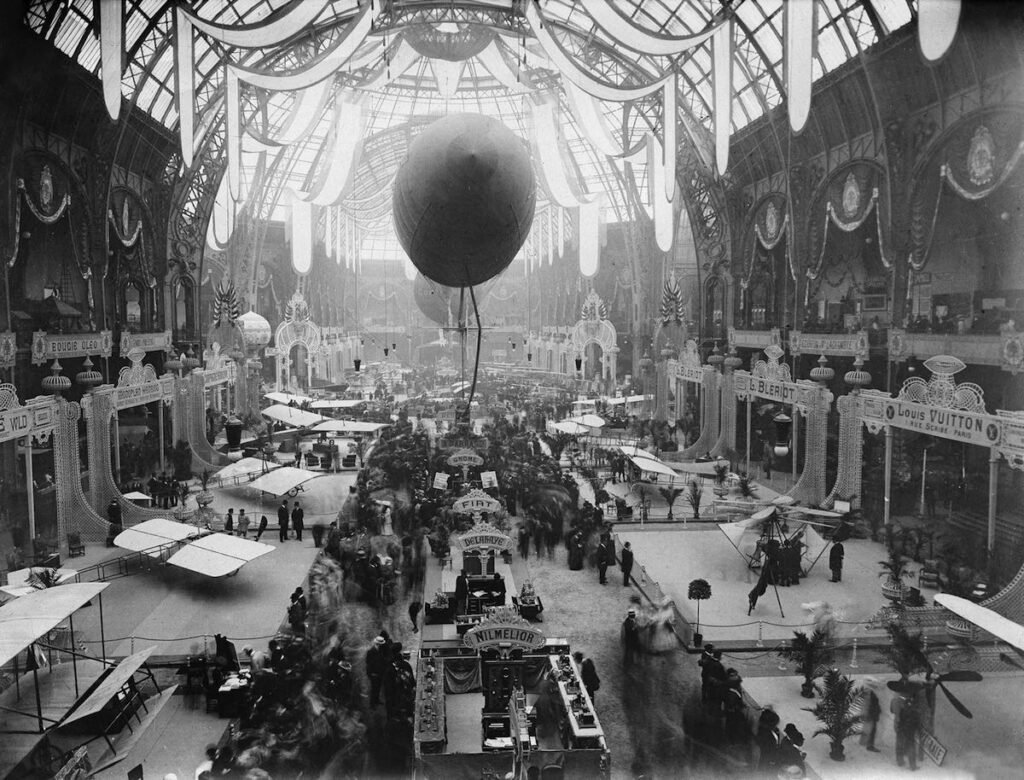
Before these encounters, the Grand Palais had been built to give the future an image. Created for the Universal Exhibition of 1900, together with the Petit Palais and the Pont Alexandre III, it belonged to a city preparing to display progress through buildings, machines, objects and works of art. Intended from the outset to house the Salons, the Palais offered exhibitions a permanent architecture: the celebrations would end, but the space designed to welcome the public would continue to receive other images of the world.
The project brought together the work of three architects, coordinated by Charles Girault, architect of the neighbouring Petit Palais. Henri Deglane designed the main building and the great nave; Albert Louvet the central section, with its grand staircase and Salon d’honneur; Albert Thomas the western section, the Palais d’Antin.
Outside, colonnades, sculptures and stone façades endow the building with the authority of a palace of fine arts. Georges Récipon’s quadrigas mark its corners towards the Seine and the Champs-Élysées. Inside, the metal structure supports the glass and allows light to reach a nave measuring 13,500 square metres. The monumental language of stone and the structural possibilities opened up by industry belong to the same design: what appears stable on the façade opens, beyond the entrance, into a volume traversed by the changing sky.
From its earliest years, art exhibitions and events devoted to motoring and aviation shared the Palais. Objects, inventions and ways of seeing entered the same public space, bringing different ideas of modernity with them. That confidence would soon encounter other needs. During the First World War, the Grand Palais was requisitioned and turned into a military hospital and rehabilitation centre. The space intended for display received wounded bodies, care, waiting. Architecture endures in this way too, shaped by needs its builders had not foreseen.
In 1937, on Jean Perrin’s initiative, the Palais de la découverte took up residence in the western wing, introducing an institution devoted to the public understanding of science into the complex. In 1966, under André Malraux, the opening of the Galeries nationales consolidated the Grand Palais’s role as a venue for major temporary exhibitions. Art and science continued to occupy different parts of the same building.
The Grand Palais has no permanent collection. The works in its exhibitions come from museums, foundations, private collections and artists, and they are brought together for a limited time. What visitors find on each return is, first and foremost, the building itself, with the memory of its uses. This condition gives the exhibitions a particular weight: the works depart, while the Palais remains associated with what it has made possible. The absence of a stable collection does not exempt it from accumulation; it changes what can accumulate. Alongside the material fabric it preserves, a reputation grows, shaped in part by the presences that have temporarily inhabited the nave.
This continuity, too, has had its interruptions. Closed in 1993 over safety concerns, the nave reopened in 2005 after structural reinforcement works. Two years later, in 2007, Monumenta begins: an artist is invited to conceive an intervention for this space. The building’s vastness becomes one of the conditions shaping the work, together with its light, proportions and possible routes. The invitation already contains a request: to engage with the monument, to make an event of it. The artist has the building at their disposal for a few weeks; the institution can continue to inscribe that encounter in its own history. Across these unequal spans of time, the work’s freedom meets a condition inherent in the commission: the place that allows the work to transform it will also be the one to survive and recount its passage.
Within this reciprocity, the Grand Palais encounters the time of the other. A work intended to remain for a few weeks confronts a structure that has lived through more than a century. For the duration of their encounter, the architecture is known through something that will soon be taken away from it. After dismantling, the floor is clear again, and the light continues on its course. But those who have seen that space occupied carry away a further sense of its scale: the memory of a form becomes part of how they recognise the place.
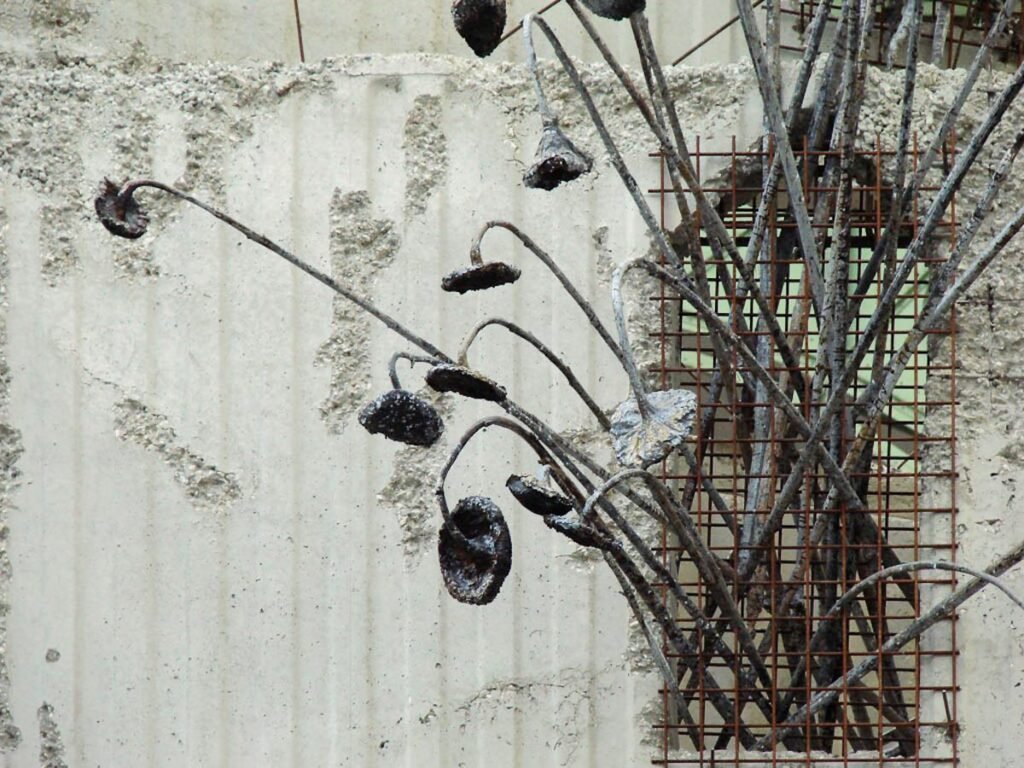
Anselm Kiefer was the first artist invited to engage with this vastness. With Chute d’étoiles / Sternenfall (2007), the artist introduced seven tower-shaped houses into the nave: buildings within a building, places gathered beneath a roof that seemed to contain them without being able to protect them. The Grand Palais received a landscape in which matter already bore the signs of its own vulnerability. Alongside the confidence embodied in the building’s construction stood another experience of duration, marked by ruins, layers and memories difficult to piece together.
Poetry carried part of this tension through the homage to Paul Celan and Ingeborg Bachmann. Words entered the space alongside things, bringing with them the history from which they had emerged. The building’s vastness was divided, interrupted, made habitable through spaces that retained a sense of isolation.
A few years after the Grand Palais came into being, Alois Riegl published The Modern Cult of Monuments (1903), distinguishing the different values through which the present recognises a building and decides what to preserve of it. Duration does not belong to matter alone: it also depends on the attention each age gives it. Kiefer’s houses brought beneath the glass roof a ruin that the Palais, though containing it, could not repair. The architecture’s permanence lost something of its certainty: the roof continued to cover that landscape without promising it shelter. The monument endured beside what remained vulnerable.
With Richard Serra, this attention takes on the visitor’s pace. Promenade (2008) placed five steel plates, seventeen metres high, along the nave’s main axis, offset from its symmetry. Their slight inclination made palpable a tension that the regularity of the architecture might otherwise have absorbed. From a distance they appeared as slender presences, almost lines drawn through the space; as one approached, the surface acquired weight and interrupted the continuity of the gaze.
The title thus named a condition of the sculpture: the movement through which it was experienced. Walking was the way in which the five plates entered into relation, without ever being gathered into a definitive view. Each advance altered the distances, made the forms overlap or separate, opened up a different portion of the nave. The building changed too: its proportions, apparently offered all at once, unfolded over the duration of the walk.
In Éléments de rythmanalyse (1992), Henri Lefebvre sought in the relationship between body, space and time a way of understanding the rhythms of experience. Promenade puts this relationship to the test through the elementary act of walking. A step measures a distance and is, at the same time, altered by what it encounters. One slows before the mass, seeks an edge, turns back to check something that had not appeared from another position.
Serra’s steel thus encountered the iron of the structure without repeating its function. The material that supported the glass in the building and made light possible returned, in the sculpture, as exposed weight. Once the plates were removed, the nave regained its symmetry. Visitors left with the distances they had crossed still in mind, remembering how a plate had changed as they approached it. Part of the encounter remained beyond what the building could gather into its account of itself.
With Christian Boltanski, the distances Serra made perceptible acquire another density. In Personnes (2010), the nave housed an installation of used clothes, laid out in regular fields on the floor and gathered, further away, into a large heap. Above that mass, a mechanical claw descended, grasped a few garments, lifted them and let them fall again. The gesture began anew, without any discernible act of choice. Between the ordered surfaces on the ground and the movement of the machine, each garment remained exposed to a fate that had nothing to do with the history of whoever had worn it.
A sleeve retains the possibility of an arm, a jacket the dimensions of a torso. Even when empty, garments continue to suggest postures, habits, ways of being among others. Boltanski worked with this incomplete proximity: the body was missing, but something of its form remained available to the gaze.
The title, too, held on to this oscillation. In French, personnes means people, while personne can mean no one. Sound brings together what language keeps distinct: a plurality of lives and the void left by their absence. In the Palais, this ambiguity acquired a physical dimension. One walked alongside the garments without being able to trace them back to a name, a face, a story that would have made recognition possible.
The heartbeats broadcast through the space introduced a time different from that of the machine. Their sound reached visitors while their own hearts continued to beat, bringing an audible rhythm into relation with one that almost always goes unnoticed. During the exhibition, Boltanski also invited the public to donate a recording of their heartbeat to the Archives du cœur, the project begun in earlier years. Those moving through the installation could leave a trace of their existence, a sound destined to be preserved and heard again. Those recordings would not remain in the Palais: their destination was the Japanese island of Teshima, where the archive has a permanent home, far from the nave that had received them for a few weeks.
In Ghostly Matters (1997), Avery Gordon describes how what appears absent continues to act in social life. The garments in Personnes do not each document a lost biography; their arrangement evokes collective memories, including those of deportation and extermination. Before that mass of personal effects, visitors bring with them histories the installation does not name. The missing body continues to address them through a piece of fabric, even when it will never be possible to know to whom it belonged.
Knowing that the Grand Palais had been a military hospital adds to that visit the memory of other bodies received beneath the glass roof. This is a connection made by someone reading the place, rather than a documented reference on Boltanski’s part. The building’s history remains distinct from the work, yet knowledge of the care and waiting that once took place there accompanies the gaze upon the empty clothes.
In the nave, vastness strained the visitor’s attention. Each garment asked to be distinguished, while the whole made that distinction almost impossible. One might slow before a piece of fabric, a fold, a familiar size. The Grand Palais would retain the memory of the exhibition, with Boltanski’s name in the succession of invited artists. The traces of those who had taken part, meanwhile, travelled in another direction. The Palais could remember having received them; their safekeeping was entrusted elsewhere.
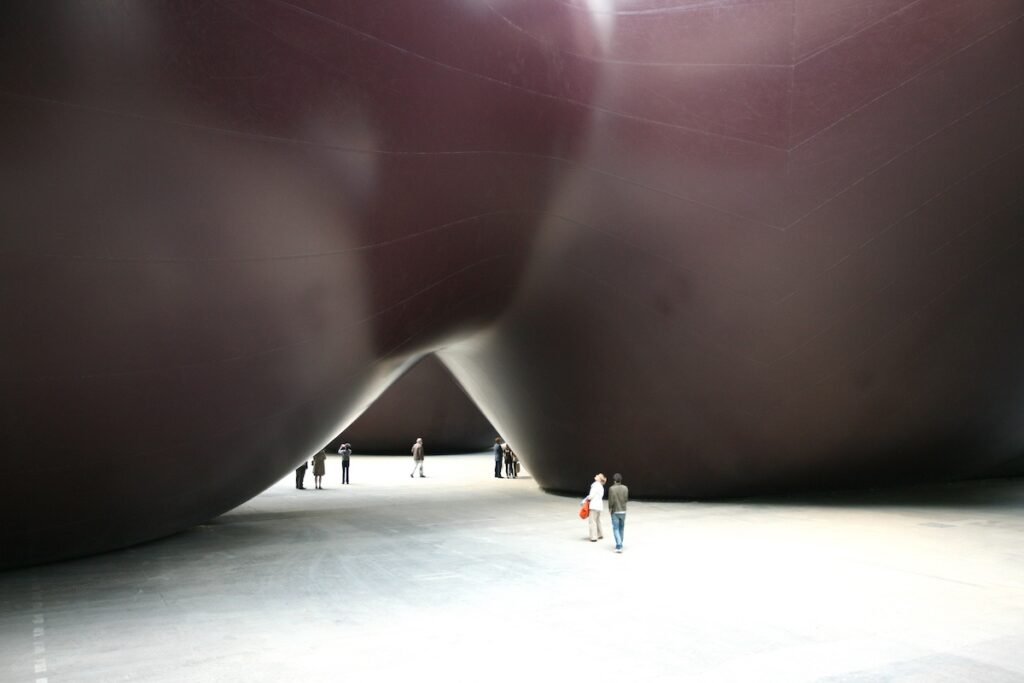
Presence could also take the form of a volume one could enter. With Leviathan (2011), Anish Kapoor introduced a gigantic inflatable structure into the nave, its membrane separating two experiences of the same object. Of its four volumes, only one was accessible; the others were offered to the gaze alone. Inside, light filtered through the surface produced an enveloping red environment in which familiar distances became difficult to recognise. Outside, visitors found the building occupied by a mass that filled its vast interior. What had just been experienced from within had to be reconsidered from another position.
This passage also altered the perception of the building. The Grand Palais temporarily disappeared from view, then re-emerged in the space surrounding the work. The glass roof continued to illuminate the nave, but its light had passed through a second surface, taking on the colour of an environment that suggested a bodily interior. One was inside something that, shortly afterwards, would appear before one’s eyes. The memory of the experience prevented the external form from becoming merely a figure to observe.
In Production of Presence. What Meaning Cannot Convey (2004), Hans Ulrich Gumbrecht identifies in aesthetic experience a tension between meaning and the material force of what is encountered. Leviathan made this tension palpable through the difficulty of separating what one saw from what one had just moved through.
The following year, Daniel Buren returned this attention to the light that had accompanied the place from the beginning. In Excentrique(s), travail in situ (2012), coloured translucent discs, supported by slender vertical elements, formed a plane beneath the glass roof. The supports bore the artist’s black and white stripes; on the dome, blue filters arranged in a chequerboard pattern tinted the light before it touched the discs. Visitors walked beneath these surfaces as the sun projected their colours onto the floor, the supports and their bodies. The work depended on a condition no installation could establish once and for all: the weather entered into its form.
Beneath the central dome, circular mirrors laid on the ground brought the image of the architecture downwards. Looking at the floor meant encountering what was above one’s head, together with one’s own presence within that reflection. This inversion brought the building’s most distant parts closer, offering another way of knowing it. For a moment, body and structure shared the same surface, while retaining distances that the mirror made visible in another way.
Buren’s work in situ took shape through these relations. In One Place after Another (2002), however, Miwon Kwon draws attention to what remains outside the experience of light: the site also includes the institution that commissions the work and shapes its reception. The body can discover an architecture without the authority of those who govern it being called into question. In Excentrique(s), colour and mirrors expose the glass roof while renewing its allure. The Palais receives an image of itself that it can readily claim as its own. Here Buren seems to me more convincing in his analysis of vision than in his critique of the institutional frame, even though that frame is the ground on which his work has been built, from Fonction du musée (1970) onwards: the architecture presents itself to the gaze with a new precision, while the commissioning institution can recognise in that very precision the value of its invitation.
The intervention’s perceptual force remained intact. A cloud passing over the sun was enough to change the intensity of the surfaces; a shift in position was enough for a reflection to receive another portion of the nave. The monument remained the one built in 1900, but its visibility depended on the moment in which it was encountered. The time of the work and that of the building met in the light.
The space could also accommodate an imagined architecture. With L’Étrange Cité (2014), Ilya and Emilia Kabakov built a city of rooms and pavilions within the nave, in which the route took on the character of a story. After Kiefer’s houses, the Grand Palais once again contained other places, but together they proposed a different possibility of inhabiting time. The structures remained enclosed: Emilia Kabakov explained that she had feared the changing light from the glass roof, and the pavilions, with no openings overhead, turned their backs on it. Inside, in spaces such as the Musée vide, one entered with bowed head and encountered waiting, imagination and the desire to go beyond the limits of everyday existence. The Palais became the provisional shelter of a utopia, concrete enough to be walked through and fragile enough not to be mistaken for a promise.
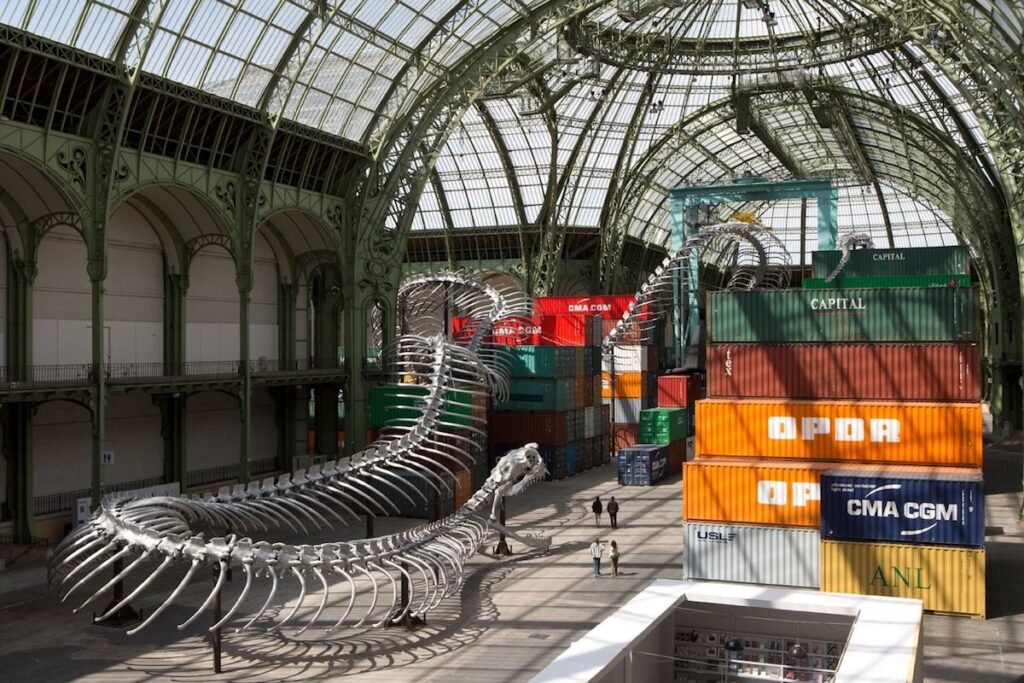
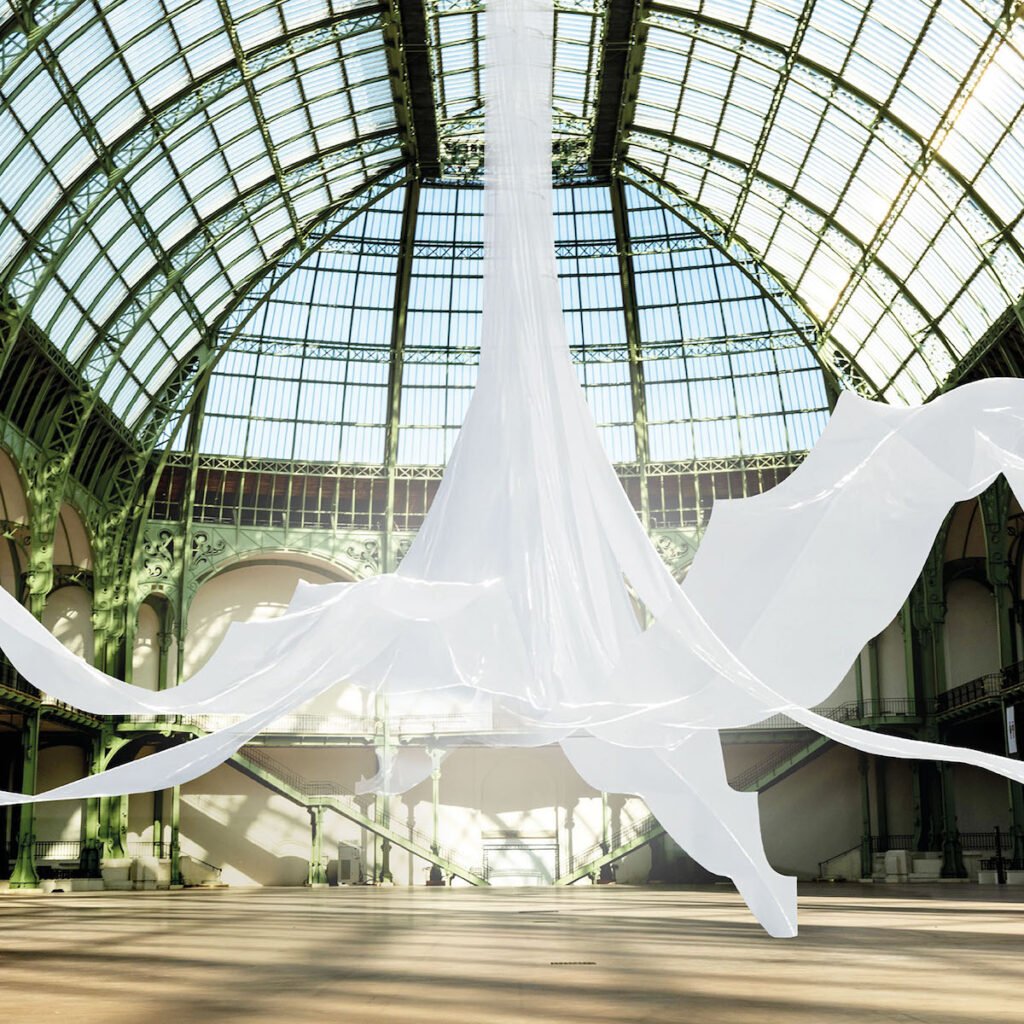
With Huang Yong Ping, that imaginary city gave way to a landscape familiar from the circulation of goods. Empires (2016) brought together three hundred and five shipping containers, arranged in groups above which a gigantic serpent skeleton wound its way. A Napoleonic bicorne, enlarged until it became an architectural presence, introduced an emblem of imperial power into the transport system. The altered dimensions made it possible to bring together elements belonging to different orders: the standardised container of global trade, the animal form, the object through which a historical figure continues to be recognised.
The containers brought into the Palais the possibility of travel and the opacity of what is transported. Their surfaces invited one to imagine origins, destinations, transfers of ownership. Above them, the serpent traced an uneasy continuity; its metal skeleton recalled the structure of the glass roof, as though the building were encountering another version of itself. The logic of the framework that supports the light reappeared in an immense body, suspended between movement and stillness.
In the Grand Palais, built for a Universal Exhibition, the containers of Empires encountered a building that had given monumental form to confidence in progress. What remained visible of the world in circulation were its outer shells; their contents were withheld from view. The serpent and the bicorne bound that movement to the violence and precariousness of power, making it difficult to contemplate the Palais without questioning what it had celebrated. This is Monumenta’s strongest point of friction, but also the point at which the commissioning institution can benefit from exposing itself to criticism. In the succession of great undertakings it has hosted, Empires becomes another demonstration of the nave’s capacity to accommodate. Critique enters the history of the monument; its prestige can grow even through what cracks its authority.
Here Monumenta reached its seventh and final edition. The works had been dismantled, but their images continued to show a nave that was different each time. From one photograph to the next, the artists change and the glass roof returns, an enduring presence in the succession of encounters. It is through those images that one can come to know what can no longer be visited. Yet a distance remains between the arrangement of the plates and the time spent walking among them; a photographed garment preserves a fold without restoring the hesitation of someone who once paused before it. The history of the Palais gathers the exhibitions, while part of their time remains dispersed in the memory of those who encountered them.
After Monumenta, a new restoration campaign, begun with the closure in March 2021 and led by François Chatillon, restored structures, decoration and routes through the building. The nave hosted Olympic and Paralympic competitions in 2024; in June 2025, the complex fully reopened to the public. Recovering vistas and connections between spaces allowed visitors to experience once more some of the architectural unity that successive uses had fragmented.
In 2026, Laure Prouvost’s Nous, frissons d’étoiles brought beneath the glass roof an environment in which video, sculpture, sound, smells and light engaged the visitor. Presented from 10 June to 26 July, the project grew out of research into quantum physics and proposed an experience of the relations between different forms of matter. The installation occupied the Nef Nord, one of the sections into which the nave is now divided, and adapted a work commissioned in 2025 by the LAS Art Foundation in Berlin. Part of the nave was once again known through a temporary presence, while attention shifted towards connections that exceed the scale of the body.
The Grand Palais preserves itself and the memory of what it has received, but that memory does not belong to it entirely. It extends into the steps of those who walked among Serra’s plates, into the traces Boltanski entrusted to another place, into the doubt Kiefer leaves beneath a roof still intact. The Palais endures, gathering these passages and drawing prestige from them; its responsibility is also to transmit what makes its own history less certain. The light still reaches the floor. Those who return may remember a plate, a garment, a colour, and recognise in that memory something the place made possible without being able to retain it all.