English text below —
Nel tempo dell’altro è una rubrica che attraversa le presenze dell’arte contemporanea nei musei storici, archeologici, universitari. Luoghi dove il tempo si stratifica e l’opera agisce come incontro, attrito o apparizione. Qui si raccontano innesti e interferenze, ascoltando ciò che resta, ciò che torna, e il silenzio che li separa.
Un luogo chiamato secoli
Progetti di arte contemporanea al Louvre
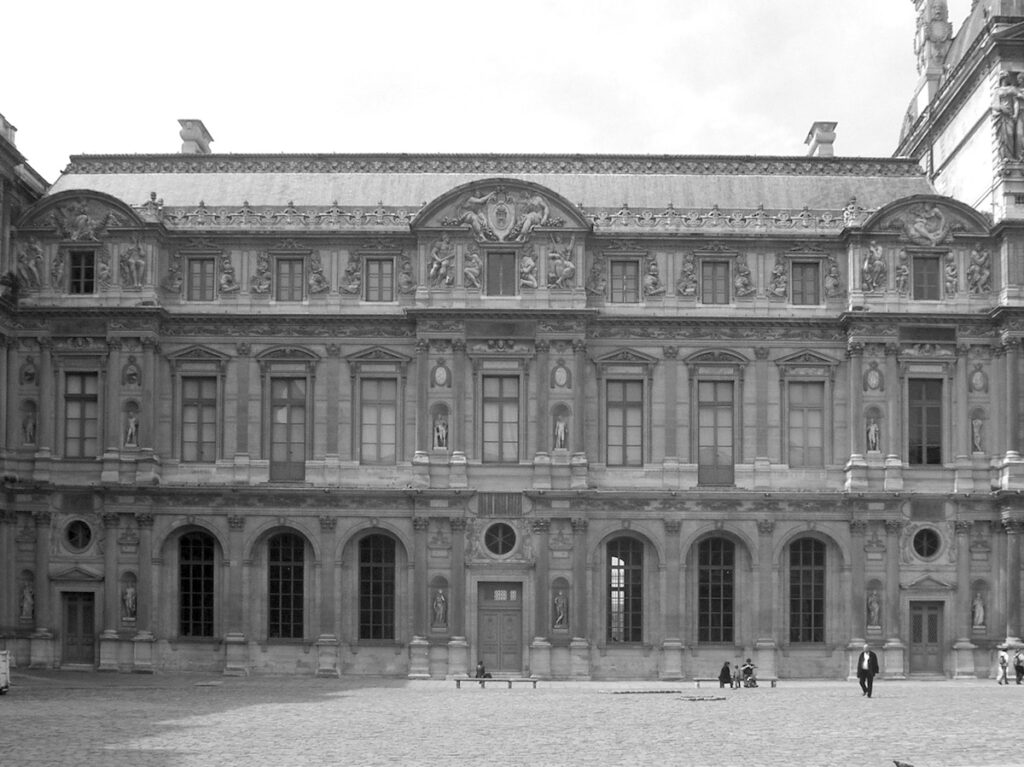
Prima di essere museo, il Louvre fu fortezza: una cittadella di pietra costruita da Filippo Augusto nel 1190 per proteggere Parigi dalle invasioni del Nord. Di quell’origine militare resta il fossato, custodito nelle sale sotterranee, come un’eco arcaica che ancora sostiene l’intero edificio. Nei secoli successivi, la fortezza si trasformò in residenza reale, poi in palazzo rinascimentale, poi ancora in reggia barocca. Ogni dinastia ne ha modificato il volto, aggiungendo corti, ali, colonnati, gallerie: un corpo in espansione che non ha mai cessato di mutare. Il Louvre è la cronaca architettonica del potere e del desiderio, un atlante murario in cui la Francia ha impresso la propria idea di storia.
Anche il suo nome conserva un’ombra originaria. L’etimologia di Louvre non è certa: potrebbe derivare da una radice germanica che indicava una torre di difesa; oppure da lupara, luogo dei lupi, territorio selvatico ai margini della città. In entrambi i casi, il nome precede il museo. Parla di protezione o di minaccia, di recinto o di foresta. Prima di diventare tempio dell’arte universale, il Louvre è stato bastione o margine, pietra armata o terra indomita. Forse è per questo che la sua storia non è mai stata lineare: nel suo stesso nome sopravvive una tensione tra custodia e inquietudine, tra ordine e forza primordiale.
Nel 1793, in piena Rivoluzione, l’antica reggia fu aperta al popolo e divenne Muséum Central des Arts. Da allora, il Louvre non appartiene più a un sovrano, ma al tempo stesso al popolo e al mondo. Le sue sale non celebrano più un’autorità, ma un’idea di civiltà fondata sulla visione, sulla possibilità di rendere visibile ciò che un tempo era destinato a pochi. Da qui nasce l’idea di museo moderno come forma di democrazia dello sguardo: il Louvre come casa comune dell’immagine, luogo in cui la rappresentazione diventa racconto condiviso.
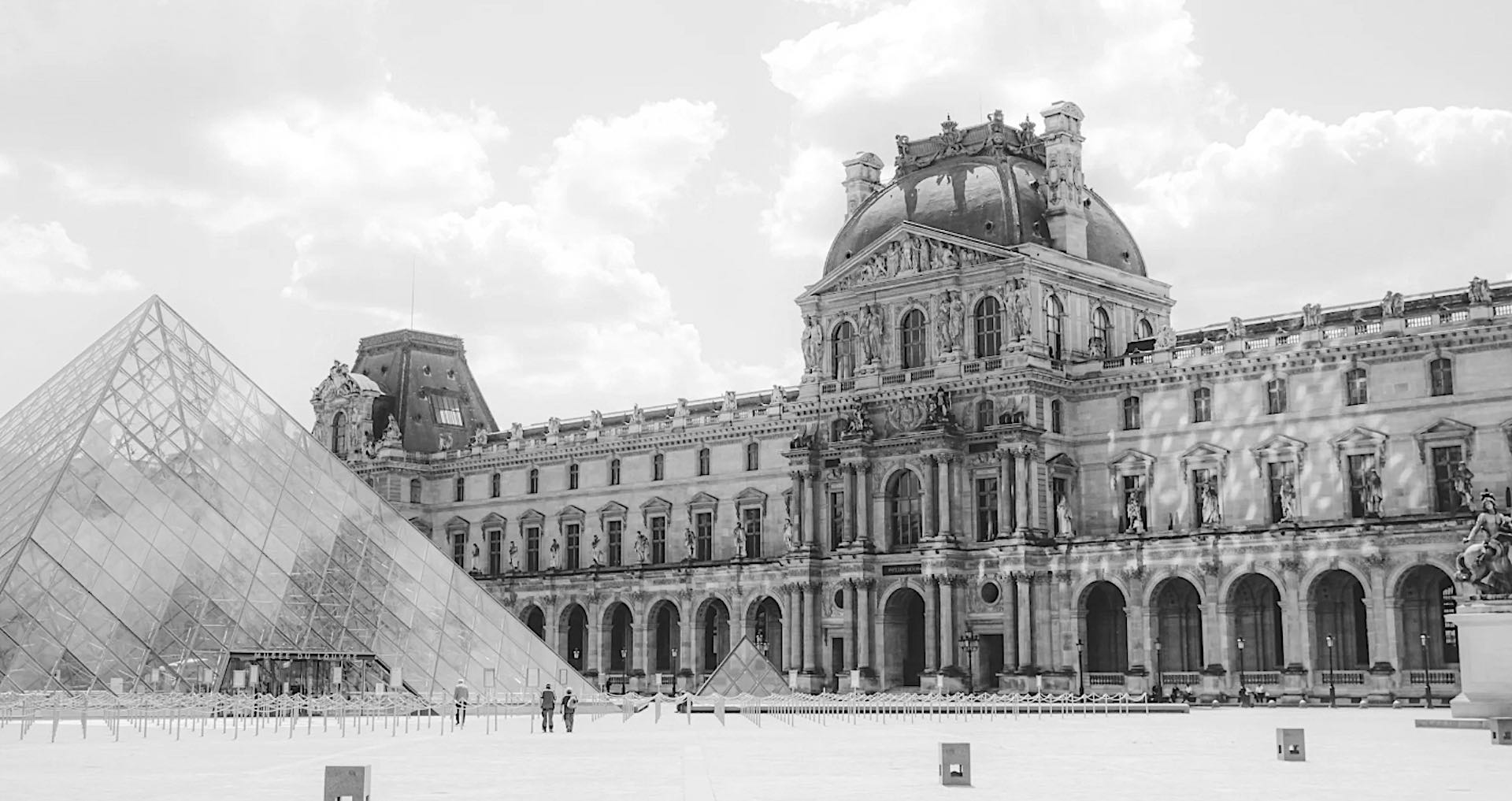
Nel 1989, con la piramide di vetro progettata da Ieoh Ming Pei, il museo ha conosciuto un’altra metamorfosi: la trasparenza è diventata la nuova soglia del tempo. Quel gesto architettonico – tanto criticato allora, quanto simbolico oggi – non è stato soltanto un atto estetico, ma una dichiarazione di principio: la modernità può attraversare la storia senza distruggerla. La luce entra nel cuore della pietra, e la pietra, a sua volta, la rifrange. È questo scambio silenzioso che ha permesso al Louvre di restare vivo, di accogliere il presente nel suo corpo monumentale.
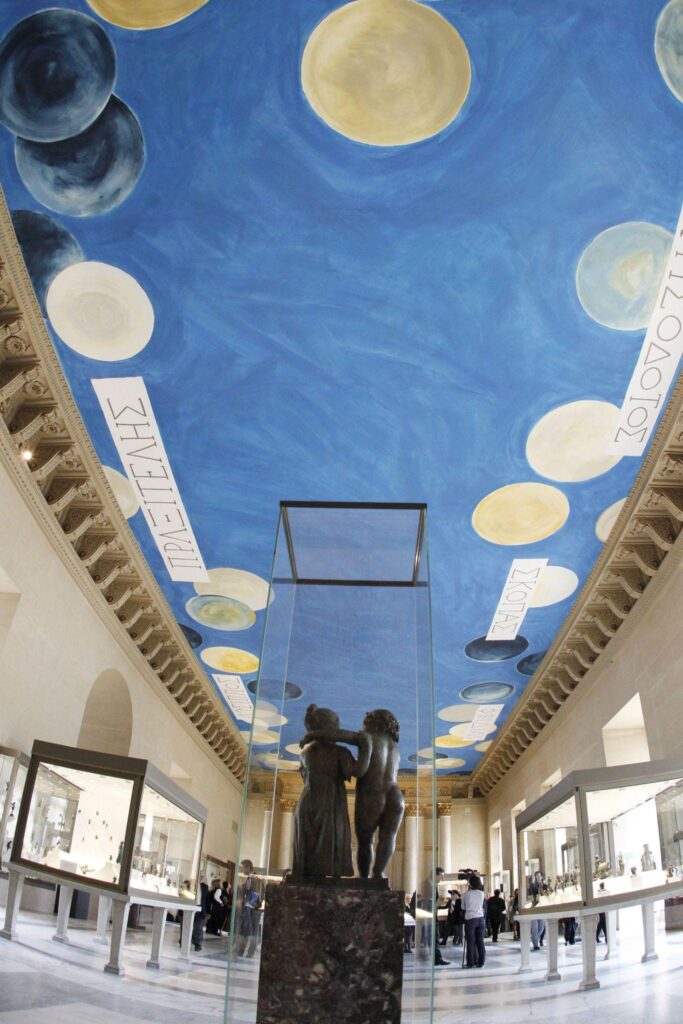
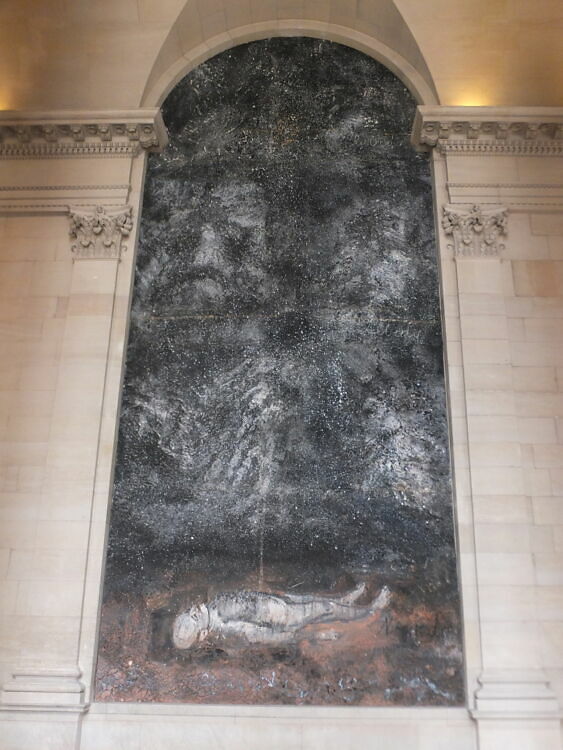
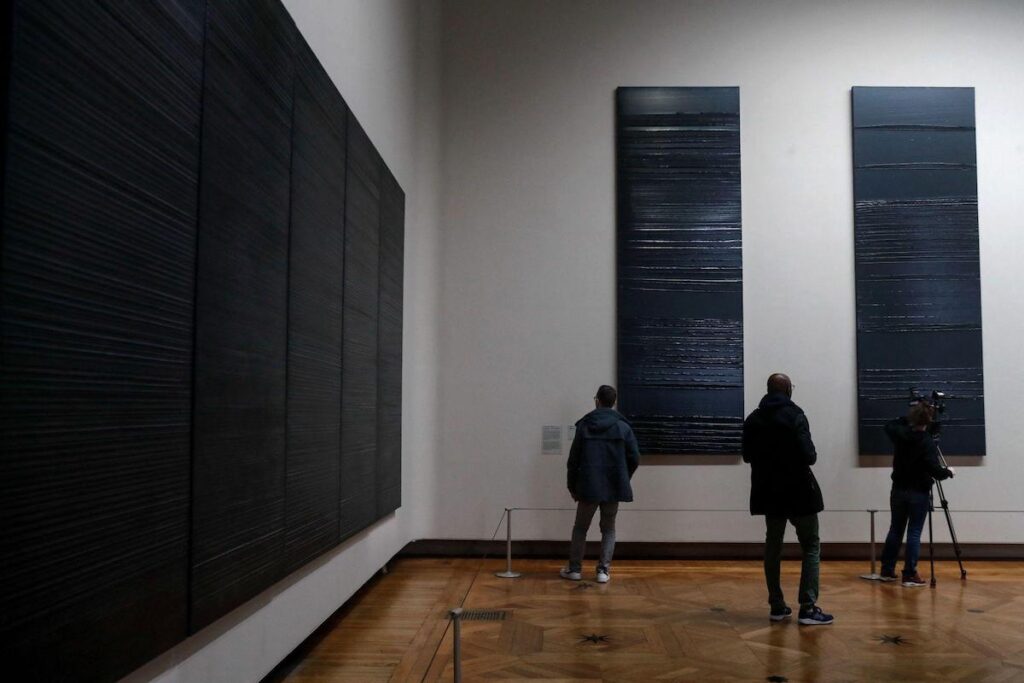
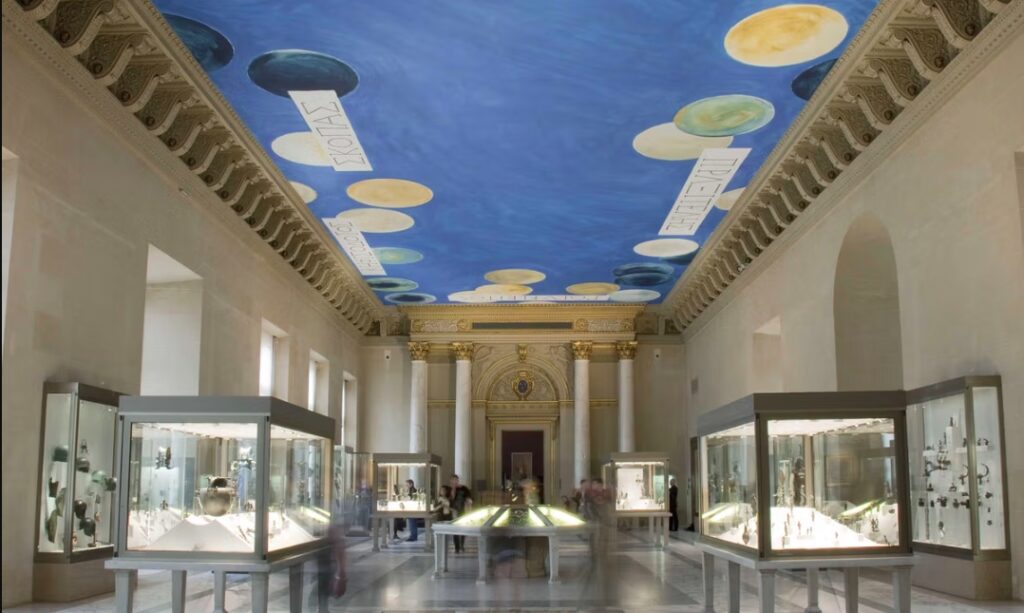
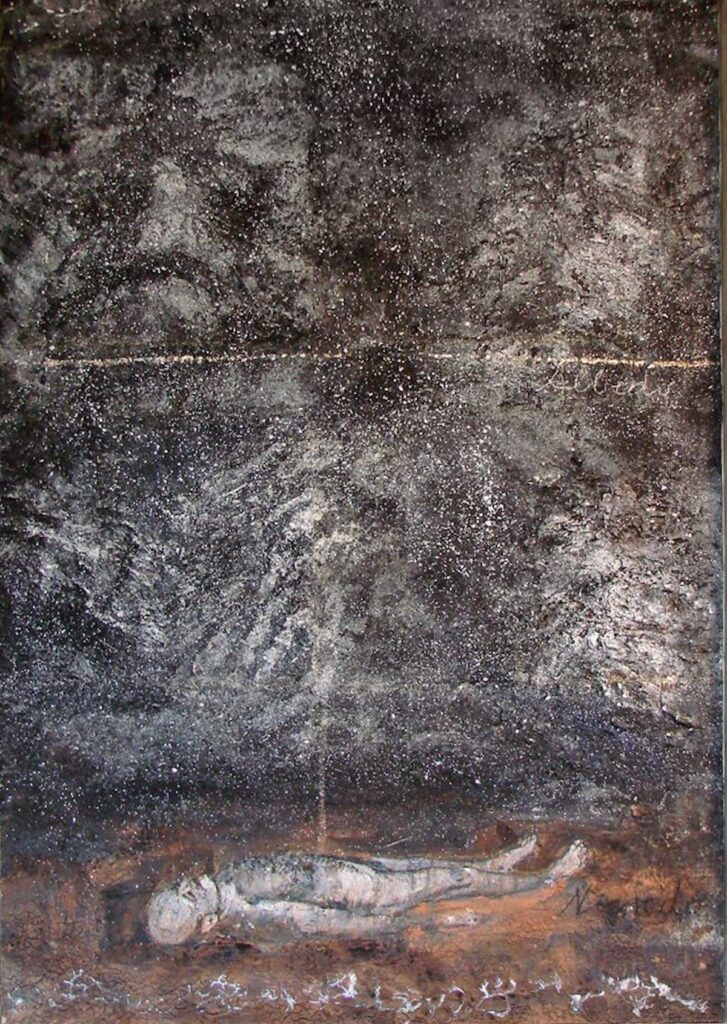
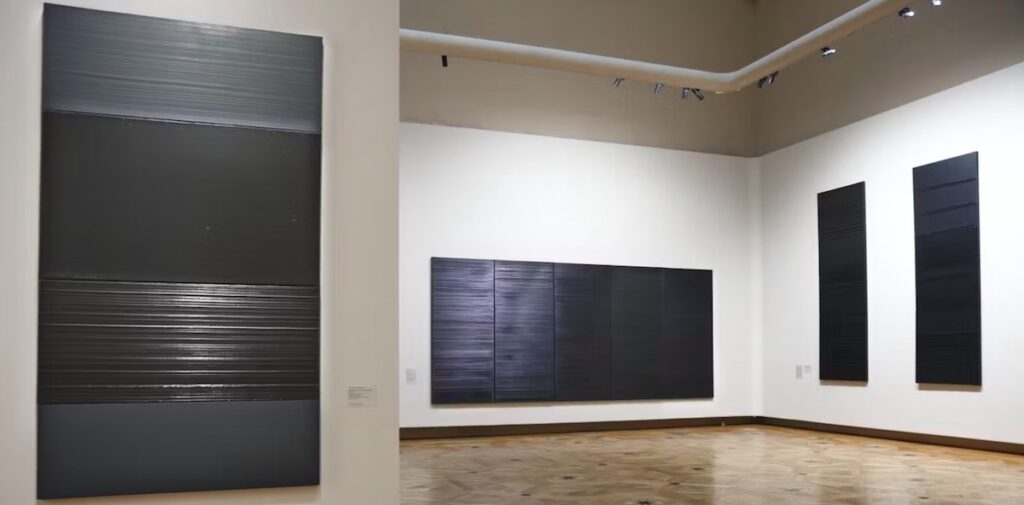
Negli ultimi decenni, questa apertura si è fatta progressiva e strutturale: non nasce all’improvviso. Già nel 2010 Cy Twombly aveva inscritto il proprio gesto nel soffitto della Salle des Bronzes, trasformando lo spazio in una volta attraversata da nomi e costellazioni, un intervento permanente che intreccia scrittura e pittura, memoria e astrazione. L’antico non veniva sovrascritto, ma attraversato da una grafia capace di riattivarne la profondità temporale. Nove anni più tardi, con la grande retrospettiva dedicata a Pierre Soulages, il Louvre aveva accolto l’“outrenoir” come campo di luce assoluta. Il nero non come negazione, ma come superficie che trattiene e restituisce lo sguardo. In quel confronto silenzioso con Rembrandt e Poussin, il museo mostrava che anche la pittura più radicale può abitare la storia senza farsi citazione del passato. Nel 2021, Anselm Kiefer ha portato le proprie materie dense — piombo, paglia, cenere — in dialogo con l’architettura del museo, riaprendo la questione della storia come stratificazione e rovina. Se Twombly aveva lavorato sulla leggerezza della traccia e Soulages sulla vibrazione della superficie, Kiefer introduceva il peso, ricordando che ogni durata è anche accumulo, ferita, sedimentazione.
Nel passaggio dalla lunga stagione di Henri Loyrette (2001–2013) alla direzione di Laurence des Cars, in carica dal 2021, il Louvre non cambia soltanto guida: si sposta da un’idea di espansione internazionale e monumentalità globale verso una riflessione più consapevole sulla propria responsabilità simbolica nel presente. Il museo ha così consolidato un dialogo costante con la contemporaneità: commissioni permanenti, mostre temporanee, programmi come Contrepoint e Carte Blanche, acquisizioni di artisti viventi. Non si tratta di aggiornare un’istituzione, ma di ridefinire la percezione stessa della permanenza. Ogni opera contemporanea inserita tra le sale antiche — un’onda, una rosa, un volto — non rappresenta una rottura, bensì una continuità attiva, una prova che il tempo può essere materia percorribile. In questo modo, il Louvre non misura più l’eterno attraverso i secoli, ma attraverso le relazioni: tra pietra e luce, tra memoria e gesto, tra ciò che rimane e ciò che muta. La sua grandezza non risiede soltanto nella vastità delle collezioni, ma nella capacità di contenere il passaggio, di far convivere l’immobilità della forma e la vibrazione del presente. È un museo che non smette di interrogare la propria sostanza, chiedendosi come si possa ancora, oggi, abitare il tempo. Tra le sue pietre, che sembrano trattenere la memoria di ogni epoca, l’eterno non è un concetto ma una materia viva. Qui il tempo non si arresta: si posa, si rifrange, muta di stato. Gli interventi contemporanei che ne hanno solcato lo spazio negli ultimi anni – dalle onde cinetiche di Elias Crespin alle rose di vetro di Jean-Michel Othoniel, dal pilastro dedicato ai migranti scomparsi di Barthélémy Toguo fino alle tele di Marlene Dumas entrate nella collezione permanente – non spezzano la continuità del luogo, ma la rendono visibile, come una pulsazione che affiora in superficie. Il Louvre non si limita più a custodire la memoria dell’arte: la misura, la interroga, la espone alla luce di un presente in perenne mutazione
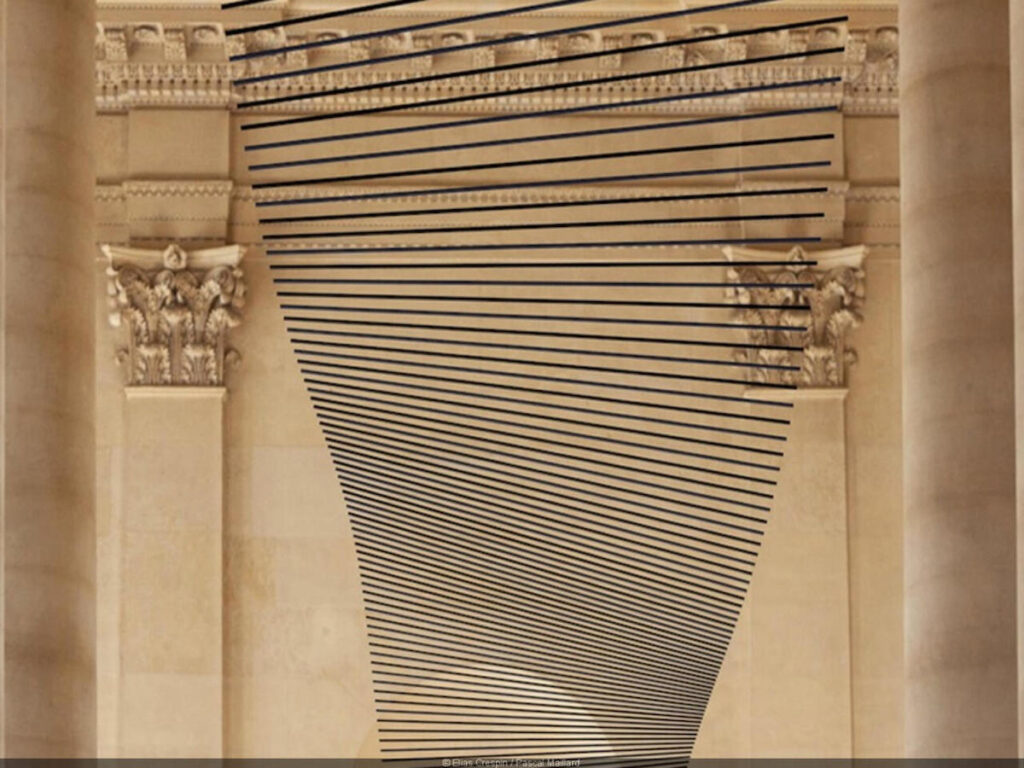
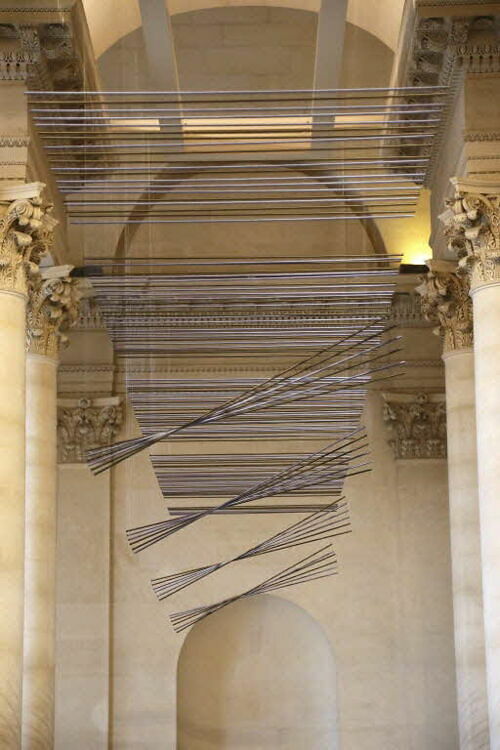
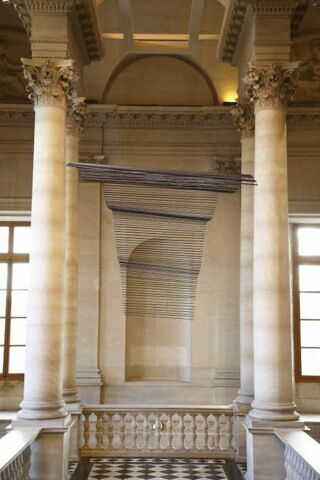
Sulle scale del Midi, L’Onde du Midi di Elias Crespin trasforma l’aria in uno strumento di precisione con un’installazione permanente inaugurata il 24 gennaio 2020, commissionata in occasione del trentesimo anniversario della Piramide. Centoventotto tubi di alluminio oscillano lentamente, mossi da algoritmi che disegnano traiettorie quasi invisibili, un’onda che attraversa lo spazio come un pensiero incarnato. Nel cuore di un palazzo concepito per celebrare l’immobilità del potere e della forma, Crespin introduce una grammatica del tempo: la pietra, attraversata dal movimento, diventa organismo respirante. L’eterno smette di opporsi al mutamento e ne diventa la misura più sottile – l’istante in cui la quiete si piega e vibra.
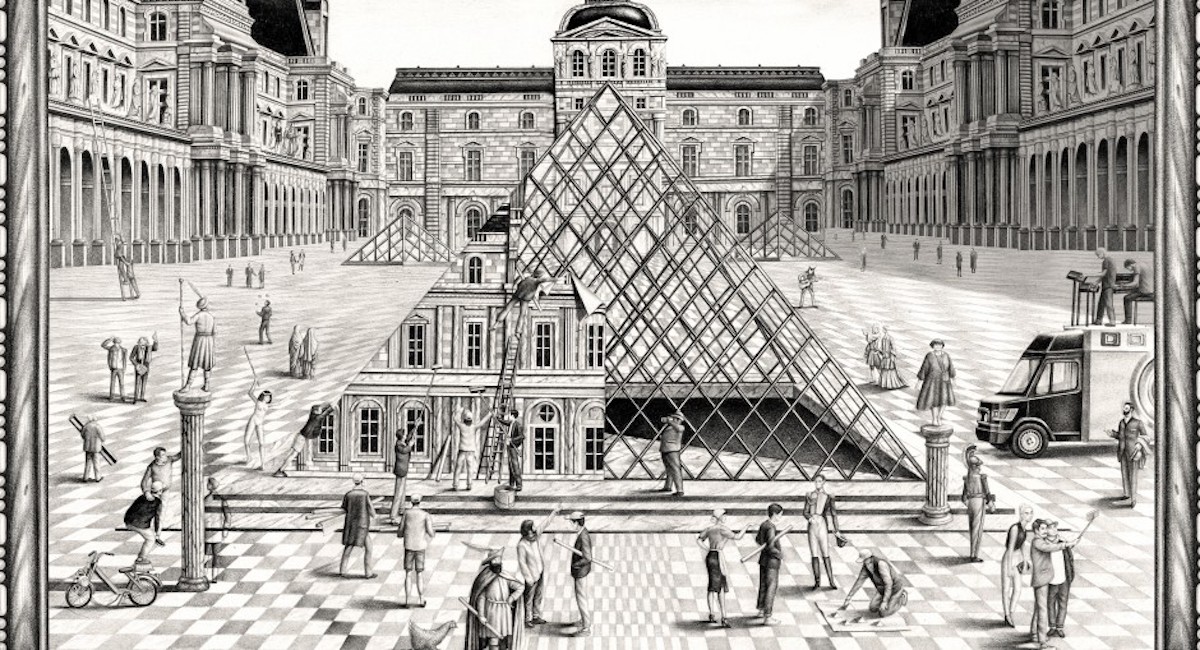
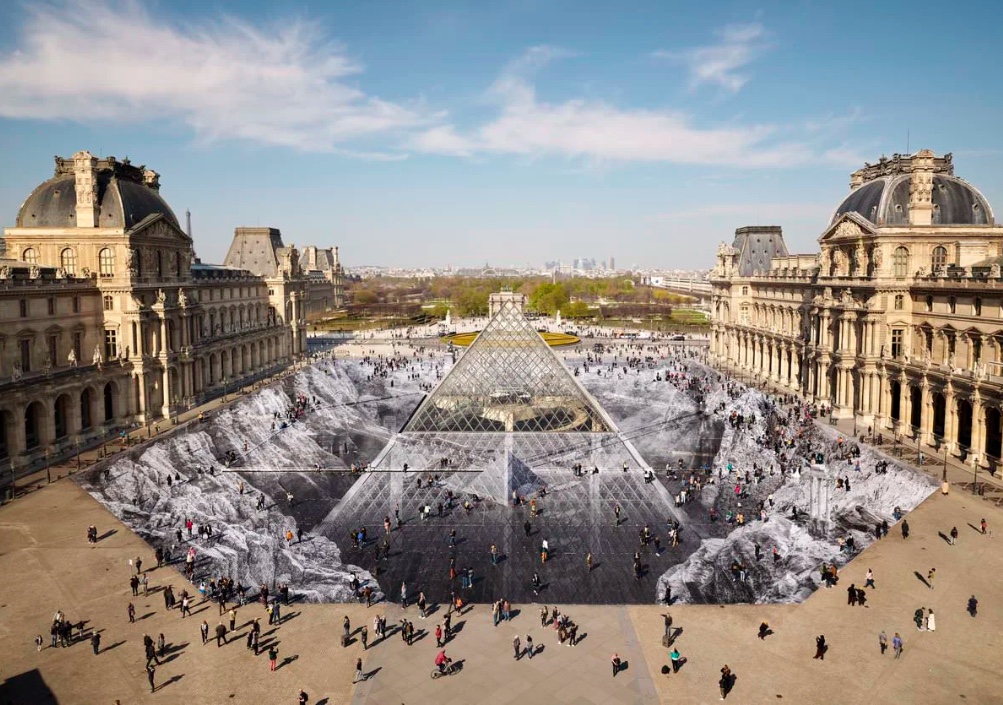
Nel 2016 e poi nel 2019, JR ha scelto di intervenire non all’interno delle sale, ma sulla superficie simbolica del museo: la Piramide stessa. Attraverso una gigantesca anamorfosi fotografica, l’artista ha fatto “scomparire” l’icona contemporanea del Louvre, dissolvendola in una continuità illusoria con la facciata storica retrostante. La Piramide non veniva distrutta, ma resa instabile, temporaneamente invisibile. Il gesto non era decorativo. Era percettivo. Il museo, abituato a custodire immagini, diventava esso stesso immagine manipolabile; la soglia non era più un confine stabile, ma un dispositivo ottico. Con JR, il Louvre esce nello spazio urbano globale, si offre alla fotografia, ai social network, alla circolazione immediata. Non più soltanto luogo di conservazione, ma superficie di proiezione. L’istituzione monumentale accetta di essere messa in gioco, di diventare esperienza condivisa, evento temporaneo.
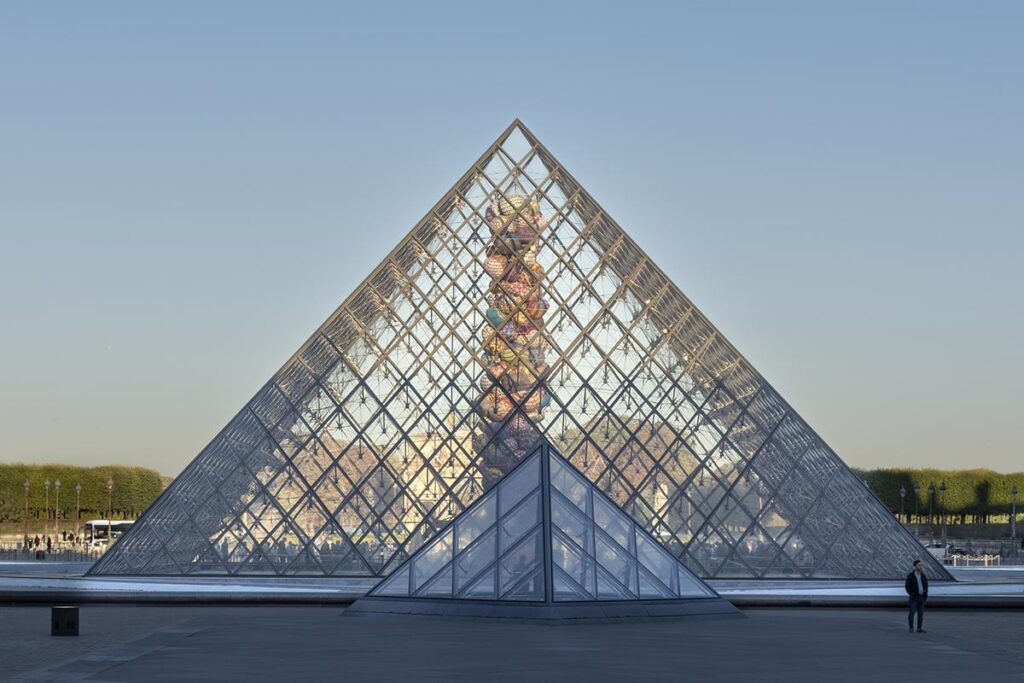
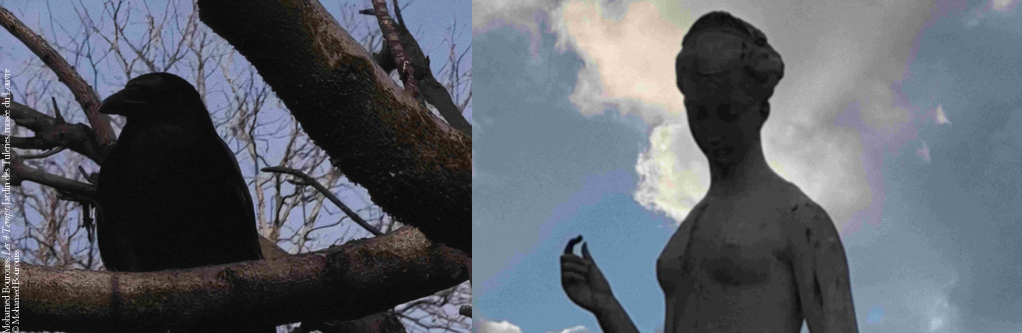
Invece, nell’ottobre del 2021, sotto la piramide di vetro Barthélémy Toguo innalza un Pilier des migrants disparus, in un momento di rinnovata attenzione alle questioni postcoloniali e alle migrazioni contemporanee. Fasci di stoffe colorate, valigie improvvisate, corde intrecciate come vene: un monumento effimero dedicato a chi non ha raggiunto la riva. Collocata nello spazio di passaggio, tra l’esterno e l’interno, l’opera non chiede contemplazione ma memoria. È una presenza umana che interrompe il flusso anonimo dei visitatori, un respiro trattenuto nel punto in cui la storia si mescola all’attualità. Lì dove il Louvre rappresenta l’Europa come patrimonio, Toguo restituisce alla pietra la sua fragilità, ricordando che ogni civiltà è anche un archivio di assenze. In questi stessi spazi, il Museo ha invitato Mohamed Bourouissa a misurare un’altra forma di durata: quella delle stagioni. Con Les 4 Temps (2025–2026), installazione presentata nell’Aile Sully, nella Salle de la Chapelle, l’artista ha trasformato un anno di osservazione del Jardin des Tuileries in un dispositivo visivo e sonoro. Per dodici mesi Bourouissa ha filmato il giardino in costante mutazione — luce, animali, passanti, giardinieri — pubblicando frammenti video che seguivano il ritmo naturale del tempo. Da questo archivio vivente è nata un’opera che intreccia musica composta a partire da suoni registrati in situ, messa in scena teatrale, scultura, disegno e video. Non si tratta soltanto di documentare le stagioni, ma di farle risuonare dentro il museo. La Chapelle, spazio storicamente carico di verticalità e raccoglimento, diventa camera di risonanza del paesaggio esterno. Attraverso la finestra si intravede la Cour Carrée e l’asse del museo; ma l’opera mette in relazione il presente vegetale con la memoria pittorica del Louvre — evocando implicitamente anche le Quattro Stagioni di Nicolas Poussin. Bourouissa costruisce ponti tra mondi: tra la propria storia personale e la storia dell’arte, tra la banlieue e il museo, tra l’interno monumentale e il giardino vivo. L’esposizione immersiva modifica luce e colori, offrendo un’esperienza che è insieme memoria e percezione.
Se Crespin ha introdotto il movimento nell’aria e Toguo ha inciso la soglia con la memoria dell’assenza, Bourouissa sposta l’attenzione sul ritmo. Il Louvre non custodisce soltanto oggetti: custodisce cicli. Non l’immobilità, ma il ritorno differente — come le stagioni che tornano senza essere mai le stesse.
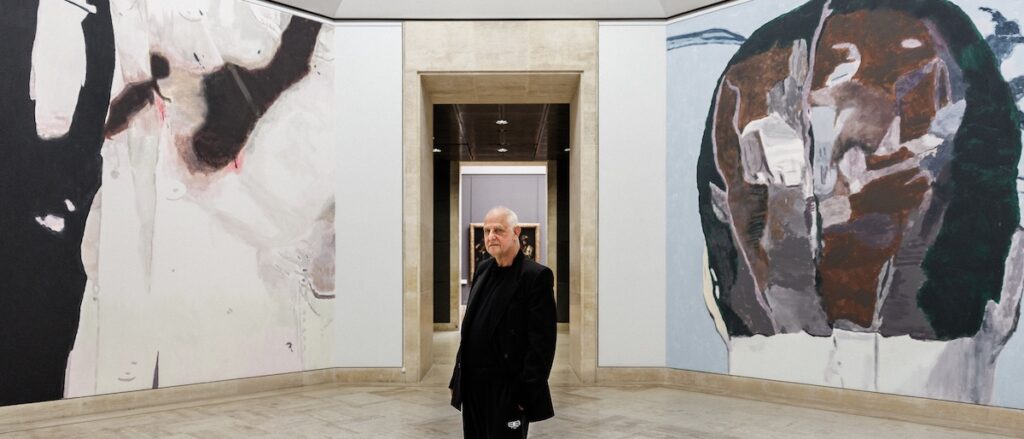
Nel 2024, nel cuore delle sale dedicate alla pittura del XVII secolo, Luc Tuymans riattiva un gesto che il Louvre sembrava aver consegnato al passato: dipingere direttamente sul muro. Non un decoro aggiunto alla storia, ma una presenza provvisoria. Quattro pannelli. Una tavolozza in corso di pulitura. Pigmenti che si dissolvono nell’acqua. E, come immagine conclusiva, la nuca di una bambola: testa senza volto, infanzia artificiale, identità voltata altrove. La bambola non guarda. Si offre di spalle. È figura privata di espressione, corpo che non restituisce lo sguardo. L’orfano non è qui soltanto chi ha perduto un padre: è l’immagine che ha perduto il proprio volto. Tuymans parla di “pittura di memoria e di trauma”. Nel Louvre, questa dichiarazione non è neutra. L’istituzione che organizza la storia in genealogie accoglie una figura senza filiazione. Una testa senza origine riconoscibile. Una pittura che non celebra l’atto, ma ne mostra il residuo. La tavolozza viene pulita. Il colore è ciò che resta dopo il quadro. Il gesto pittorico non costruisce monumentalità: consuma sé stesso. E poi la scomparsa. Dopo un anno, la fresque verrà ricoperta. La parete tornerà bianca. Il titolo — L’Orphelin — si carica allora di una vibrazione più sottile. L’orfano è ciò che sopravvive senza tutela. L’immagine che non può essere protetta dalla permanenza. L’infanzia senza genealogia. La memoria senza garanzia. Nel cuore del Louvre, la pittura diventa fragile per scelta. Non monumento, ma interruzione.
Non eredità, ma sospensione. Se Bourouissa ha lavorato sul ciclo che ritorna, Tuymans introduce l’eventualità della cancellazione. L’eterno non è ciò che dura, ma ciò che attraversa la possibilità di essere perduto.
Nella Cour Puget, Jean-Michel Othoniel ha collocato La Rose du Louvre (2019), un fiore di vetro e luce che sembra nascere dal cuore minerale del museo. Il suo gesto non impone, ma traduce: il vetro rifrange la luce del giorno come un respiro che attraversa le epoche. Il Louvre, che per secoli ha custodito la solidità della forma, lascia entrare il tremore, il riflesso, la possibilità che la bellezza si manifesti come trasparenza. In quel dialogo tra materia e luminosità, tra peso e leggerezza, il tempo trova una nuova misura: non l’eternità immobile delle statue, ma una durata percettiva che si rinnova a ogni sguardo.
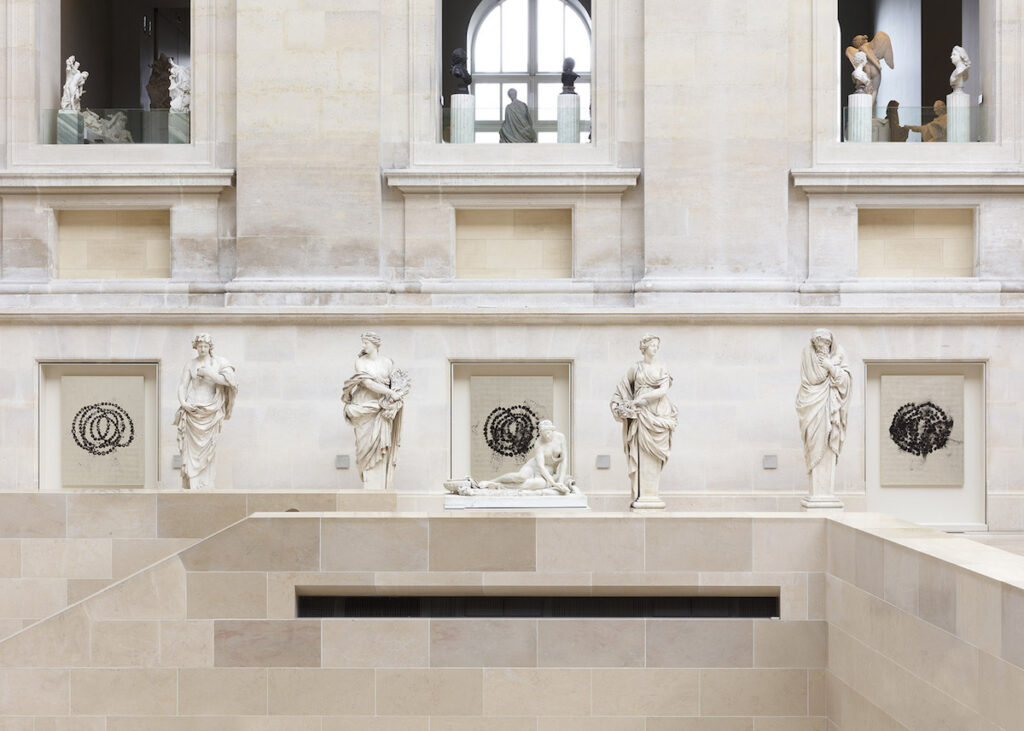
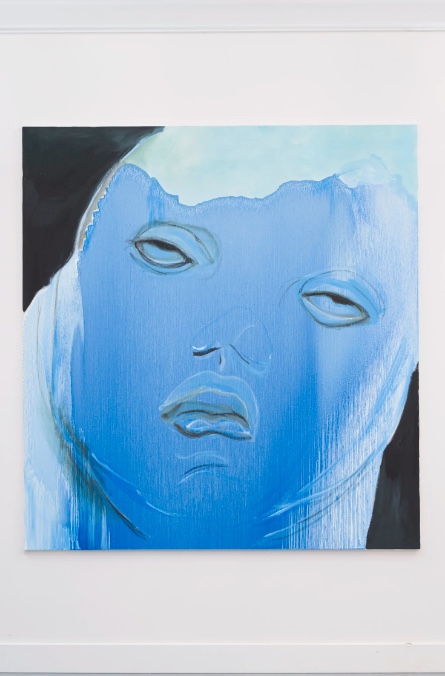
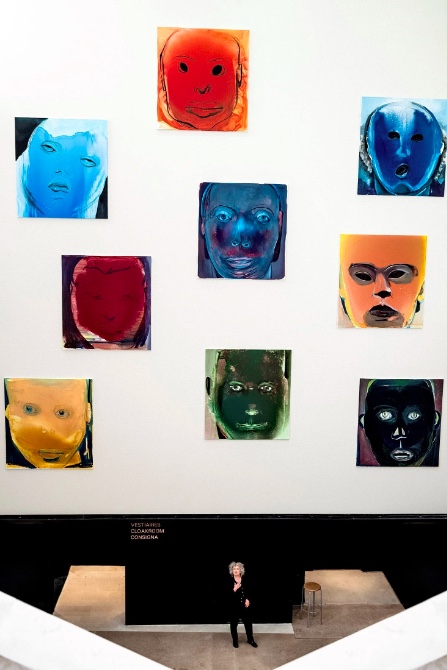
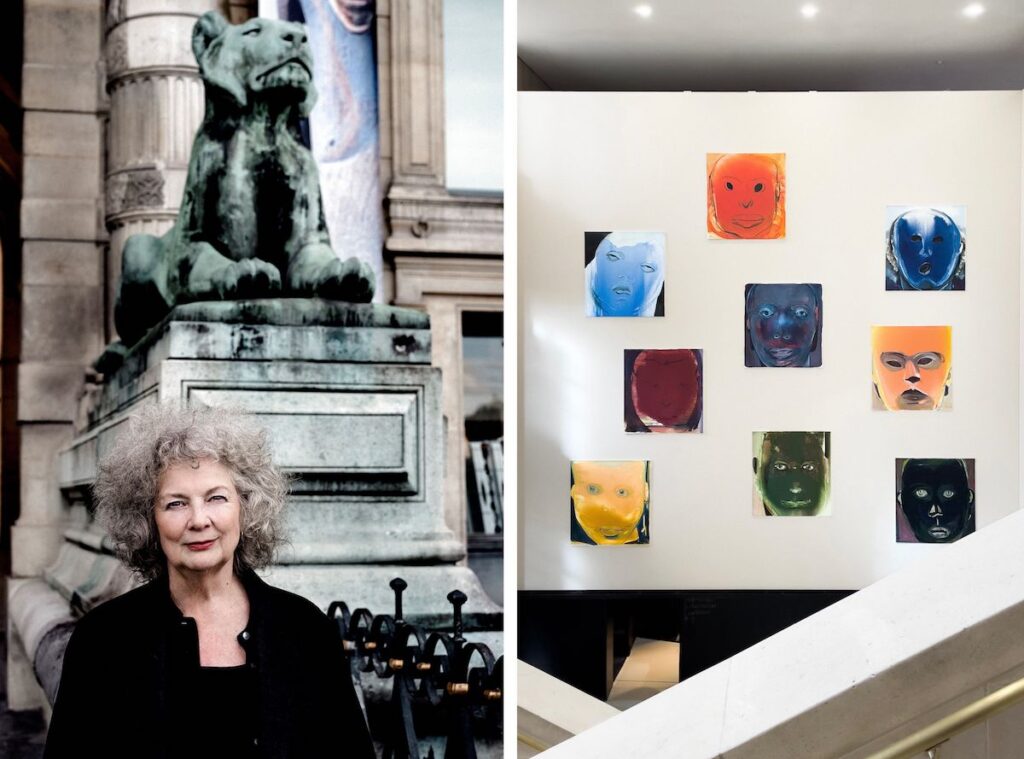
Quando il museo invita Marlene Dumas a concepire un’opera per la Porte des Lions, non le chiede semplicemente di occupare una parete: le affida una soglia. Liaisons (2025) nasce come intervento pensato alla scala del grande muro dell’atrio, calibrato sulle dimensioni dei bassorilievi marmorei che un tempo vi erano collocati. L’opera si inserisce così non solo nello spazio fisico del museo, ma nella sua stessa storia museografica: nella tradizione dei grandi decori, delle commissioni in situ, delle trasformazioni che hanno ridisegnato nel tempo il volto del Louvre. La Porte des Lions è luogo di passaggio tra la Galerie des Cinq Continents e il Dipartimento delle Pitture, a pochi passi dalla Grande Galerie. Collocare qui nove volti significa trasformare il transito in confronto. Non un ingresso, ma un faccia a faccia. Il titolo stesso, Liaisons, parola che vive sia in francese che in inglese, indica legami tra territori, tra persone, tra storie. Ma Dumas ne accentua la risonanza più ambigua: l’opera, come un corpo sensuale, tenta di sedurre lo sguardo, sapendo che ogni interpretazione la tradirà. I nove dipinti instaurano tra loro rapporti instabili; mutano carattere a seconda della distanza, dell’altezza, dell’opera che li affianca. Preferiscono suggerire piuttosto che definire. Custodiscono segreti.
I volti non sono ritratti. Sono apparizioni. L’artista stessa ammette di non sapere pienamente da dove provengano: sono frammenti di immagini viste, di memorie sedimentate, di ombre del presente. Non nascono da un unico luogo, ma da un intreccio di passato e attualità. In essi si avverte l’eco dei genocidi contemporanei, pur senza rappresentarli; si riconosce l’anonimato dei fuggitivi, dei marginalizzati, di coloro che vengono stigmatizzati come stranieri. Non sono eroi, né vittime esemplari. Sono figure dell’inconscio collettivo, attraversate da una temperatura cromatica che sembra provenire dai quattro elementi – terra, acqua, aria, fuoco. La pittura, per Dumas, non è mai preparazione o disegno preliminare: è fusione. Ogni tela nasce dal versamento di un colore diluito, da una colata che l’artista inclina e guida come un partner di danza in un gioco di caso e controllo. La superficie si comporta come pelle; le macchie restano irregolari; il volto emerge come evento. Questa fisicità non è tecnica, ma ontologica. Dipingere significa esorcizzare la paura, lottare tra libertà e destino. L’artista ha parlato del proprio lavoro come di una preghiera per ottenere protezione. In questo senso, Liaisons non è soltanto un ciclo di immagini, ma un rituale di attraversamento.
Il rapporto di Dumas con il Louvre non è episodico. Per anni ha citato, integrato, trasformato immagini provenienti dalle sue collezioni. Delacroix – i Massacres de Scio – le apparve un giorno non come pittore del passato, ma come contemporaneo. Il Louvre, per lei, è insieme storia della bellezza e storia delle inumanità occidentali; luogo di conservazione ma anche di conflitto. Inserire Liaisons in questo contesto significa riconoscere che la collezione non è un archivio chiuso, ma una trama di relazioni in continuo mutamento. Non è l’eternità dell’ideale, ma la persistenza del confronto.
In un gesto di rilevanza storica, un’opera di un’artista contemporanea entra stabilmente nelle collezioni del Louvre. Non come eccezione simbolica, ma come affermazione di una genealogia diversa che interviene sulla struttura invisibile del museo: la sua rete di legami. Non si custodiscono soltanto opere: si custodiscono relazioni tra i tempi. E Dumas, con i suoi volti che vibrano tra attrazione e inquietudine, ricorda che ogni museo è un luogo dove si parla agli stranieri — e ai morti. Ogni intervento contemporaneo è una variazione su questa misura. Non tenta di rompere il silenzio della pietra, ma di ascoltarne la frequenza: l’arte contemporanea, in questo contesto, non entra come visitatrice, ma come interprete.
Forse il Louvre è oggi un immenso pendolo: non misura il tempo per immobilizzarlo, ma per ascoltarne la vibrazione. L’antico e il contemporaneo non si fronteggiano; oscillano. Le pietre che sembravano compatte trattengono ancora il calore dei secoli, mentre le opere che nascono oggi si depositano come sedimenti futuri. Nel punto in cui la luce sfiora il marmo, ciò che è stato e ciò che accade si toccano senza confondersi.
L’eterno non si colloca altrove: si concentra. È l’istante in cui il tempo diventa percepibile a sé stesso — onda, bagliore, riflesso. Le opere non occupano lo spazio: lo percorrono.
Alla fine, la sua misura non è nei secoli abbracciati, ma in quel movimento d’aria, in quel vetro che si illumina, in quella figura che ci osserva. È lì che qualcosa continua — nonostante il tempo, nel tempo. La pietra, per un attimo, restituisce il suo fiato più lungo. E il presente, senza rumore, diventa antico.
A Place Called Centuries
Contemporary Art Projects at the Louvre
Before it became a museum, the Louvre was a fortress: a stone citadel built by Philip II of France in 1190 to protect Paris from northern invasions. Of that military origin, the moat remains, preserved in the underground galleries like an archaic echo that still underpins the entire structure. In the centuries that followed, the fortress became a royal residence, then a Renaissance palace, and later a Baroque court. Each dynasty altered its face, adding courtyards, wings, colonnades, galleries: a body in expansion that never ceased to transform. The Louvre is an architectural chronicle of power and desire, a masonry atlas upon which France inscribed its own idea of history.
Even its name retains a primal shadow. The etymology of Louvre is uncertain: it may derive from a Germanic root denoting a defensive tower; or from lupara, a place of wolves, a wild territory at the city’s edge. In either case, the name precedes the museum. It speaks of protection or threat, enclosure or forest. Before becoming a temple of universal art, the Louvre was bastion or margin, armed stone or untamed ground. Perhaps this is why its history has never been linear: within its very name survives a tension between guardianship and unrest, between order and primordial force.
In 1793, in the midst of the Revolution, the former royal palace was opened to the people and became the Muséum Central des Arts. From that moment on, the Louvre no longer belonged to a sovereign, but at once to the people and to the world. Its rooms no longer celebrated authority, but an idea of civilisation founded upon vision — upon the possibility of making visible what had once been reserved for the few. From this emerged the modern museum as a form of democracy of the gaze: the Louvre as a shared house of images, a place where representation becomes collective narrative.
In 1989, with the glass pyramid designed by I. M. Pei, the museum underwent another metamorphosis: transparency became the new threshold of time. That architectural gesture — much criticised then, deeply symbolic today — was not merely aesthetic, it was a declaration of principle: modernity can traverse history without destroying it. Light enters the heart of stone, and the stone, in turn, refracts it. It is this silent exchange that has allowed the Louvre to remain alive, to welcome the present into its monumental body.
In recent decades, this openness has gradually become structural; it did not emerge suddenly. As early as 2010, Cy Twombly had inscribed his gesture across the ceiling of the Salle des Bronzes, transforming the space into a vault traversed by names and constellations — a permanent intervention intertwining writing and painting, memory and abstraction. The ancient was not overwritten, but crossed by a script capable of reactivating its temporal depth.
Nine years later, with the major retrospective dedicated to Pierre Soulages, the Louvre welcomed outrenoir as a field of absolute light. Black not as negation, but as a surface that holds and returns the gaze. In that silent confrontation with Rembrandt and Poussin, the museum demonstrated that even the most radical painting can inhabit history without becoming a citation of the past.
In 2021, Anselm Kiefer brought his dense materials — lead, straw, ash — into dialogue with the museum’s architecture, reopening the question of history as stratification and ruin. If Twombly had worked on the lightness of the trace and Soulages on the vibration of the surface, Kiefer introduced weight, reminding us that every duration is also accumulation, wound, sediment.
In the transition from the long tenure of Henri Loyrette (2001–2013) to the directorship of Laurence des Cars, in office since 2021, the Louvre has not merely changed leadership: it has shifted from an idea of international expansion and global monumentality towards a more conscious reflection on its symbolic responsibility in the present. The museum has thus consolidated a sustained dialogue with contemporaneity: permanent commissions, temporary exhibitions, programmes such as Contrepoint and Carte Blanche, acquisitions of living artists.
This is not a matter of updating an institution. It is about redefining the very perception of permanence. Each contemporary work inserted among the ancient galleries — a wave, a rose, a face — does not constitute a rupture, but an active continuity, proof that time can become traversable matter. Thus, the Louvre no longer measures the eternal through centuries, but through relationships: between stone and light, memory and gesture, what remains and what transforms. Its greatness lies not only in the vastness of its collections, but in its capacity to hold the passage within itself, to let the immobility of form coexist with the vibration of the present. It is a museum that continues to question its own substance, asking how one might still, today, inhabit time. Among its stones, which seem to retain the memory of every epoch, the eternal is not a concept but a living material. Here time does not halt: it settles, refracts, changes state.
The contemporary interventions that have marked its spaces in recent years — from the kinetic waves of Elias Crespin to the glass roses of Jean-Michel Othoniel, from the pillar dedicated to disappeared migrants by Barthélémy Toguo to the canvases of Marlene Dumas now in the permanent collection — do not break the continuity of the place; they render it visible, like a pulse rising to the surface.
The Louvre no longer merely preserves the memory of art: it measures it, interrogates it, exposes it to the light of a present in perpetual transformation.
On the Escalier du Midi, L’Onde du Midi by Elias Crespin transforms air into an instrument of precision. This permanent installation, inaugurated on 24 January 2020 and commissioned to mark the thirtieth anniversary of the Pyramid, sets one hundred and twenty-eight aluminium tubes into slow oscillation. Driven by algorithms that trace almost invisible trajectories, they form a wave crossing the space like an embodied thought. At the heart of a palace conceived to celebrate the immobility of power and form, Crespin introduces a grammar of time: stone, traversed by movement, becomes a breathing organism. The eternal ceases to oppose change and becomes its most subtle measure — the instant in which stillness bends and vibrates.
In 2016 and again in 2019, JR chose to intervene not within the galleries but upon the museum’s symbolic surface: the Pyramid itself. Through a vast photographic anamorphosis, he made the Louvre’s contemporary icon “disappear”, dissolving it into an illusory continuity with the historic façade behind. The Pyramid was not destroyed, but destabilised — temporarily rendered invisible. The gesture was not decorative. It was perceptual. The museum, accustomed to safeguarding images, became itself a manipulable image; the threshold was no longer a stable boundary but an optical device. With JR, the Louvre steps into global urban space, offering itself to photography, to social media, to immediate circulation. No longer solely a site of conservation, it becomes a surface of projection. The monumental institution accepts being put into play, becoming shared experience, temporary event.
In October 2021, beneath the glass pyramid, Barthélémy Toguo erected Pilier des migrants disparus, at a moment of renewed attention to postcolonial questions and contemporary migration. Bundles of coloured fabrics, improvised suitcases, ropes intertwined like veins: an ephemeral monument dedicated to those who never reached the shore. Positioned in a space of passage, between exterior and interior, the work asks not for contemplation but for memory. It is a human presence interrupting the anonymous flow of visitors — a held breath at the point where history blends with actuality. Where the Louvre represents Europe as heritage, Toguo restores fragility to stone, reminding us that every civilisation is also an archive of absences.
In these same spaces, the museum invited Mohamed Bourouissa to measure another form of duration: that of the seasons. With Les 4 Temps (2025–2026), installed in the Aile Sully, in the Salle de la Chapelle, the artist transformed a year of observing the Jardin des Tuileries into a visual and sonic apparatus. For twelve months Bourouissa filmed the garden in constant mutation — light, animals, passers-by, gardeners — video fragments that followed the natural rhythm of time.
From this living archive emerged a work interweaving music composed from sounds recorded in situ, theatrical staging, sculpture, drawing and video. It is not merely a matter of documenting the seasons, but of allowing them to resonate within the museum. The Chapelle — historically charged with verticality and recollection — becomes a resonance chamber for the external landscape. Through the window one glimpses the Cour Carrée and the museum’s axis; yet the work relates the vegetal present to the Louvre’s pictorial memory, implicitly recalling the Four Seasons by Nicolas Poussin.
Bourouissa builds bridges between worlds: between his own personal history and art history, between the banlieue and the museum, between monumental interior and living garden. The immersive installation alters light and colour, offering an experience that is at once memory and perception.
If Crespin introduced movement into the air and Toguo inscribed the threshold with the memory of absence, Mohamed Bourouissa shifts attention towards rhythm. The Louvre does not safeguard objects alone; it safeguards cycles. Not immobility, but differential return — like the seasons that come back without ever being the same.
In 2024, within the galleries devoted to seventeenth-century painting, Luc Tuymans reactivates a gesture the Louvre seemed to have consigned to the past: painting directly onto the wall. Not a decoration added to history, but a provisional presence. Four panels. A palette in the process of being cleaned. Pigments dissolving in water. And, as a final image, the nape of a doll: a head without a face, artificial childhood, identity turned elsewhere.
The doll does not look. It offers its back. It is a figure deprived of expression, a body that does not return the gaze. The orphan here is not merely one who has lost a father; it is the image that has lost its own face. Tuymans speaks of a “painting of memory and trauma”. Within the Louvre, such a declaration is not neutral. The institution that organises history into genealogies receives a figure without filiation. A head without recognisable origin. A painting that does not celebrate the act but shows its residue. The palette is cleaned. Colour is what remains after the painting. The painterly gesture does not construct monumentality; it consumes itself. And then disappearance. After a year, the fresco will be covered. The wall will return to white. The title — L’Orphelin — acquires a subtler vibration. The orphan is that which survives without protection. The image that cannot be secured by permanence. Childhood without genealogy. Memory without guarantee. At the heart of the Louvre, painting becomes fragile by choice. Not monument, but interruption.
Not inheritance, but suspension. If Bourouissa worked with the cycle that returns, Tuymans introduces the possibility of erasure. The eternal is not what endures, but what passes through the possibility of being lost.
In the Cour Puget, Jean-Michel Othoniel installed La Rose du Louvre (2019), a flower of glass and light that seems to emerge from the museum’s mineral core. His gesture does not impose; it translates. The glass refracts daylight like a breath passing through epochs. The Louvre, which for centuries safeguarded the solidity of form, allows tremor, reflection, the possibility that beauty might manifest as transparency. In that dialogue between matter and luminosity, weight and lightness, time finds a new measure: not the immobile eternity of statues, but a perceptual duration renewed with each glance.
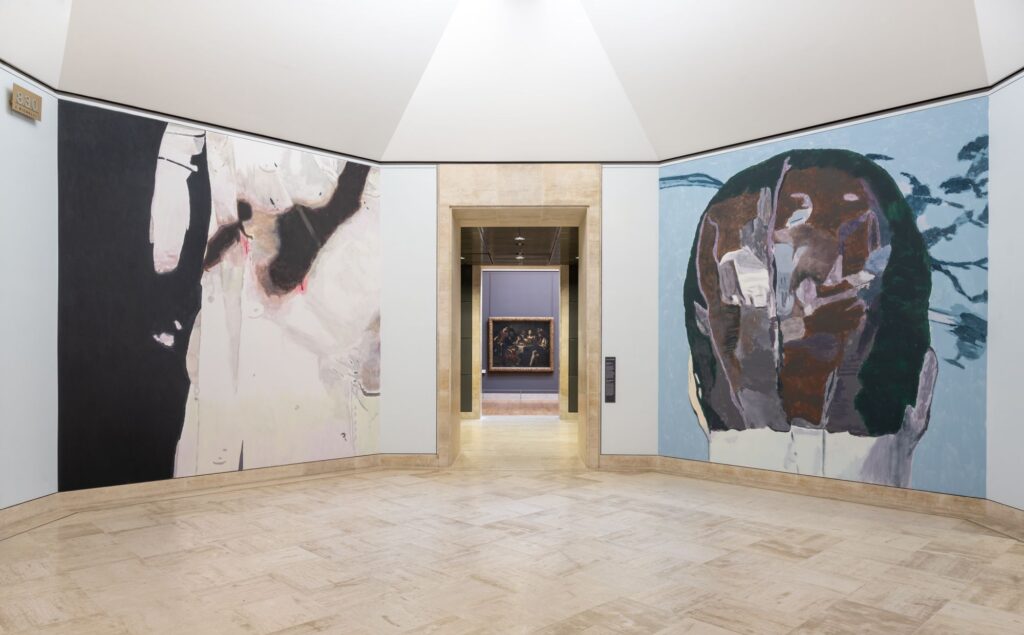
In 2025, the Louvre acquired and presented Liaisons, a cycle of paintings by Marlene Dumas conceived in dialogue with the museum’s collections. The gesture marked a significant and long-awaited expansion of the institution’s contemporary horizon, opening its historical galleries to a voice that confronts the canon from within. The work was conceived at the scale of the great atrium wall, calibrated to the dimensions of the marble bas-reliefs once installed there. It thus inscribes itself not only within the museum’s physical space, but within its museographic history: in the tradition of grand decorations, in situ commissions, and transformations that have repeatedly redrawn the Louvre’s face.
The Porte des Lions is a place of passage between the Galerie des Cinq Continents and the Department of Paintings, a few steps from the Grande Galerie. To place nine faces here is to transform transit into confrontation. Not an entrance, but a face-to-face. The very title, Liaisons — a word that lives in both French and English — signals connections between territories, between persons, between histories. Yet Dumas heightens its more ambiguous resonance: the work, like a sensual body, attempts to seduce the gaze, knowing that every interpretation will betray it.
The nine paintings establish unstable relations among themselves; they change character according to distance, height, and the works beside them. They prefer to suggest rather than define. They guard secrets.
The faces are not portraits. They are apparitions. The artist herself admits she does not fully know where they come from: they are fragments of images seen, sedimented memories, shadows of the present. They do not arise from a single place, but from an entanglement of past and actuality. In them one senses the echo of contemporary genocides, without these being represented; one recognises the anonymity of fugitives, of the marginalised, of those stigmatised as strangers. They are neither heroes nor exemplary victims. They are figures of the collective unconscious, traversed by a chromatic temperature that seems to emanate from the four elements — earth, water, air, fire.
For Marlene Dumas, painting is never preparation or preliminary drawing: it is fusion. Each canvas begins with the pouring of diluted colour, a flow the artist tilts and guides like a dance partner in a play between chance and control. The surface behaves like skin; the stains remain irregular; the face emerges as event. This physicality is not technical but ontological. To paint is to exorcise fear, to struggle between freedom and destiny. The artist has spoken of her work as a prayer for protection. In this sense, Liaisons is not merely a cycle of images, but a ritual of passage.
Dumas’s relationship with the Louvre is not episodic. For years she has cited, integrated, transformed images drawn from its collections. Eugène Delacroix — The Massacres at Chios — once appeared to her not as a painter of the past, but as a contemporary. For her, the Louvre is at once a history of beauty and a history of Western inhumanities; a place of preservation, yet also of conflict. To insert Liaisons into this context is to recognise that the collection is not a closed archive, but a web of relations in constant transformation. It is not the eternity of the ideal, but the persistence of confrontation.
In a gesture of historic significance, a contemporary woman artist enters the Louvre’s permanent collection. Not as a symbolic exception, but as the affirmation of a different genealogy intervening within the museum’s invisible structure: its network of ties. What is safeguarded are not works alone, but relations between times. And Dumas, with her faces vibrating between attraction and unease, reminds us that every museum is a place where one speaks to strangers — and to the dead. Each contemporary intervention is a variation upon this measure. It does not attempt to break the silence of stone, but to listen to its frequency: contemporary art, in this context, enters not as a visitor, but as an interpreter.
Perhaps the Louvre is today an immense pendulum: it does not measure time in order to immobilise it, but to hear its vibration. The ancient and the contemporary do not confront one another; they oscillate. Stones that once seemed compact still retain the warmth of centuries, while works created today settle like future sediments. At the point where light grazes marble, what has been and what unfolds touch without merging.
The eternal is not located elsewhere; it concentrates. It is the instant in which time becomes perceptible to itself — wave, glimmer, reflection. The works do not occupy space; they traverse it.
In the end, its measure lies not in the centuries it encompasses, but in that movement of air, that glass catching the light, that figure watching us. It is there that something continues — despite time, within time. For a moment, stone releases its longest breath. And the present, without noise, becomes ancient.