English text below —
Testo di Alissia Lucini e Gaspar Ozur —
Ipnotico, macchinico, rifinito. Weaving Anni Albers è un film che restituisce al pubblico del design e delle arti la consapevolezza che la tessitura non sia un’arte minore o da “sissies”, ma piuttosto una meccanica quantistica divina. Dedicato al “fare poetico”, Weaving Anni Albers si distingue per il formato 4:3 e per un’attenzione maniacale ai dettagli, cifra stilistica del regista e produttore italo-rumeno Alessandro Del Vigna che costruisce, in poco più di nove minuti, un dispositivo audiovisivo in cui immagine, suono e materia operano organicamente, restituendo la profondità teorica del pensiero di Anni Albers.
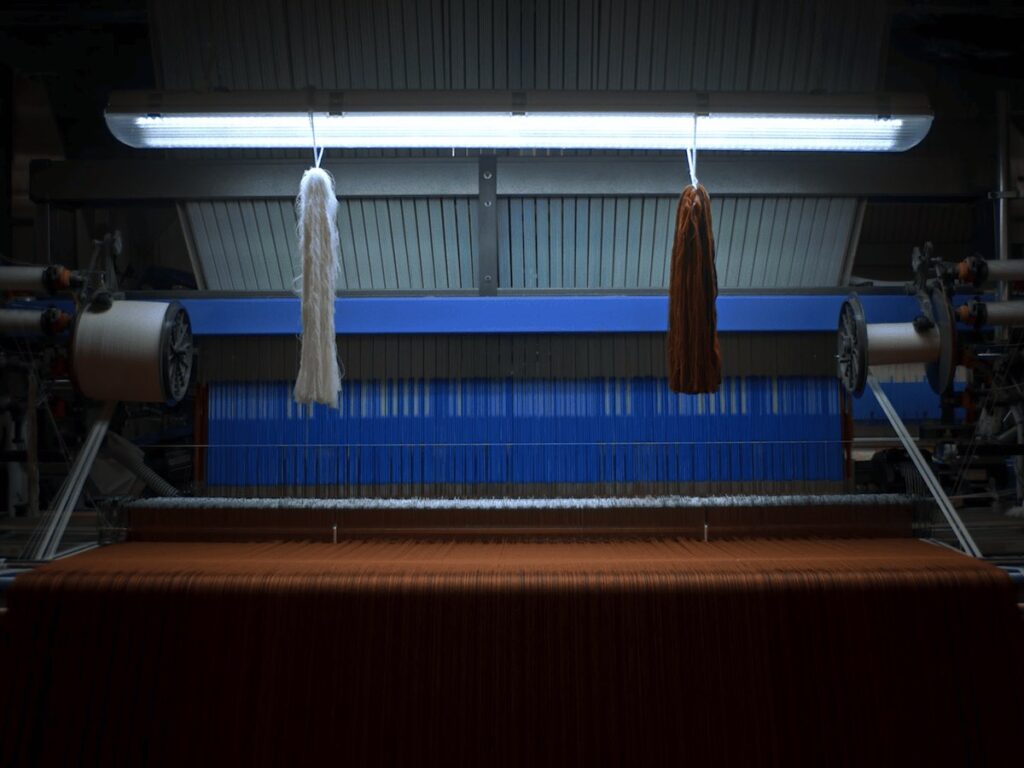
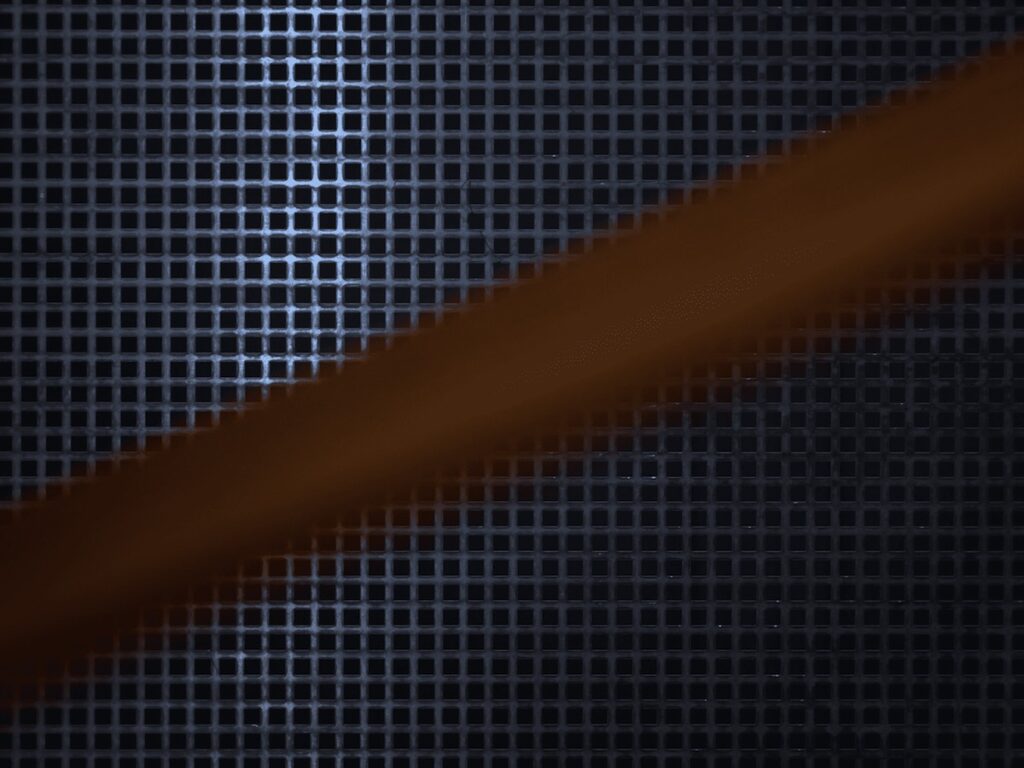
Lontano dalla retorica espansiva del wide screen, Del Vigna avvolge lo spazio retinico con un incessante lavorio di telai, un fluire materico che si ripete fino all’astrazione e in cui l’innervamento ottico (in senso benjaminiano) si compie nella purezza dell’immagine riquadrata. A compimento di questa armonia percettiva, il cortometraggio è accompagnato dalla voce suadente dell’attrice britannica Greta Bellamacina, che lavora per stratificazione ritmica e timbrica, inscrivendosi nel movimento incalzante delle immagini senza però assumere un ruolo didascalico. La soundtrack della compositrice rumena Simina Oprescu, inoltre, rafforza questa esperienza sinestetica, lavorando sul timbro acustico come amplificatore della dimensione tattile dell’ascolto, rendendo il suono una vera estensione della materia visiva e inserendo questo contributo filmico al crocevia tra cinema documentario e videoarte.
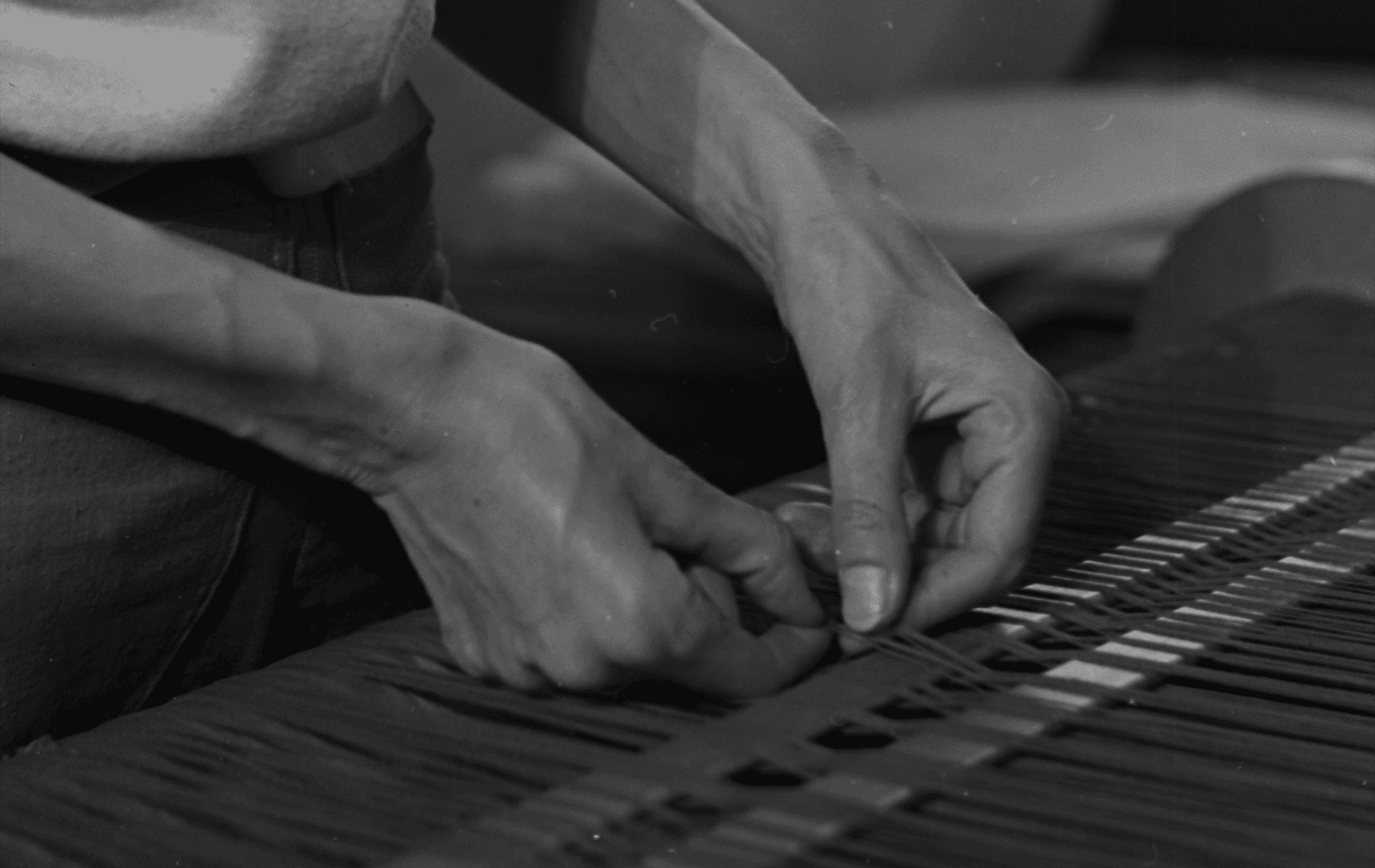
Weaving Anni Albers è un film che si fa materia: carne, filo, mano che sfiora sensualmente il tessuto creando una relazione diretta con il suono e il tempo del montaggio. L’immagine in movimento quasi scolpisce e muove l’animo in un sussulto vibratorio; i fili “molli”, addirittura detestati da Albers nei suoi primi anni al Bauhaus (dove fu relegata alla classe di tessitura in quanto donna), assumono forme ramificate, architettoniche, quasi mitologiche. In questo senso il film intercetta il nucleo teorico espresso dalla Albers in On Weaving, dove la tessitura viene intesa come pratica conoscitiva, capace di tradurre un ordine cosmico insito nella materia, in una struttura espressivo-visuale.
I tessuti peruviani antichi – fonte primaria di ispirazione per Albers – diventano così una chiave di lettura imprescindibile per comprendere l’opera di quella che può essere considerata la textile artist del XX secolo. Non come repertorio formale o suggestione esotica, ma come sistema di pensiero: una lingua originaria in cui la natura inscrive la propria grammatica nella materia, chiedendo di essere ascoltata prima che formata, mai dominata.
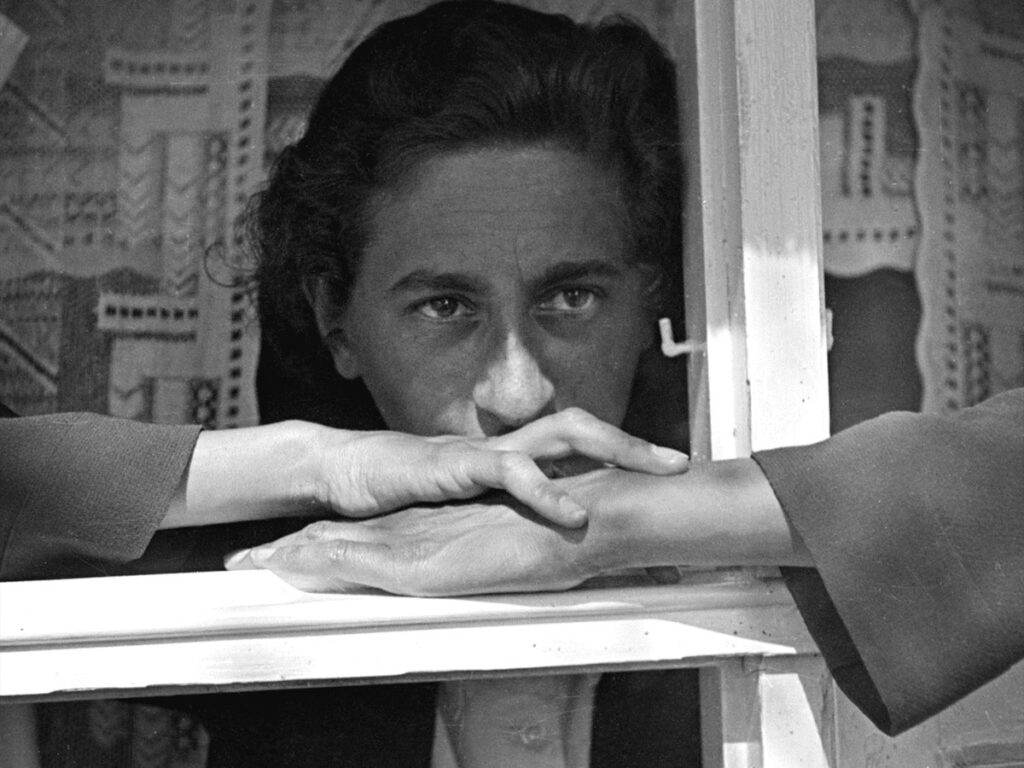
In questo processo, Albers si fa studiosa, interprete e chiarificatrice di un sapere antico, traducendo tecniche e strutture arcaiche in un linguaggio capace di attraversare il tempo. Il film assume questa postura come metodo e, al contempo, come monito: un memorandum rivolto ai molti giovani artisti che, in epoca di revival, credono di aver scoperto un presunto “nuovo” attraverso la scultura tessile. Weaving Anni Albers ricorda invece che abbiamo memoria, che siamo naufraghi in un mare di fili da intessere, impulso costante al creare e al dare forma al senso.
Un film trasversale, capace di incrinare la narrativa semplificata da primo anno di Storia dell’Arte, che continua a privilegiare i grandi nomi dei Bauhaus e del Black Mountain College, spesso mitizzati più che realmente interrogati. Weaving Anni Albers procede invece per intrecci, restituendo centralità al fare e al tempo lungo del tessere. In questa prospettiva, la figura di Albers assume insieme i tratti di una Penelope contemporanea e nuovo eroe, una Gorgone che mai si fa decapitare da Perseo, né violare da Poseidone, un mito giustamente inverso, gentile, in cui l’eroismo non passa dall’atto violento, ma dalla persistenza del lavoro e dalla sensibilità della memoria.
Non è casuale la selezione del film da parte de Lo Schermo dell’Arte di Firenze e del Maysles Documentary Center di New York, che hanno riconosciuto il valore del contributo filmico dalla qualità formale e della natura ibrida. Weaving Anni Albers è un’opera che abita pienamente il cinema, ma che trova il suo senso più profondo nel dialogo con la storia dell’arte, del design e delle tecniche, offrendo un contributo artistico e documentario prezioso su una figura femminile a lungo marginalizzata dai canoni disciplinari.
Il cortometraggio a firma Del Vigna è stato presentato durante la Design Week di Milano all’interno dell’allestimento prezioso di Dedar, mostra dedicata ad Anni Albers, progettato e concepito in dialogo con lo spazio espositivo e urbano della Torre Velasca e realizzato in collaborazione con la Josef e Anni Albers Foundation. Installato su più monitor Antarex e in una sala dedicata, Weaving Anni Albers ha abitato poeticamente gli spazi della torre generando un’esperienza sinestetica in cui l’architettura storica della città -dalle architetture medievali al gotico lombardo- sembrava riflettersi e insinuarsi nelle pieghe moderniste del progetto BBPR.
Buona la prima: un esordio convincente che restituisce una visione coerente e rigorosa, rispettosa della figura straordinaria di Anni Albers. Un film che intreccia cinema, arte, design e materia in un unico gesto poetico, ricordandoci che ogni forma creativa nasce dal confronto con ciò che è complesso e intricato. In un presente che consuma immagini e gesti senza sedimentazione, resta l’urgenza di comprendere se siamo ancora disposti a sostare nell’ascolto della materia, accettandone il tempo, la resistenza e la memoria che essa custodisce.
Listening to matter | On Weaving Anni Albersby Alessandro Del Vigna
Text by Alissia Lucini and Gaspar Ozur —
Hypnotic, machinic, refined. Weaving Anni Albers is a film that offers audiences in design and the arts an awareness that weaving is neither a minor art nor a pursuit for “sissies”, but rather a kind of divine quantum mechanics. Exploring the poetic act of making, Weaving Anni Albers stands out for its 4:3 format and meticulous attention to detail, in the style of Italian-Romanian director and producer Alessandro Del Vigna who in nine minutes builds an audiovisual device in which image, sound, and matter operate organically, conveying the theoretical depth of Anni Albers’s thought.
Far from the expansive rhetoric of widescreen, Del Vigna envelops the retinal space with the incessant labor of looms, a material flow that repeats itself until abstraction, in which optical innervation (in the Benjaminian sense) is fulfilled in the purity of the framed image. Completing this perceptual harmony, the short film is accompanied by the sensual voice of British actress Greta Bellamacina, who works through rhythmic and timbral layering, inscribing herself into the driving movement of the images without ever assuming a didactic tone. The soundtrack by Romanian composer Simina Oprescu further reinforces this synesthetic experience, working on acoustic timbre as an amplifier of the tactile dimension of listening, making sound a true extension of visual matter and placing this filmic contribution at the crossroads of documentary and video art.
Weaving Anni Albers is a film that becomes matter: flesh, thread, a hand that sensually caresses the fabric, creating a direct relationship with sound and the pace of editing. The moving image almost sculpts and stirs the soul in a vibratory jolt; the “soft” threads – detested by Albers in her early years at the Bauhaus (where she was relegated to the weaving workshop because she was a woman) – take on branched, architectural, almost mythological forms.
In this sense, the film intercepts the theoretical core articulated by Albers in On Weaving, where weaving is understood as a cognitive practice, capable of translating a cosmic order inherent in matter into an expressive-visual structure.
Ancient Peruvian textiles -Albers’s first source of inspiration- thus become an indispensable key to understanding the work of what may be considered the twentieth century’s textile artist par excellence. Not as a formal repertoire or exotic suggestion, but as a system of thought: an original language in which nature inscribes its own grammar into matter, asking to be listened to before being shaped, never dominated.
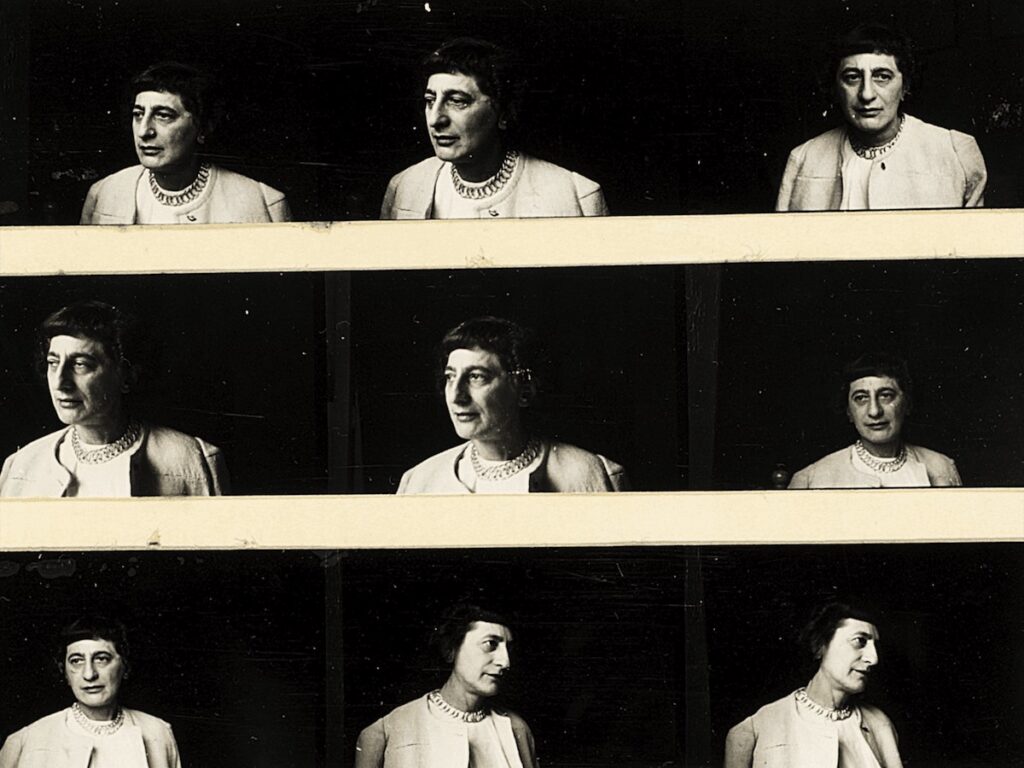
In this process, Albers becomes an interpreter and clarifier of an ancient knowledge, translating archaic techniques and structures into a language capable of traversing time.
The film adopts this stance both as method and as warning: a memorandum addressed to the many young artists who, in an era of revival, believe they have discovered something supposedly “new” through textile sculpture. Weaving Anni Albers instead reminds us that we have memory, that we are castaways in a sea of threads to be woven -an ongoing impulse to create and to give form to meaning.
A transversal film that disrupts the simplified narratives of introductory Art History courses, which continue to privilege the great names of the Bauhaus and Black Mountain College -figures too often mythologized rather than critically examined. Weaving Anni Albers proceeds instead through interlacings, restoring centrality to making and to the long duration of weaving. From this perspective, the figure of Anni Albers takes on the traits of both a contemporary Penelope and a new kind of hero: a Gorgon who is never beheaded by Perseus, nor violated by Poseidon -a rightly inverted, gentle myth, in which heroism does not pass through violent action, but through the persistence of labor and the sensitivity of memory.
It is no coincidence that the film was selected by Lo Schermo dell’Arte in Florence and the Maysles Documentary Center in New York, both of which recognized the value of a filmic contribution of strong formal quality and hybrid nature. Weaving Anni Albers is a work that fully inhabits the cinema, yet finds its deepest meaning in dialogue with the history of art, design, and techniques, offering a precious artistic contribution on a female figure long marginalized by disciplinary canons.
Del Vigna’s short film was first presented during Milan Design Week within Dedar’s remarkable exhibition dedicated to Anni Albers, designed and conceived in dialogue with the exhibition and urban space of Torre Velasca and realized in collaboration with the Josef and Anni Albers Foundation. Installed across multiple Antarex monitors and in a dedicated screening room, the short film poetically inhabited the spaces of the Torre, generating a synesthetic experience in which the city’s historic architecture -from medieval structures to Milanese Gothic- seemed to be reflected and to insinuate itself into the modernist folds of the BBPR project.
A strong debut: a convincing first film that offers a coherent and rigorous vision, respectful of the extraordinary figure of Anni Albers. A piece that interweaves cinema, art, design, and matter into a single poetic gesture, reminding us that every creative form is born from an encounter with what is complex and intricate.
In a present that consumes images and gestures without proper sedimentation, what remains urgent is to ask whether we are still willing to dwell in listening to matter, accepting its time, its resistance, and the memory it holds.
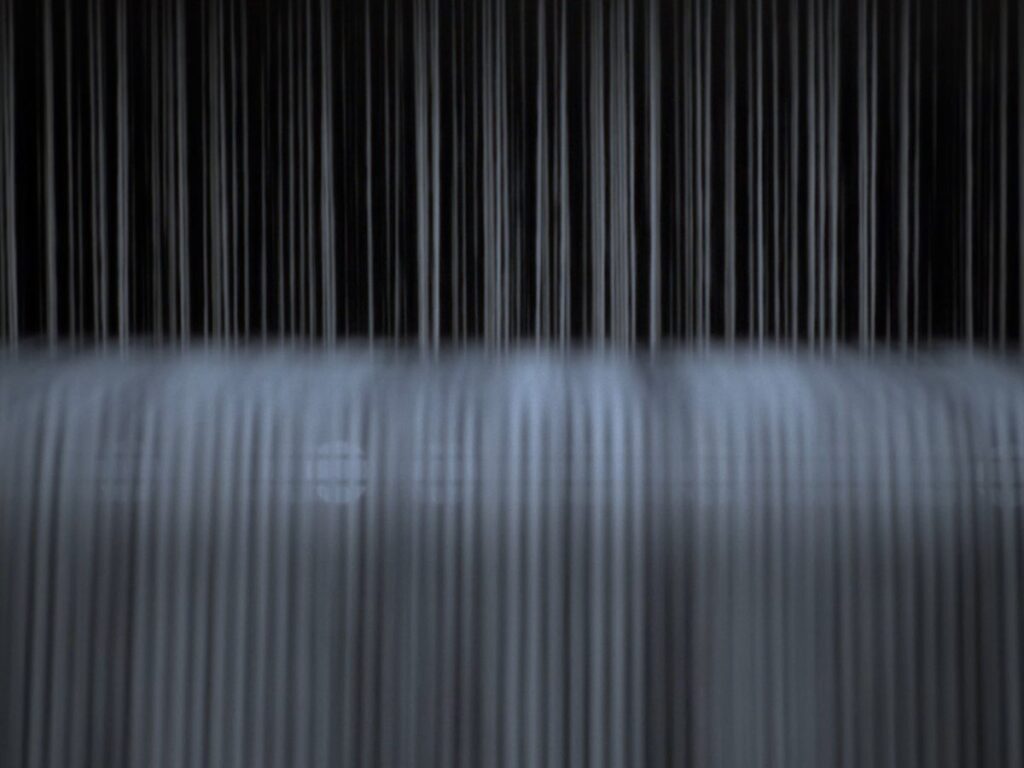
Weaving Anni Albers
Directed by: Alessandro Del Vigna
Produced by: Raffaele Fabrizio, Caterina Fabrizio, Riccardo Annoni
Production company: Dedar, Start in collaboration with The Josef and Anni Albers Foundation
Cast: Greta Bellamacina (v.o.)
Written by: Giacomo Zibardi
Director of Photography: Jacopo Mutti
Edited by: Davide Curto
Music by: Simina Oprescu
Running time: 10 minutes
Festivals:
30th Ji.hlava International Documentary Film Festival (Competition).
Lo Schermo dell’arte 2025.
Les Films de Cannes à Bucarest 2025.
Maysles Documentary Center New York 2026 (US Premiere)