English text below —
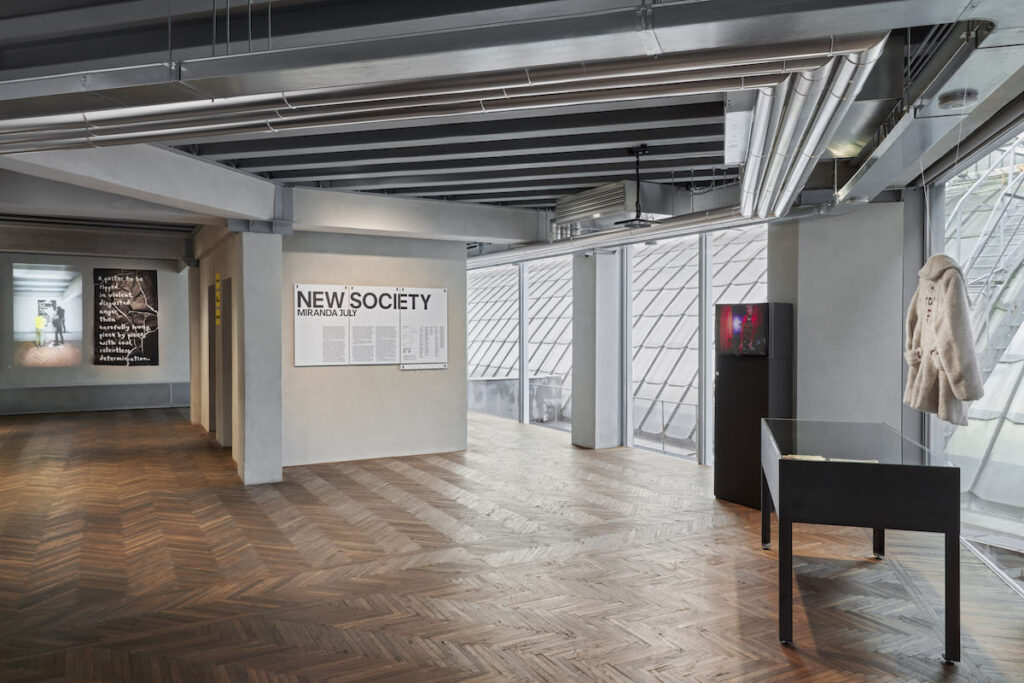
Miranda July è un incontro inaspettato. Perché è imprevedibile. È un’altra. Come un’attrice liberata nel mondo reale, un copione dimenticato su una seduta in metropolitana. Ha una voce strana e capelli ricci. Faceva performance in cui parlava e ballava in maniera libera e imbarazzante in alcuni locali punk americani. Anche se è nata negli States e penso viva a L.A. e nelle sue storie la provincia americana ha una certa rilevanza, ha portato quell’attitudine altrove, raccontando storie improbabili in modi e luoghi fuori dall’ordinario. È anche una scrittrice. Spesso i suoi racconti sono scritti in prima persona e chi si narra ha un’attenzione focalizzata che dura solo una manciata di secondi per poi correre altrove. Un amico mi ha detto che Miranda July è sposata con il regista Mike Mills. Ne abbiamo parlato perché credevo che fosse lesbica, siccome nei suoi sketch a volte cita la sua ragazza o dice di aver fatto sesso con alcune signore a teatro, come in New Society, il pezzo teatrale riprodotto in video all’Osservatorio Prada, nella mostra monografica che le ha curato Mia Locks.
Se vuoi parlare a Miranda July, puoi cercare di farlo chiamandola al (833)526-8880, la sua Hotline prodotta da Prada. Forse stava già pensando di creare qualcosa di simile quando in La veranda comune aveva scritto: “Se siete tristi, chiedetevi perché siete tristi. Poi alzate il telefono, chiamate qualcuno e comunicategli la risposta. Se non conoscete nessuno, chiamate l’operatore e raccontatelo a lui, o a lei. La maggior parte della gente non sa che l’operatore deve ascoltare, per legge”. O forse ci ha pensato Prada leggendo quel paragrafo.
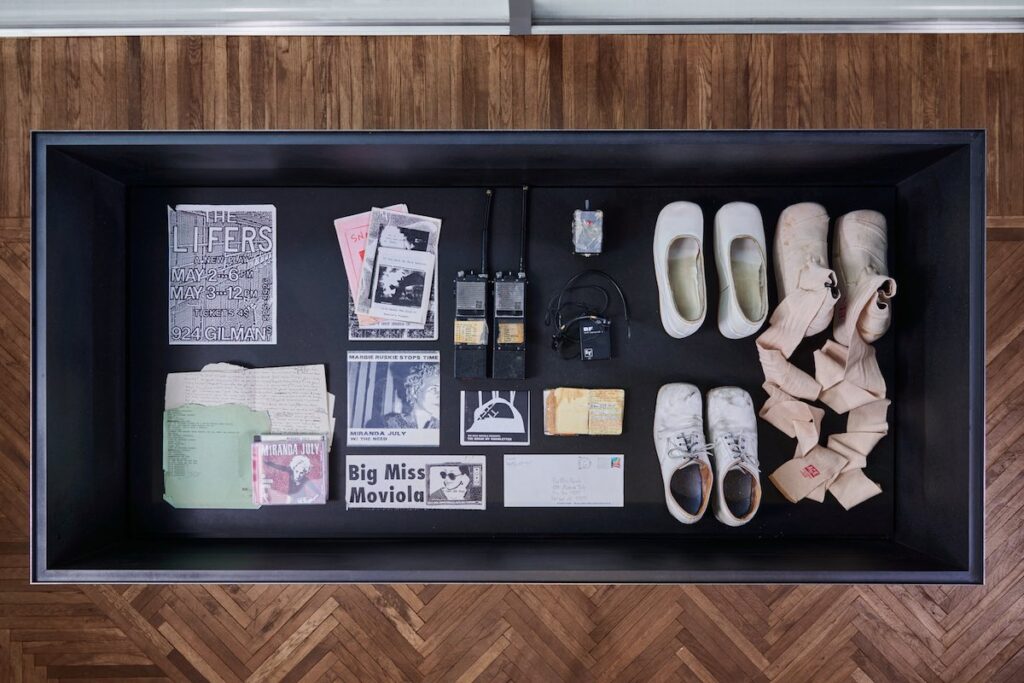
Una volta ha pensato e scritto: “Realizza un abito da bambino in una taglia da adulto (e fotografati mentre lo indossi)”. Questa istruzione è diventata il Compito n. 1 di Learning to Love You More (2002-2009), un progetto online (http://learningtoloveyoumore.com/) e offline in cui ha raccolto i lavori realizzati da persone qualsiasi, che hanno intercettato i compiti assegnati da lei e Harrell Fletcher. Al secondo piano dell’Osservatorio Prada c’è un esempio di “compito”, il n° 43, che una signora milanese ha portato a termine: “Realizza una mostra con le opere che trovi a casa dei tuoi genitori”. La signora Miriam Goi è stata fortunata perché Miranda July l’ha trovata cercando su Instagram (credo, forse è un racconto inventato a cui ho creduto) e ha deciso che nel museo avrebbe esposto gli oggetti della casa in cui Miriam era stata bambina. Credo che molte persone si sentano più fortunate nel non mostrare questo tipo di oggetti, perché sono intimi e potrebbero raccontare un condizionamento estetico. Insomma, potrebbero essere oggetti molto imbarazzanti, soprattutto per chi cerca di darsi un tono o di sembrare professionale nel mondo dell’arte. Io, per esempio, mi vergognerei di mostrare i grumi emotivi della mia eredità antiartistica.
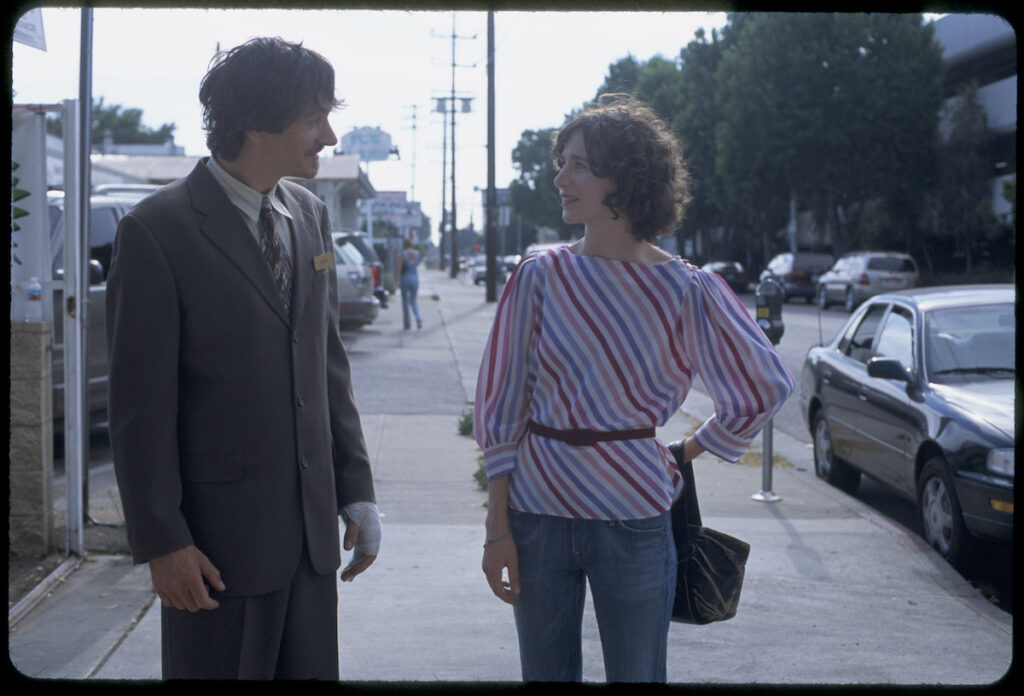
Il mio amico mi ha detto anche che Miranda July ama la propria camera da letto. Un po’ l’avevo intuito guardando Me and You and Everyone We Know (2005), che è un film bizzarro, personale e toccante e utilizza ))<>(( come simbolo prorompente della perversione di una curatrice.
Se fossi andata a teatro a vedere New Society (2015), sarei diventata un’abitante della nuova società fondata da Miranda July. Per creare questa nuova sorta di Stato ha indossato un pantalone nero e una camicia verde e chiuso il pubblico dentro a un teatro senza che nessuno se ne accorgesse. Anzi, ha indossato tre pantaloni neri e otto camicie verdi, perché ha dovuto ritestare in vari teatri che la cosa funzionasse. Nel pubblico avrei incontrato anche Guy Debord, se fosse stato ancora vivo e avesse avuto senso dell’umorismo. Magari avrebbe voluto diventarne sindaco. Durante lo spettacolo l’avrei vista cercare tra il pubblico qualcuno che suonasse l’inno della nuova società (e non avrei potuto essere io, perché non so suonare il pianoforte), una persona che disegnasse una bandiera, dei soccorritori che avremmo riconosciuto, perché avrebbero avuto legato al braccio un pezzo di stoffa strappato dalla camicia verde di July. Sarei rimasta chiusa nel teatro per oltre vent’anni e avrei vissuto senza utilizzare denaro; quindi, non avrei dovuto lavorare e fare altre cose. Poi il ronzio di vita nel teatro si sarebbe spento e sarei tornata al mio posto, aspettando la fine dello spettacolo. Forse morire nella società dello spettacolo sarà un po’ come uscire dalla New Society. Magari senza il voice over che a lei piace tanto.
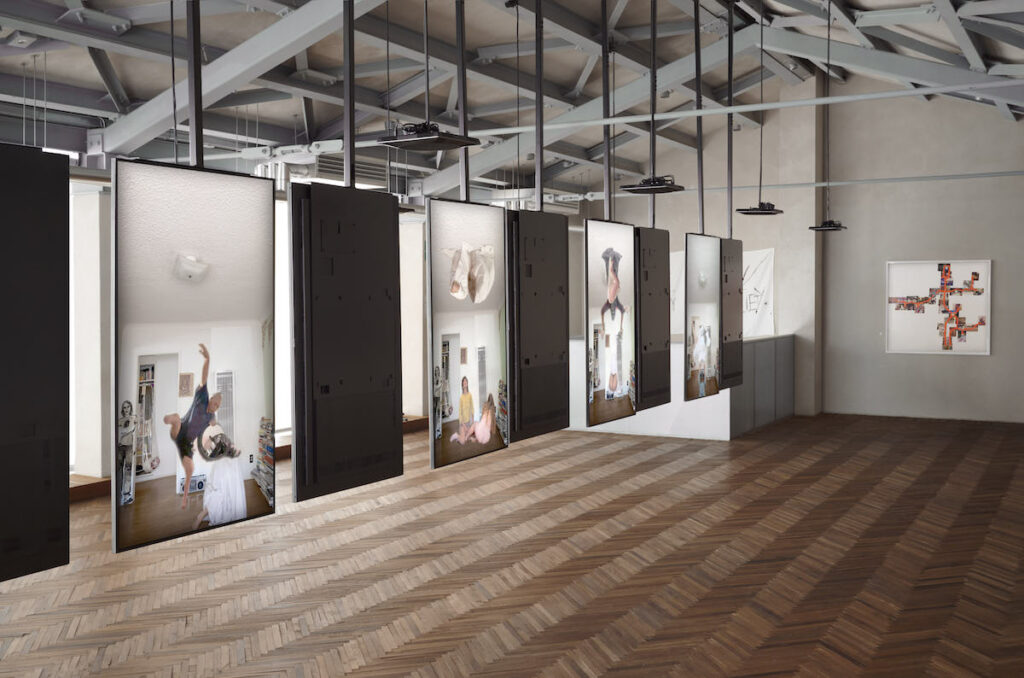
Diverse persone hanno conosciuto Miranda July su Instagram, perché lì hanno seguito le sue collaborazioni, durate un anno, con sette performer. In Osservatorio c’è un’installazione video multicanale, F.A.M.I.L.Y. (Falling Apart Meanwhile I Love You), che porta questa cosa fuori da Internet. Le azioni svolte in questi video sono semplici ma anche aliene, per esempio le persone cadono dal soffitto dove sono rintanate come bozzi di pipistrelli nascenti. Guardarle mi fa sentire disorientata, e ho pensato di stare guardando strane forme di rapporti sessuali senza sesso, anche se sono presentati in modo del tutto naturale e non infrangono nessuna legge. È una cosa che mi ha fatto sentire lievemente agitata, anche se so che a lei piacciono i gatti e le cose delicate e magari pure ferite. Ma non credo volesse ferire nessuno. In fondo non sono situazioni estreme da trattenere il fiato. Però dissimulano qualcosa. Un po’ come tutto il resto. Non sembra mai sé stessa, vero?
“Miranda July: New Society”
A cura di Mia Locks
Osservatorio Prada, Milano
Fino al 28 ottobre 2024

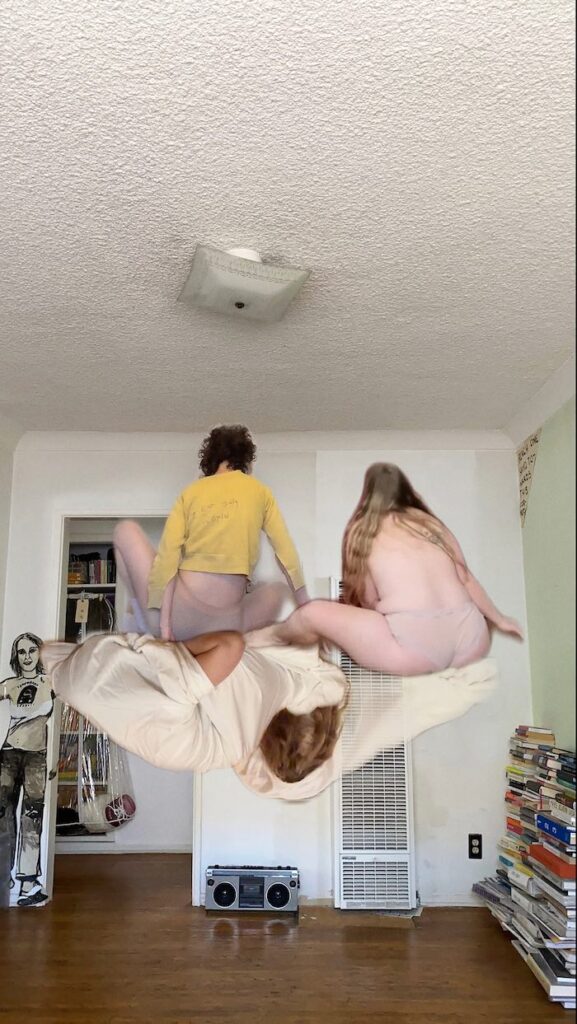
Miranda July July, @enter_laughing (Augusta Dayton), @thongria (Zoë Ligon), and @goatzfoot (Lisa Ziegenfuss) in F.A.M.I.L.Y. Cloud, 2024 Still from video Courtesy of Miranda July Studio
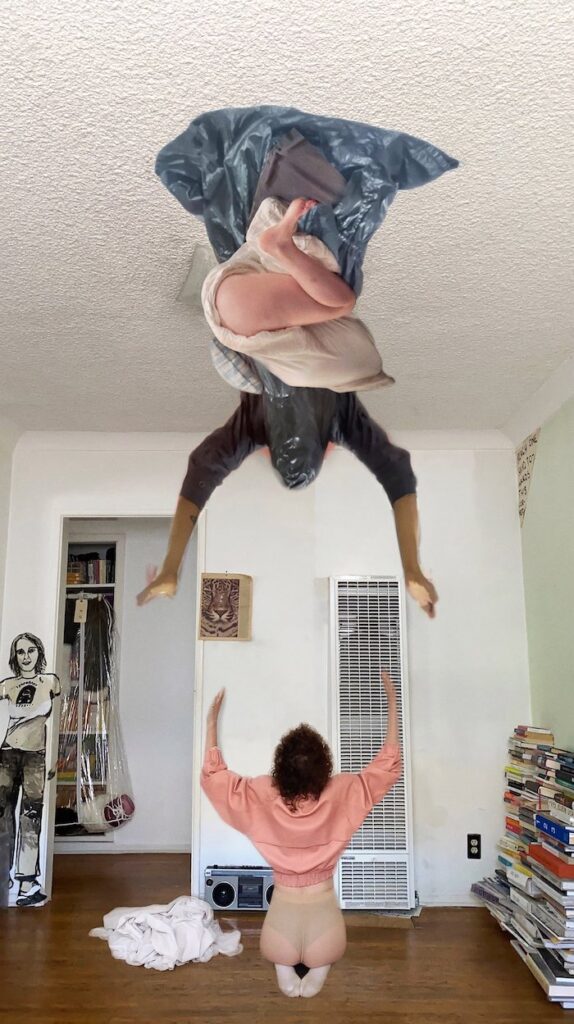
ria (Zoë Ligon) in F.A.M.I.L.Y. Ceiling, 2024 Still from video Courtesy of Miranda July Studio
Miranda July, and I don’t think I’m mistaken
Sara Benaglia shares insights, quotes, and reflections on Miranda July’s exhibition “New Society,” currently on display at the Prada Observatory.
Miranda July is an unexpected encounter. Because she is unpredictable. She is different. Like an actress liberated in the real world, a script forgotten on a subway seat. She has a strange voice and curly hair. She used to perform in American punk clubs, talking and dancing freely and awkwardly. Although she was born in the United States and I think she lives in LA, and the American provinces have a certain relevance in her stories, she has taken that attitude elsewhere, telling improbable stories in unusual ways and places. She is also a writer. Her stories are often written in the first person, and the narrator has a focused attention that lasts only a few seconds before rushing off elsewhere. A friend told me that Miranda July is married to director Mike Mills. We talked about it because I thought she was a lesbian, since in her sketches she sometimes mentions her girlfriend or says she has had sex with some women in the theater, as in New Society, the play reproduced on video at the Prada Observatory, in the monographic exhibition curated by Mia Locks.
If you want to talk to Miranda July, you can try calling her at (833)526-8880, her hotline produced by Prada. Perhaps she was already thinking of creating something similar when she wrote in The Shared Porch: “If you are sad, ask yourself why you are sad. Then pick up the phone, call someone, and tell them the answer. If you don’t know anyone, call the operator and tell him or her. Most people don’t know that operators are required by law to listen.” Or maybe Prada thought of it when reading that paragraph.
She once thought and wrote: “Make a child’s dress in an adult size (and photograph yourself wearing it).” This instruction became Task No. 1 of Learning to Love You More (2002-2009), an online (http://learningtoloveyoumore.com/) and offline project in which she collected works created by ordinary people who had come across the tasks assigned by her and Harrell Fletcher. On the second floor of the Prada Observatory, there is an example of a “task,” No. 43, which a Milanese woman completed: “Create an exhibition with the works you find in your parents’ house.” Miriam Goi was lucky because Miranda July found her on Instagram (I think, maybe it’s a made-up story that I believed) and decided that the museum would exhibit objects from the house where Miriam grew up. I think many people feel luckier not to show this kind of object, because they are intimate and could reveal aesthetic conditioning. In short, they could be very embarrassing objects, especially for those who try to put on airs or appear professional in the art world. I, for example, would be ashamed to show the emotional lumps of my anti-artistic heritage.
My friend also told me that Miranda July loves her bedroom. I had guessed as much when watching Me and You and Everyone We Know (2005), which is a bizarre, personal, and touching film that uses ))<>(( as an explosive symbol of a curator’s perversion.
If I had gone to the theater to see New Society (2015), I would have become a member of the new society founded by Miranda July. To create this new kind of state, she wore black pants and a green shirt and locked the audience inside a theater without anyone noticing. Actually, she wore three pairs of black pants and eight green shirts, because she had to retest it in various theaters to make sure it worked. In the audience, I would have met Guy Debord, too, if he were still alive and had a sense of humor. Perhaps he would have wanted to become mayor. During the show, I would have seen her looking among the audience for someone to play the anthem of the new society (and it couldn’t have been me, because I can’t play the piano), someone to design a flag, and rescuers whom we would have recognized because they would have had a piece of cloth torn from July’s green shirt tied to their arms. I would have stayed locked in the theater for over twenty years and lived without using money; therefore, I wouldn’t have had to work or do other things. Then the buzz of life in the theater would have died down and I would have returned to my seat, waiting for the show to end. Perhaps dying in show business will be a bit like leaving the New Society. Maybe without the voice-over she likes so much.
Several people got to know Miranda July on Instagram, because that’s where they followed her year-long collaborations with seven performers. In Osservatorio there is a multi-channel video installation, F.A.M.I.L.Y. (Falling Apart Meanwhile I Love You), which brings this thing out of the Internet. The actions performed in these videos are simple but also alien, for example, people fall from the ceiling where they are holed up like clusters of newborn bats. Watching them makes me feel disoriented, and I thought I was watching strange forms of sexless sexual relations, even though they are presented in a completely natural way and do not break any laws. It made me feel slightly agitated, even though I know she likes cats and delicate things, and perhaps even wounds. But I don’t think she wanted to hurt anyone. After all, these are not extreme situations that make you hold your breath. But they conceal something. A bit like everything else. She never seems like herself, does she?
“Miranda July: New Society”
Curated by Mia Locks
Osservatorio Prada, Milan
Until October 28, 2024