English version below —
Alma Heikkilä è un’artista contemporanea che vive e lavora in Finlandia la cui pratica spazia dalla pittura alle installazioni su larga scala. Il suo lavoro indaga i sistemi biologici, ecologici e microbici, concentrandosi spesso su processi che rimangono invisibili alla percezione umana. Attingendo alla ricerca scientifica, esplora temi quali l’interdipendenza, la simbiosi e la definizione mutevole di ciò che costituisce la vita. Attraverso materiali fluidi e tecniche sperimentali, Heikkilä crea ambienti immersivi in cui la materia stessa diventa un agente attivo nella creazione dell’immagine. Il suo lavoro è stato presentato a livello internazionale, contribuendo ai dialoghi attuali all’incrocio tra arte, scienza e pensiero ambientale.
Sara Benaglia: Cara Alma, il tuo lavoro si confronta spesso con prospettive scientifiche e processi invisibili. Come traduci sistemi biologici o ecologici complessi in forma visiva senza semplificarli?
Alma Heikkilä: Mi piace dedicarmi a grandi domande senza risposta, come: cos’è la vita o cos’è il corpo umano. A volte alcune scoperte scientifiche possono essere piuttosto semplici e dirette. Penso che lo stupore nasca quando si inizia a riflettere su come ciò si traduca nella nostra cultura. Su come possa sfidare i nostri modi consolidati di vedere il mondo. Cerco di realizzare opere d’arte che creino spazio per assimilare nuove prospettive e la possibilità di imparare e disimparare fisicamente ed emotivamente.
SB: Hai descritto la tua pratica come una forma di collaborazione tra te stessa, i materiali e altri fenomeni. Potresti approfondire questa idea di co-creazione? Dove finisce la tua agency e dove inizia quella della materia?
AH: A volte mi sento frustrata dal modo in cui gli artisti vengono descritti come creatori quasi divini di qualcosa di nuovo. Allo stesso tempo, come specie umana non produciamo nulla di concreto. Siamo eterotrofi, consumatori che dipendono dagli altri. La profonda dipendenza da altre forme di vita non è ben articolata nelle nostre vite. Sicuramente non è ben articolata nelle convenzioni delle mostre d’arte. I telai di legno, i polimeri a base di olio e i pigmenti minerali hanno una storia di vita così lunga alle spalle. Sono loro che creano davvero le opere d’arte. I materiali, altri pensatori e altri artisti creano l’ambientazione da cui attingo. Non mi è possibile sapere da dove sia nata un’idea, né comprendere la fisica che sta dietro all’evaporazione dell’inchiostro o il percorso dei fossili fino a diventare un polimero nel medium pittorico.
SB: Il tuo lavoro traccia spesso parallelismi tra il corpo umano e i sistemi ecologici: digestione, circolazione, reti sotterranee. Come consideri questa continuità tra interno ed esterno?
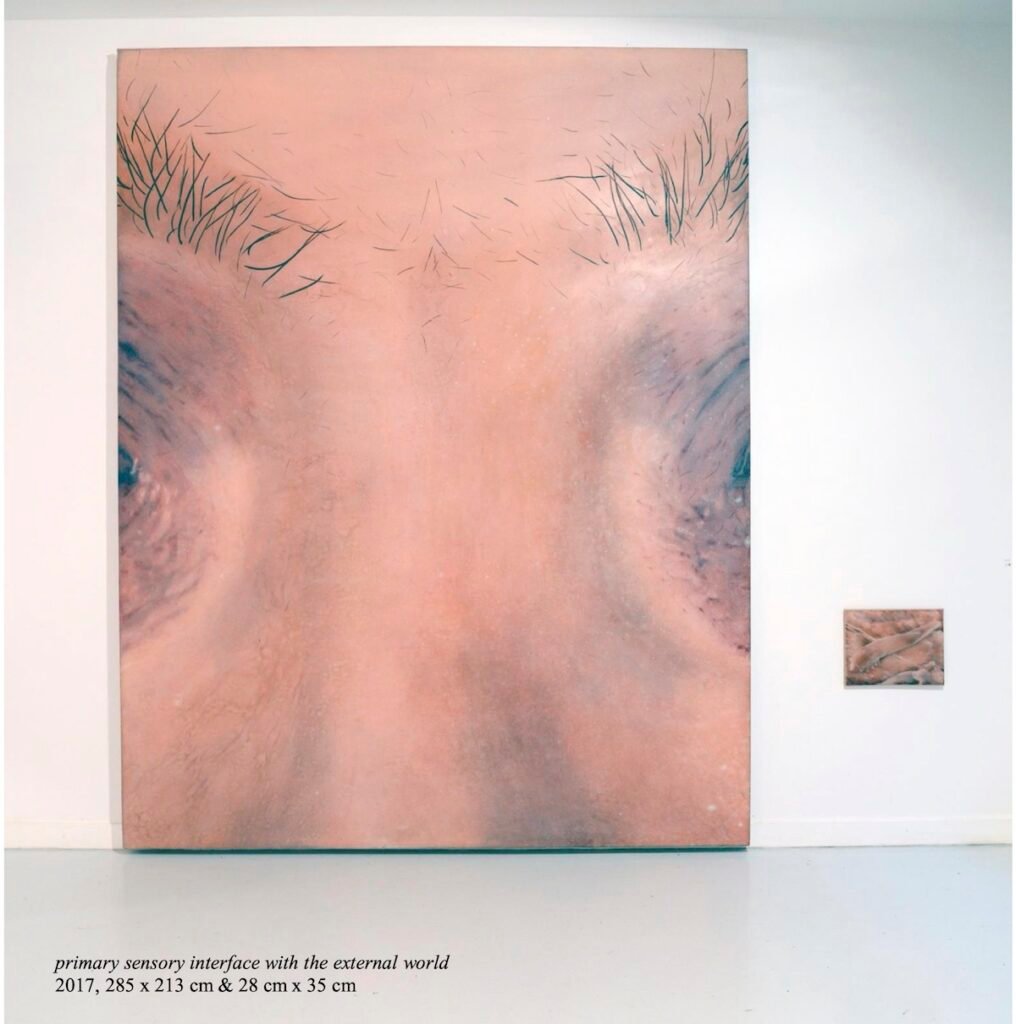
AH: Il rivestimento intestinale umano è la superficie più estesa che abbiamo con il mondo esterno. Supera di gran lunga la superficie cutanea; attraverso la digestione siamo costantemente in relazione intima con il mondo esterno. Le cose diventano ancora più sfocate quando iniziamo a pensare a cosa fa parte del corpo umano e cosa no. Ad esempio, il sistema immunitario è un sistema complesso che collabora con i microbi intestinali. In parole povere, i microbi insegnano al corpo a riconoscere cosa fa parte del corpo e cosa no. Un altro aspetto affascinante del corpo umano sono i mitocondri. Il loro DNA “non umano” unico è il risultato di un antico evento evolutivo in cui un batterio libero è stato inglobato da una cellula ancestrale. È strano che allo stesso tempo il mio corpo (/io) sia qualcosa che conosco meglio di chiunque altro e allo stesso tempo sia sconosciuto e non umano.
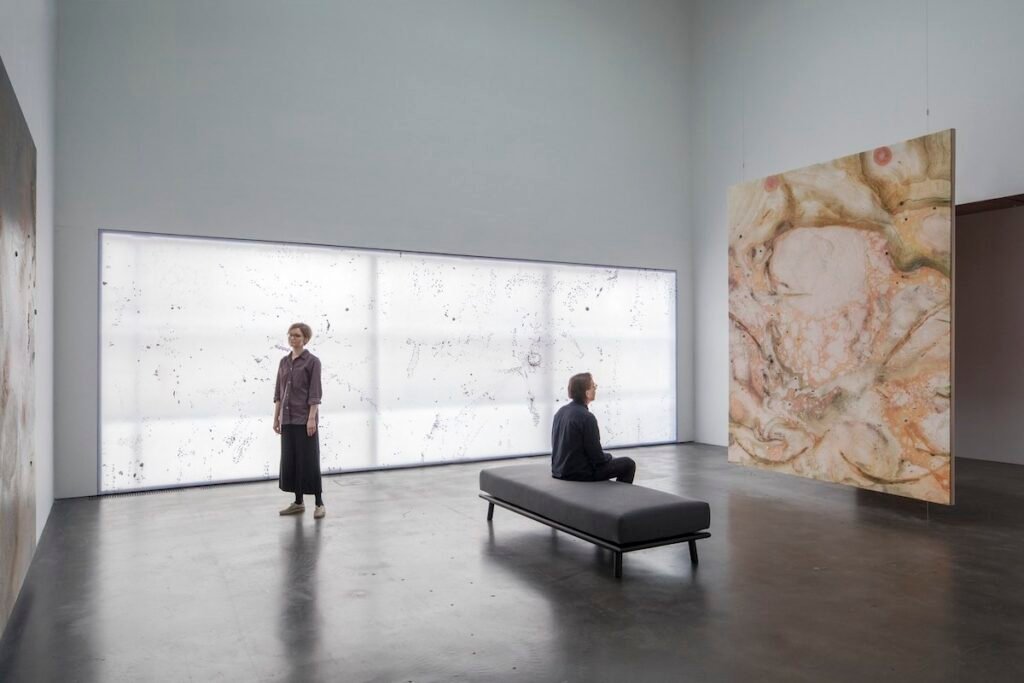
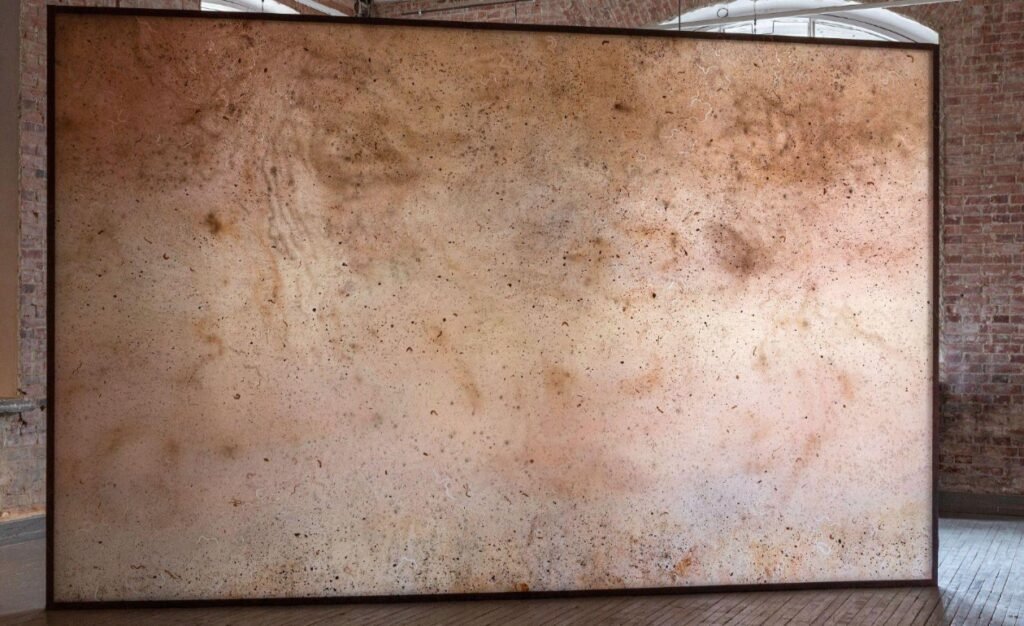
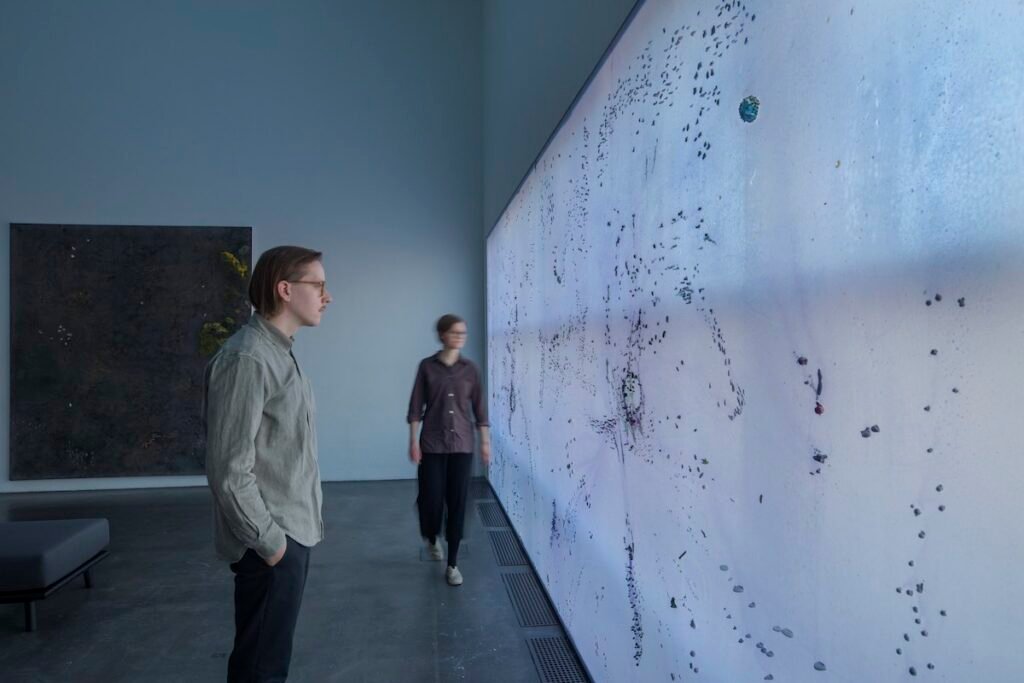
SB: In opere come Where processes are more critical than entities becoming aware of being affected (2024), il processo sembra avere la precedenza sulla forma. Si tratta anche di una posizione concettuale su come dovremmo intendere la vita oggi?
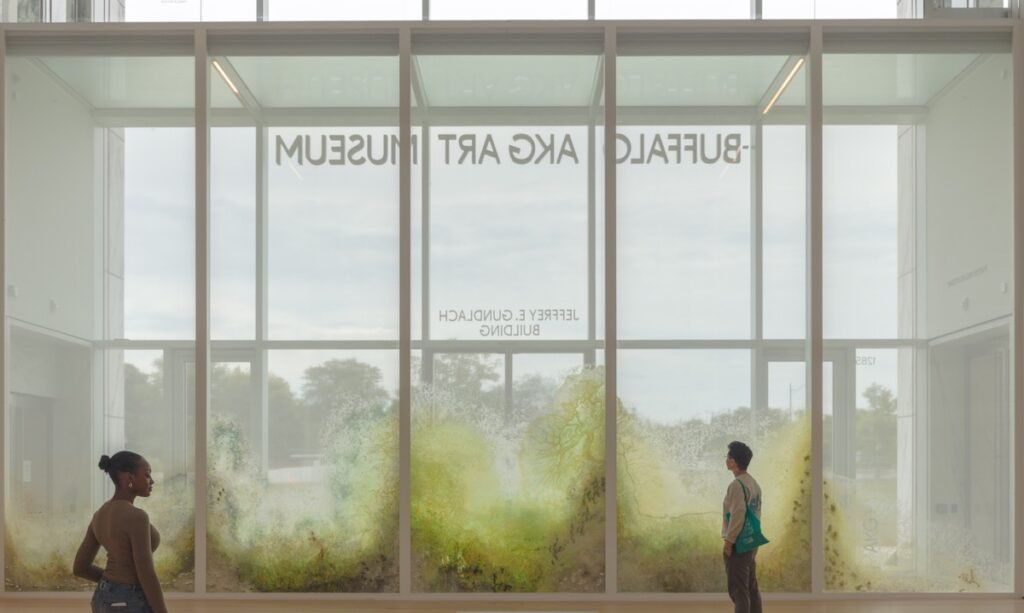
AH: Quest’opera è stata realizzata per essere esposta nella grande vetrata del Museo AKG di Buffalo. Nella mia mente sono tornata alle origini dell’idea di paesaggio e di pittura di paesaggio. C’è l’idea che guardare un’immagine di paesaggio con la prospettiva rafforzi e crei la separazione degli esseri umani dalle altre forme di vita. Lo spettatore (l’essere umano) osserva il paesaggio, trovandosi al di fuori di esso e al tempo stesso al centro. Questa configurazione è al centro di molti dei problemi che stiamo affrontando in questo momento. Quindi, in quest’opera ho voluto creare uno spazio per trovarsi all’interno del paesaggio, in particolare all’interno dello strato microbico del paesaggio che è invisibile all’occhio umano. Volevo anche collocare lo spettatore all’interno dell’opera in modo che non possa essere mostrata realmente da un unico punto e in un unico momento. Poiché l’illuminazione cambia, cambiano anche l’opera e i dettagli che si possono vedere.
SB: Alcune delle tue opere evocano texture e condizioni che sono corporee, persino viscerali. Decomposizione, umidità, trasformazione. Quanto è importante questa dimensione sensoriale nel plasmare l’esperienza dello spettatore?
AH: Mi interessa la creazione di immagini scientifiche, ma allo stesso tempo desidero lavorare in ambiti in cui essa non può arrivare. Sono attratta dal modo trompe-l’oeil di creare immagini. Dove ci si può davvero immergere nell’immaginario. Spesso trovo difficile comprendere la vastità, la stranezza e la magia di come si dice che la vita sia organizzata. Per me, i miei dipinti creano uno spazio per percepire queste nozioni scientifiche.
SB: La ricerca scientifica odierna suggerisce forme di intelligenza e apprendimento in organismi privi di cervello. Queste idee influenzano il modo in cui concepisci l’azione e la cognizione nel tuo lavoro?
AH: Sono entusiasta di tutte le idee e le nozioni relative alla cognizione. Ci sono state molte nuove scoperte scientifiche e altre ne seguiranno. Questo argomento è molto complesso e in qualche modo sfocato. Se si parte dagli esseri umani, pensiamo con i nostri corpi, non solo usando il cervello, pur notando che il cervello umano ha dei limiti e delle irrazionalità. Si può mettere in discussione del tutto il concetto di libero arbitrio. Nel mio lavoro ho riflettuto sulle colonie batteriche, sulle cellule cerebrali umane, sulla corteccia centrale, sui sistemi nervosi e sull’asse cervello-intestino, sui miceti mucillaginosi, su altri animali e sulla loro somiglianza con gli esseri umani. Sono attratta dai pensatori e dagli artisti che hanno formulato ogni sorta di ipotesi, spesso basate sul lavoro di scienziati come Lynn Margulis e James Lovelock.
SB: I materiali rivestono un ruolo cruciale nel tuo lavoro: pigmenti, liquidi, sostanze organiche e industriali. In che modo i processi materici influenzano la nascita delle immagini?
AH: Nel mio lavoro mi piace spesso ricorrere a tecniche molto fluide, lasciando che le cose si asciughino in modi diversi. Trovo affascinante osservare come le immagini inizino a formarsi e a creare motivi che prima non sarei nemmeno riuscita a immaginare.
SB: Il testo compare in molte delle tue opere, spesso in forma sia poetica che descrittiva. Che ruolo gioca il linguaggio accanto all’immagine e al materiale?
AH: Desidero condividere alcune delle idee che mi sono venute mentre realizzavo le opere. Nominare le specie che ho dipinto ed essere molto chiara e informativa. Allo stesso tempo, provo nuovi modi di usare il linguaggio ed evito anche di usare alcune parole. Spesso ho la sensazione che non disponiamo delle parole e dei modi migliori per descrivere cos’è la vita, cosa significa vivere, cosa significa essere umani, ecc. Creare mondi migliori e un modo di pensare migliore è un lavoro che coinvolge molte persone. Un modo per iniziare questo lavoro è non seguire ogni volta lo stesso metodo di denominazione e scrittura.
SB: Il tuo lavoro sembra resistere alla tentazione di fornire risposte, soffermandosi invece sulle domande. Lo consideri una forma di resistenza al bisogno di chiarezza e certezza che caratterizza l’epoca attuale?
AH: Non ho davvero risposte e spesso non ce ne sono. È molto chiaro che abbiamo una crisi ambientale e che noi esseri umani dobbiamo agire in modo diverso, dobbiamo consumare meno. Su questo voglio essere chiara. Ma non sono una scienziata, né una scrittrice, le mie opere sono basate sull’immagine. Quel che penso nelle mie opere passa attraverso le immagini e anche l’esperienza per gli altri è visiva. Non vedo né la necessità né la possibilità di tradurle.
SB: Guardando al futuro, ci sono nuove direzioni, scale o collaborazioni che ti interessa esplorare?
AH: Sto preparando mostre che lavorano molto con la luce e la visione. Mi interessa la vita che si trova nelle profondità della crosta terrestre, dove la luce solare non è necessaria per la vita, dove il metabolismo è così lento che la durata della vita può essere estremamente lunga; per questa vita non esiste un limite di profondità conosciuto.
Interview with Alma Heikkilä
By Sara Benaglia
Alma Heikkilä is a Finnish contemporary artist whose practice spans painting and large-scale installations. Her work investigates biological, ecological, and microbial systems, often focusing on processes that remain invisible to human perception. Drawing from scientific research, she explores themes of interdependence, symbiosis, and the shifting definition of what constitutes life. Through fluid materials and experimental techniques, Heikkilä creates immersive environments where matter itself becomes an active agent in image-making. Her work has been presented internationally, contributing to current dialogues at the intersection of art, science, and environmental thought.
Sara Benaglia: Dear Alma, your work often engages with scientific perspectives and invisible processes. How do you translate complex biological or ecological systems into visual form without simplifying them?
Alma Heikkilä: I like spend time around large unanswerable questions like; what is life or what is the human body. Sometimes some scientific findings can be quite simple and straightforward. I think the amazement comes when one starts to think about how that translates to in our culture. How it can challenge our fixed ways of seeing the world. I try to make art works that make space for digesting new perspectives and possibility to bodily and emotionally learn and unlearn.
SB: You have described your practice as a form of collaboration—between yourself, materials, and other phenomena. Could you expand on this idea of co-creation? Where does your agency end and that matter begin?
AH:Sometimes I feel frustrated on how artists are described as almost god-like creators of something new. At the same time as human species we don’t produce anything materially. We are heterotrophs, consumers that rely on others. The deep dependency on other life forms is not well articulated in our lives. Definitely not well articulated in art exhibition conventions. The wooden stretchers, oil based polymers and mineral pigments have such a long history of life behind them. They really do make the art works. Materials, other thinkers and other artists create the setting where I borrow. It’s not possible for me to know where an idea appeared from, to understand the physics behind ink evaporating or fossils’ route to being a polymer in paint medium.
SB: Your work often draws parallels between the human body and ecological systems — digestion, circulation, underground networks. How do you think about this continuity between inside and outside?
AH: Humane gut lining is the biggest surface that we have with the external world. It outnumbers the skin surface area greatly, through digestion we are constantly in intimate relation to the external world. Things get even more blurred when we start to think about what is part of the human body and what is not. For example the immune system is a complex system that collaborates with the gut microbes. Simply said, the microbes are teaching the body to recognize what is part of the body and what not. Another fascinating thing in the human body are the mitochondria. Their unique “non-human” DNA is a result of an ancient evolutionary event where a free-living bacterium was engulfed by an ancestral cell. It’s weird that at the same time my body (/me) is something that I know the best and at the same time is unknown and nonhuman.
SB: In works like Where processes are more critical than entities becoming aware of being affected (2024), process seems to take precedence over form. Is this also a conceptual position on how we should understand life today?
AH: This work was made to be shown in the large window of the BUffalo AKG Museum. In my mind I went back to the starting of the idea of landscape and landscape painting. There is an idea that watching an image of landscape with perspective enforces and creates the separation of humans from other life. The viewer ( the human) is watching over the landscape, being outside of it and in the center of it. This setup is at the core of many of the problems we are facing at the moment. So, in this work I wanted to make a space to be inside the landscape, especially inside the microbial layer of the landscape that is invisible to the human eye. I also wanted to place the viewer inside the work. So, that it cannot be shown truly from one place and at one time. Since the lighting changes, so does the work and the details that can be seen.
SB: Some of your works evoke textures and conditions that are bodily, even visceral — decay, humidity, transformation. How important is this sensorial dimension important in shaping the viewer’s experience?
AH: I’m interested in scientific image making but at the same time I wish to work in the areas where it cannot go. I’m drawn to the trompe-l’oeil way of image making. Where one can truly immerse in the imagining. Often I find it hard to realise the vastness, weirdness and the magic of how life is told to be organized. For me, my paintings make space to feel these scientific notions.
SB: Scientific research today suggests forms of intelligence and learning in organisms without a brain. Do these ideas influence how you think about agency and cognition in your work?
AH: I’m super excited about all the ideas and notions around cognition. There has been a lot of new findings in science and are to come. This topic is so complex and somewhat blurred. If one starts with humans, we think with our bodies, not only using our brains, while noticing that the human brain has limitations and irrationality. One can question the notion of free will altogether. In my work I’ve been thinking of bacterial colonies, human brain cells, central cortex, nervous systems and the brain-gut-axis, slime molds, other animals and their similarity to humans. I’m drawn to the thinkers and artists who have made all sorts of assumptions often based on the work of scientists like Lynn Margulis and James Lovelock.
SB: Materials play a crucial role in your work—pigments, liquids, organic and industrial substances. How do material processes influence the emergence of images?
AH: In my work I often like to use very liquid methods, to leave things to dry in different ways. It’s very fascinating to me to see how the images start to form and make patterns that I have not been able to even imagine in my mind beforehand.
SB: Text appears in several of your works, often both poetic and descriptive. What role does language play alongside image and material?
AH: I wish to share some of the notions I have had while making the works. Name the species I have painted and to be very clear and informative. At the same time I test new ways of using language and also avoid using some words. I often feel that we don’t have the best words and ways of describing what life is, what is living, what is human etc. Making better worlds and better thinking is work done by many people. One way to start this work is to not follow the same naming and writing method every time.
SB: Your work seems to resist providing answers, instead dwelling in questions. Do you see this as a form of resistance to the need for clarity and certainty today?
AH: I truly don’t have answers and often there are no answers. It’s very clear that we have an environmental crisis and that we humans need to act differently, we need to consume less. In this I want to be clear. But I’m not a scientist, nor writer, my works are image based. My thinking in my works comes through images and also the experience for others is visual. I see no need nor possibility to translate them.
SB: Looking ahead, are there new directions, scales, or collaborations you are interested in exploring?
AH: I’m preparing exhibitions that work a lot with light and vision. I’m interested in life that is deep in the earth’s crust, where sunlight is not needed for life, where metabolism is so slow that the life span can be extremely long, for this life there is no known depth limit.
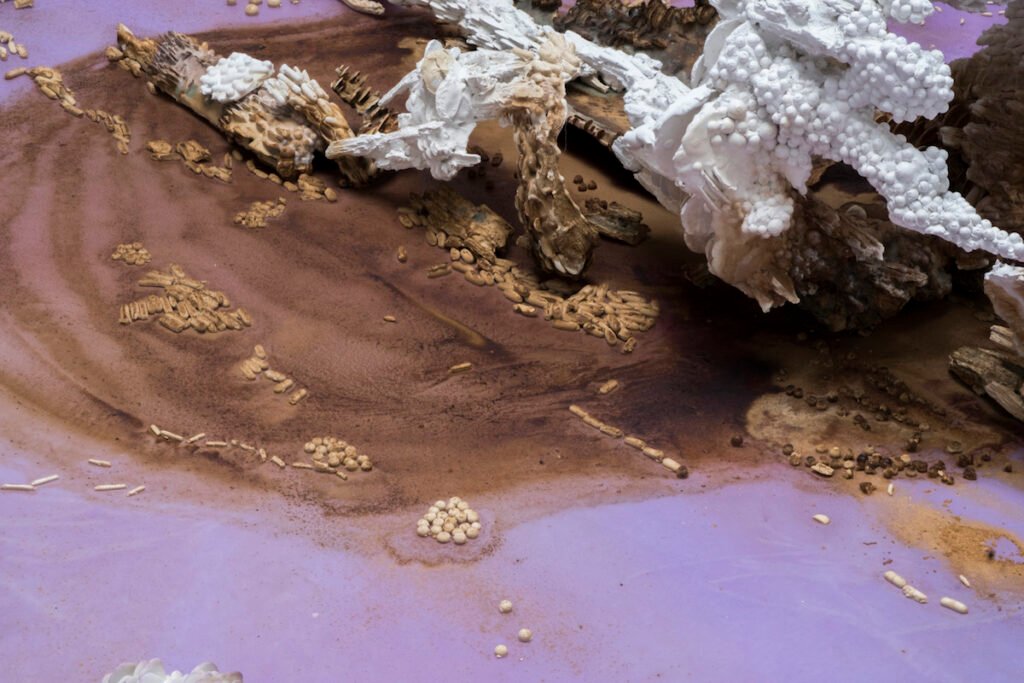
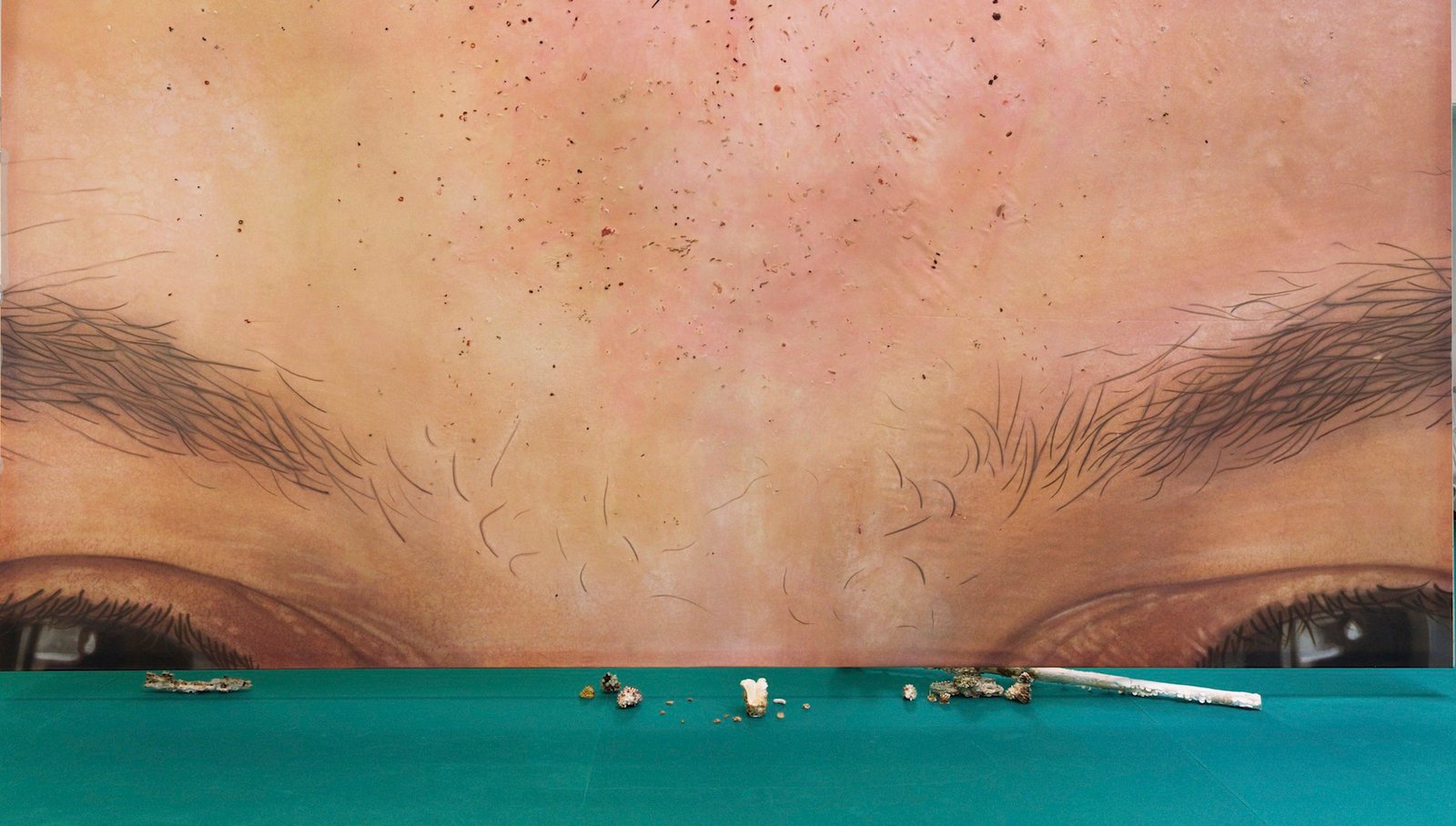
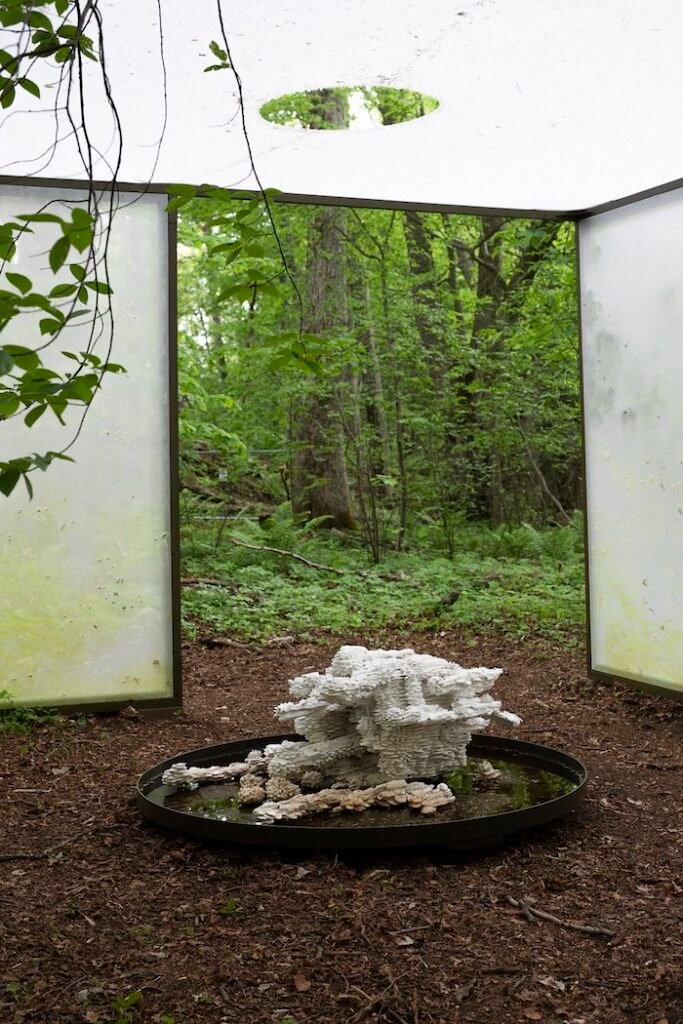
Cover: Alma Heikkilä, Semipermeable & sensitive, 2023